Custom yoga bras for studio collections and private label development
Yoga bras focus on product-level sourcing decisions such as fit, fabric behavior, construction details, and collection use. They are designed for movement comfort, body coverage, and light-to-medium support across studio, stretch, Pilates, and low-impact training use. Ninghow Yoga supports custom yoga bra development for brands, retailers, studios, and sourcing teams that need control over fabric, fit, neckline, strap design, branding, packaging, and bulk production.
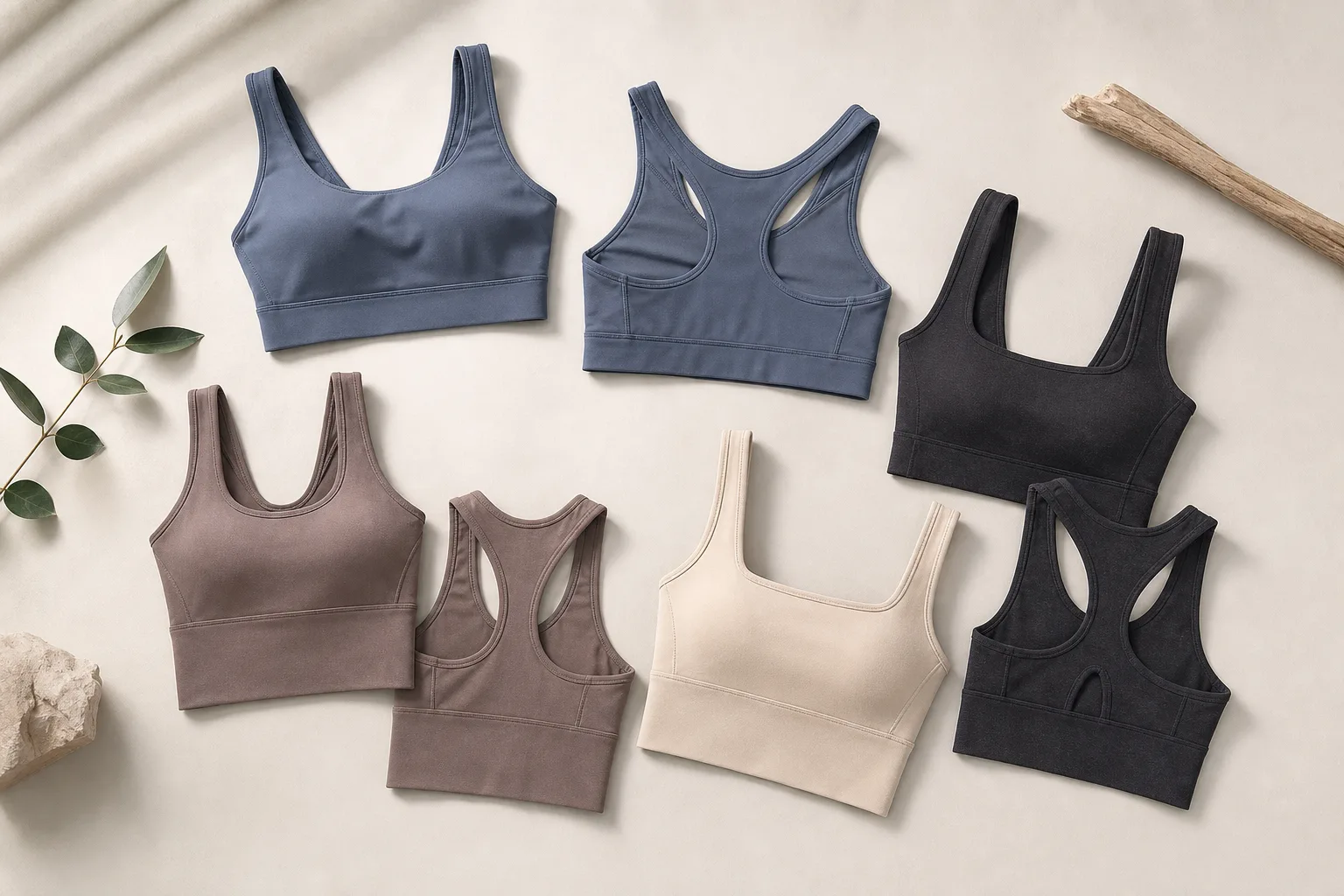
Category comparison
Compare garment types, fabric behavior, construction needs, and development inputs before requesting samples.
Products
If the project needs broader gym or higher-impact development, compare the requirements on the sports bras page.
Products
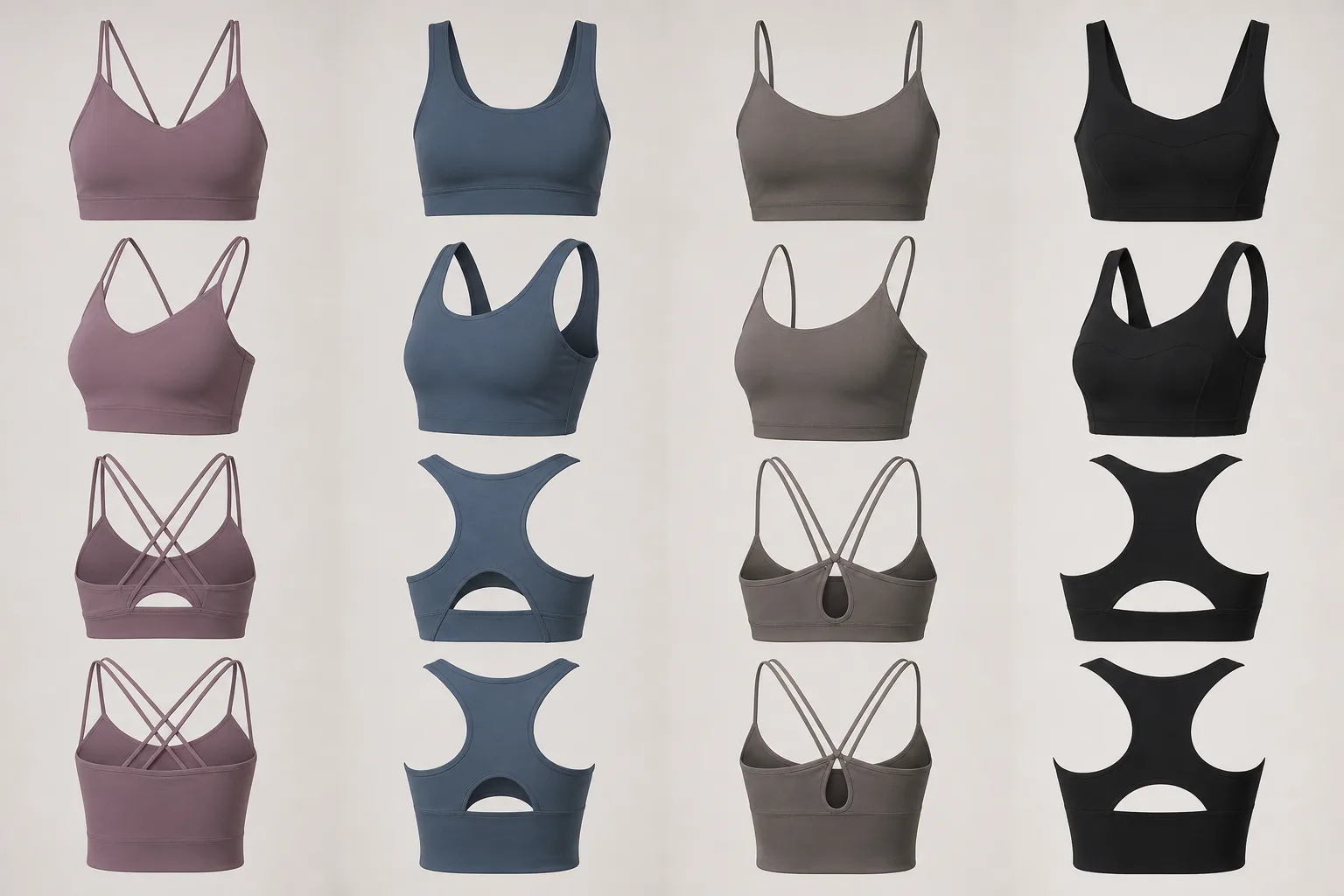
Scoop, square, V, or higher-coverage neckline.
Fabrics
Composition, such as nylon-spandex or polyester-spandex blends.
Construction
Underband width and elasticity.
Prepare clearer yoga bra information before quotation review
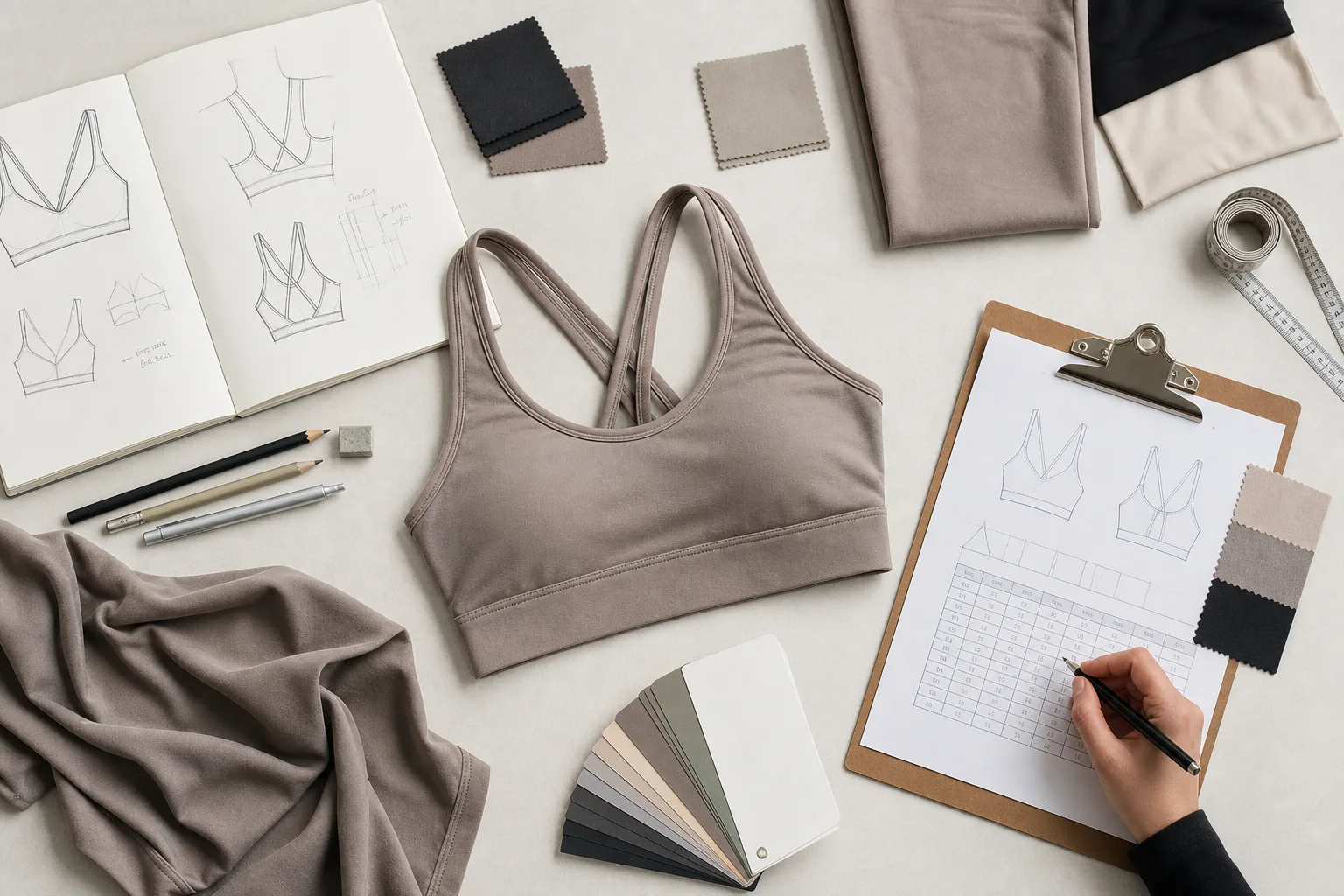
A project-specific quotation becomes easier when the product brief is organized in groups instead of scattered notes. If your yoga bra style is already defined, Request a Quote. If you still need to confirm fabric feel and construction direction first, start with Request Samples.
Style type or
Style type or reference images affects sample requirements, fabric choice, fit approval, and launch planning.
Neckline, back shape,
Connect neckline, back shape, and coverage preference with buyer decisions around construction, size range,.
Target level
Sourcing teams can prepare clearer references when target support level becomes part of a custom yoga apparel.
What makes yoga bras different from broader sports bra programs
Yoga bras usually focus more on studio comfort, cleaner lines, softer hand feel, and controlled support rather than high-impact compression. Buyers often compare them with training bras, but the product brief is different. If the project needs broader gym or higher-impact development, compare the requirements on the sports bras page before locking the product direction.
01
Planning
If the project needs broader gym or higher-impact development, compare the requirements on the sports bras page.
Neckline, strap, and coverage choices change the final product feel
Many yoga bra programs succeed or fail at the sample stage because the style direction was too general. A better approach is to define the visible shape and wearing experience early. For a coordinated launch, many buyers also build matching bottoms such as custom yoga leggings, yoga shorts, or full yoga sets.
- Scoop, square, V, or higher-coverage neckline
- Racerback, cross-back, straight strap, or open-back design
- Longline or regular underband length
- Removable padding or unpadded construction
- Single-layer or lined body depending on coverage target
- Clean edge or banded finishing depending on look and hold
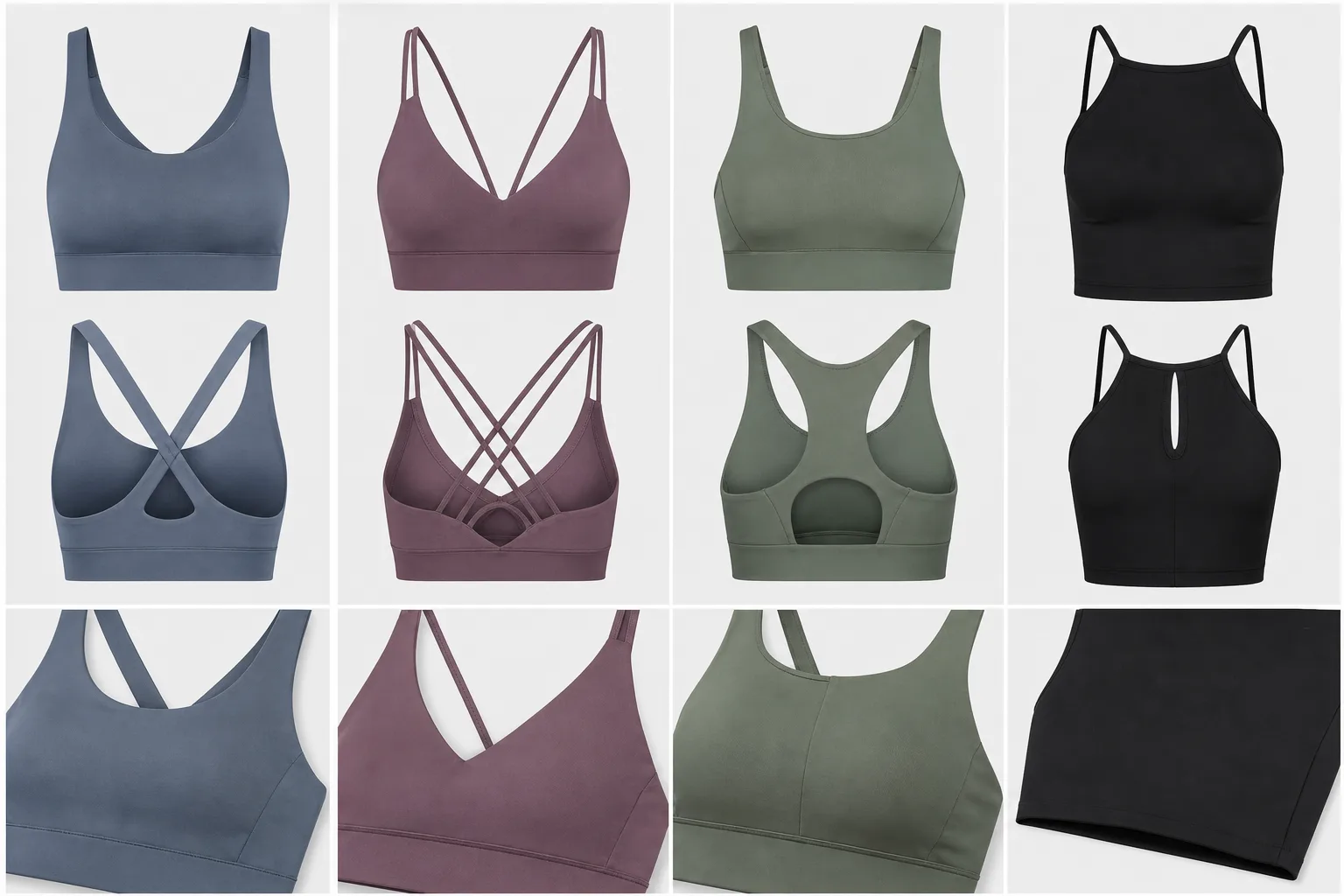
Small construction details matter more on yoga bras than many buyers expect
Because yoga bras sit close to the body, minor pattern or sewing changes can alter comfort, shape, and support. Sample review should focus on the details that affect wear during movement. Projects with defined specs can move faster when buyers submit measurement charts or a tech pack. If your team already has development files, use Upload Your Tech Pack for a more accurate quotation and sample review path.
- Underband width and elasticity
- Strap placement and strap tension balance
- Neckline height and side coverage
- Armhole shape and edge stability
- Padding entry position if removable cups are used
- Lining attachment and internal clean finish
- Seam placement in high-contact areas
- Measurement consistency across the graded size range
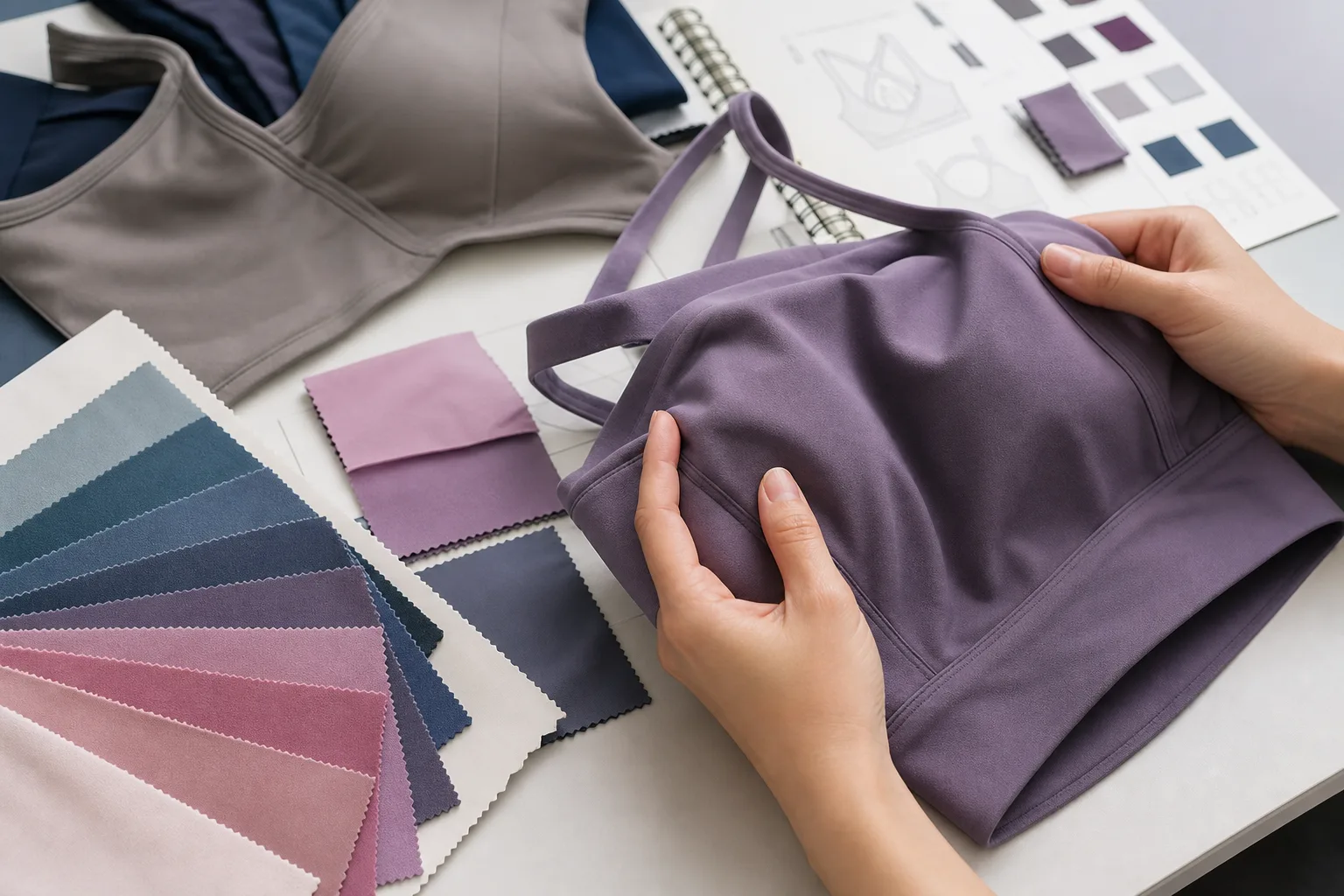
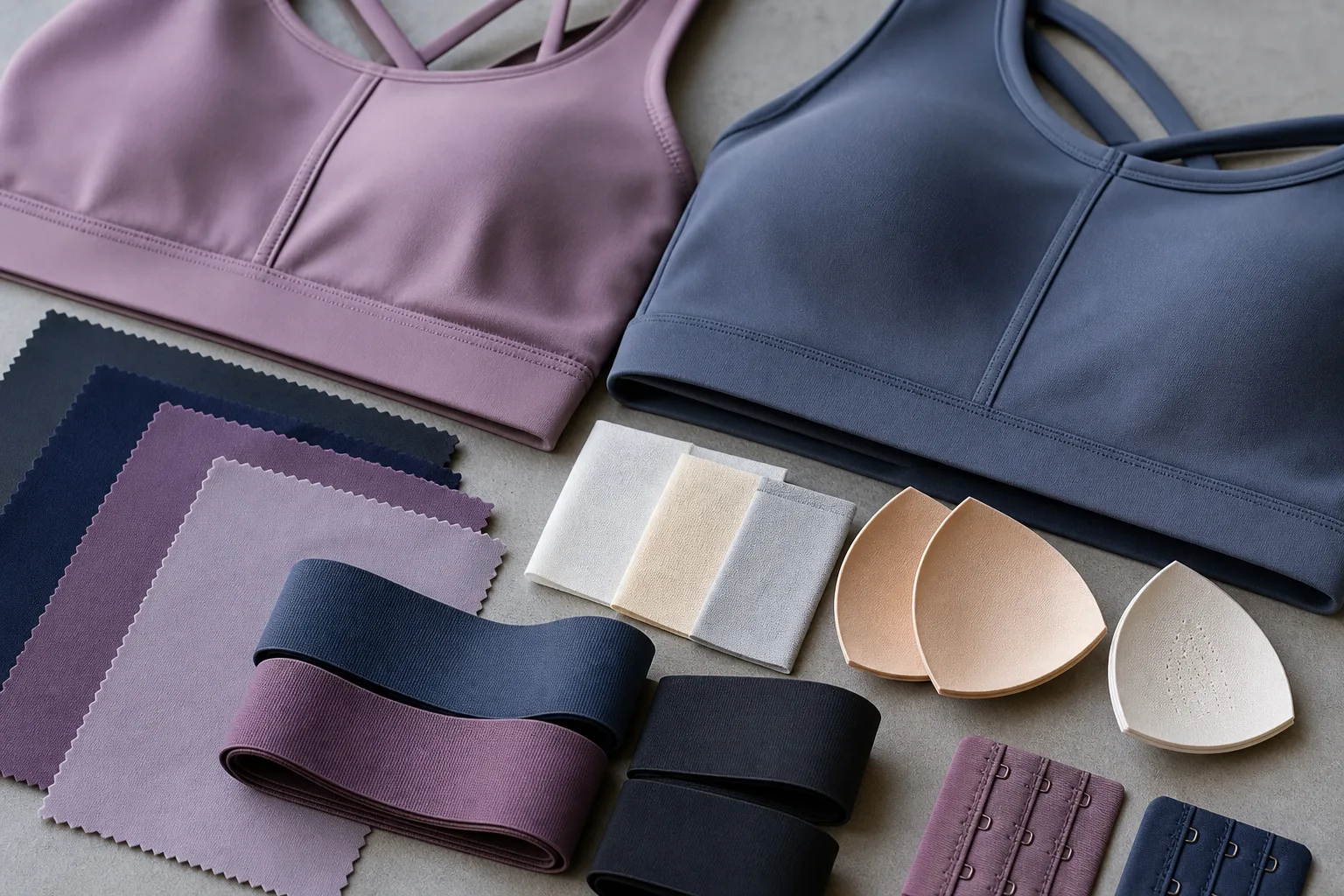
Different buyers usually need different yoga bra development routes
A yoga studio capsule, an e-commerce launch, and a wholesale replenishment program rarely use the same briefing method. If the project is still at concept stage, ODM activewear development may be the better route. If your team already controls the measurements and construction details, review OEM yoga apparel before sampling.
- Brand collections: Often need multiple bra shapes, coordinated colors, labels, and packaging presentation.
- Studios and Pilates programs: Often focus on comfort, consistent coverage, and a cleaner branded look for smaller collections.
- Retail and wholesale buyers: Usually need clearer size planning, color allocation, and repeat-order practicality.
- Startups: Often begin with reference images, target price range, and intended market rather than complete technical files.
Sample approval should cover support, coverage, and branding together
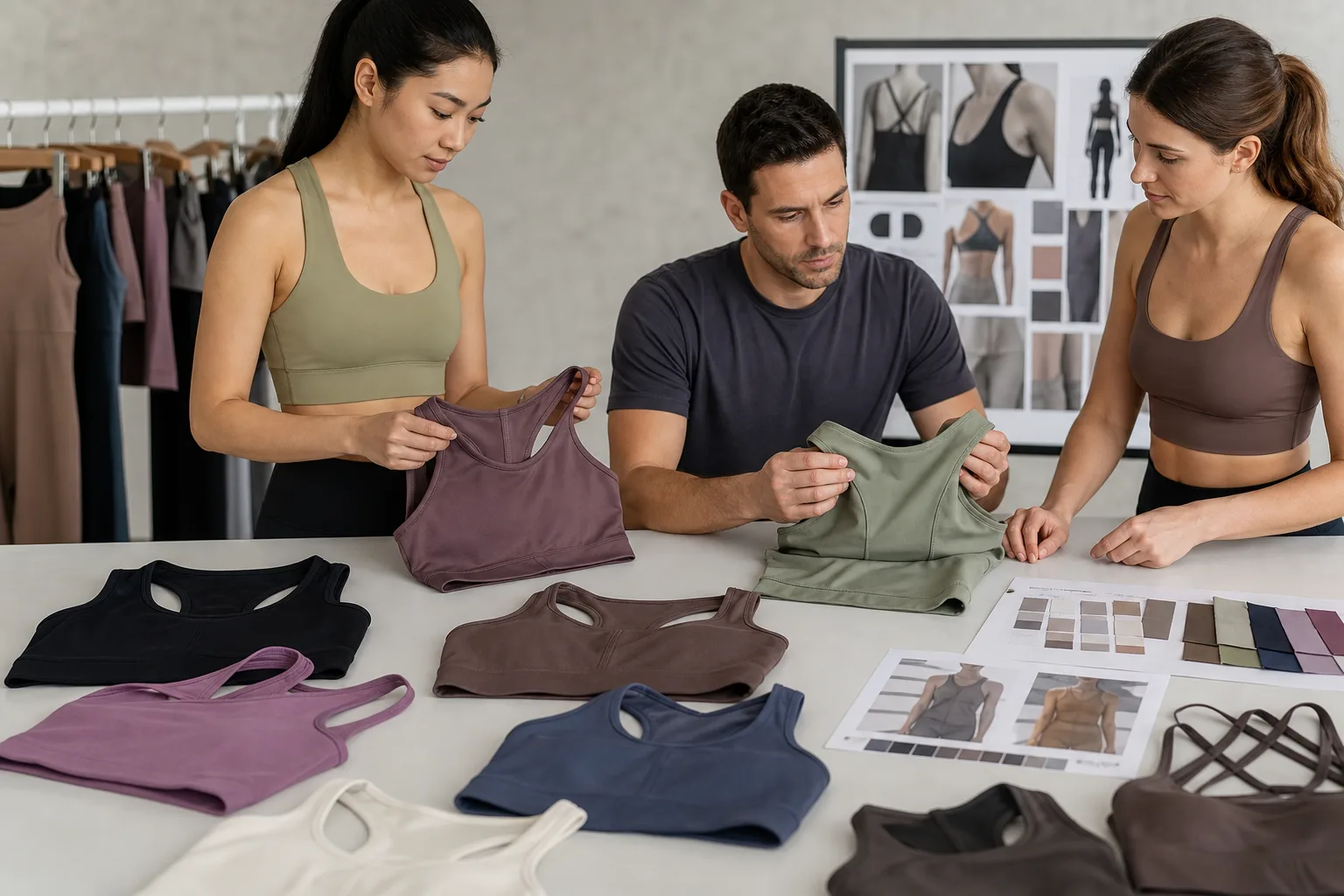
Yoga bra development usually needs practical review across fit, visual balance, and material behavior. Standard samples may take around 5–7 days, while more complex samples may take around 7–10 days. Final timing depends on specification completeness, fabric availability, construction details, logo method, custom trims, and revision rounds. When branding is part of the program, buyers often review logo application options and custom packaging details before final approval.
- Confirm reference style, intended support level, and coverage direction
- Review fabric, lining, and padding requirements
- Develop sample based on buyer specs, reference sample, or approved product direction
- Check fit, bust coverage, underband feel, and strap placement
- Revise measurements, finishing, or branding if needed
- Approve pre-production details before material readiness and bulk planning
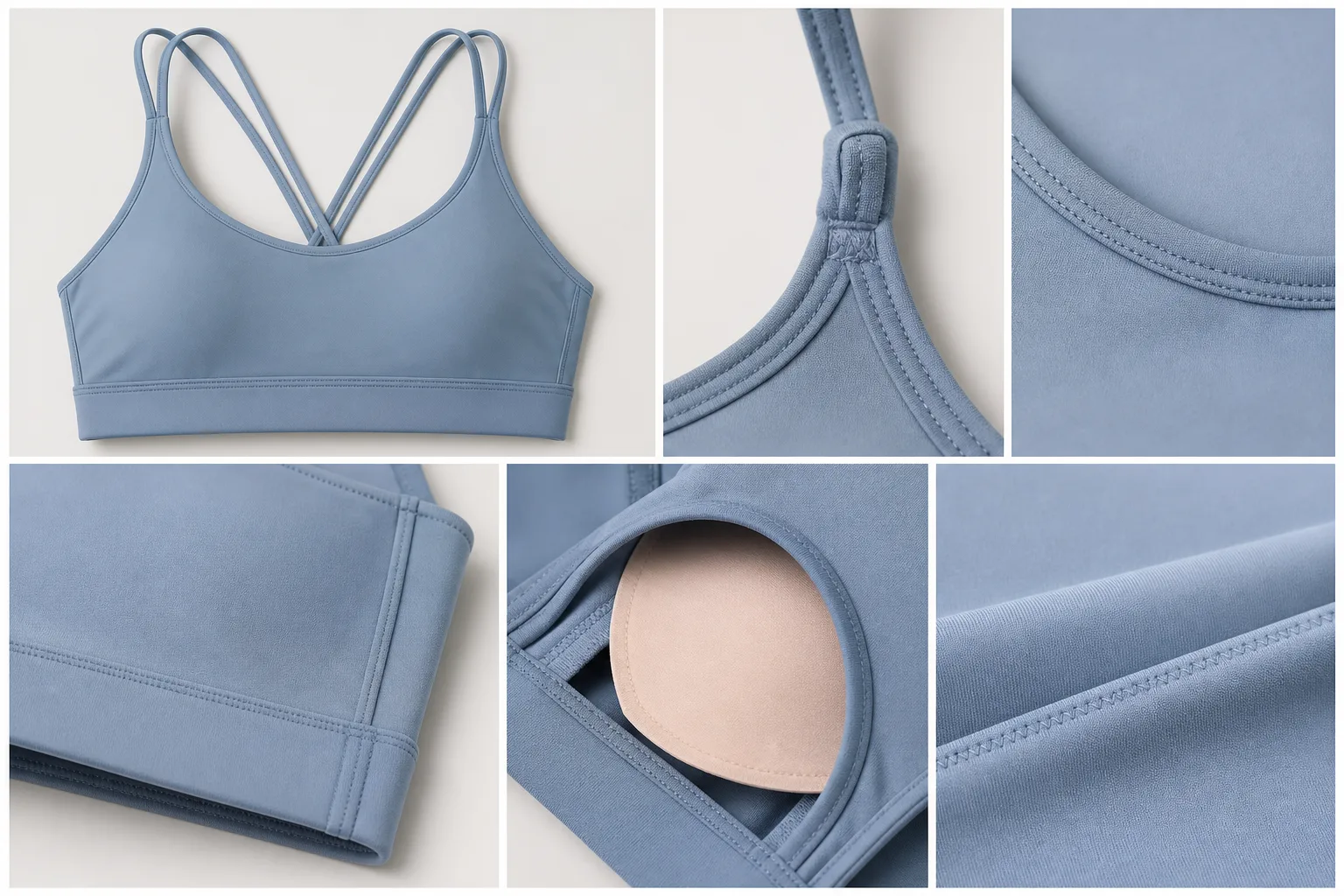
Approval points that keep production clear
The process is easier to manage when buyers know what to confirm before the next stage.
MOQ and order planning depend on style complexity and size-color allocation
Reference MOQ starts from 300 pieces. The final MOQ and size or color allocation depend on the product, fabric, construction, branding, and packaging. For yoga bras, bulk planning is often influenced by: Reference bulk production is often around 20–35 days. Approvals and material readiness. But the final schedule depends on product complexity. Order quantity. Material availability. Branding details. Packaging requirements. And the current production schedule.
Move from concept, sample, or approved spec to the right next action
Ninghow Yoga helps yoga apparel development, sample coordination, bulk production, inspection, packaging, and shipment coordination for B2B buyers. Your team can start from different levels of readiness.
Answers buyers usually need before starting
Keep the project conversation practical with clear expectations around sampling, production and quotation inputs.
What information is most useful when asking about custom yoga bras?
Reference images, neckline and back style, target support level, fabric preference, size range, estimated quantity, branding details, and shipping destination all help create a more accurate quotation and sample plan. A tech pack is useful if available, but not every inquiry starts with one.
What is the MOQ for yoga bra orders?
Reference MOQ starts from 300 pieces. The final MOQ and size or color allocation depend on the product, fabric, construction, branding, and packaging.
Can yoga bras be developed with removable pads and custom branding?
Yes. Projects may include removable padding, lining choices, logo application, labels, and custom packaging, depending on the approved product requirements. The final construction should be confirmed during sampling.
How long does a yoga bra sample usually take?
Standard samples may take around 5–7 days, while more complex samples may take around 7–10 days. Timing depends on specification completeness, fabric availability, construction details, custom trims, logo method, and revision needs.
How should buyers choose fabric for yoga bras?
Buyers usually compare fabric composition, weight, stretch, recovery, hand feel, moisture management, and coverage during movement. Reviewing swatches before sampling can help narrow the material direction.
Can Ninghow Yoga support quality checks for yoga bra production?
Quality-control steps may include fabric review, measurement checks, strap and neckline review, logo and label checking, workmanship review, packaging review, and AQL-based or third-party inspection support when required.
Prepare a product brief for sample discussion.
Send the product type, reference styles, fabric preference, size range, target quantity, and branding needs so Ninghow Yoga can confirm sample feasibility.