Factory capabilities for custom yoga apparel projects
Factory Capabilities explains one manufacturing topic at decision level, with clearer checkpoints and fewer recycled transition lines. Ninghow Yoga supports B2B yoga apparel manufacturing with coordinated development, sample follow-up, production planning, sewing or seamless routes, inspection support, and export coordination. For buyers comparing suppliers, factory capability is not only about capacity. It is about whether the team can manage fabric, fit, branding, packaging, and approval checkpoints in the right order.
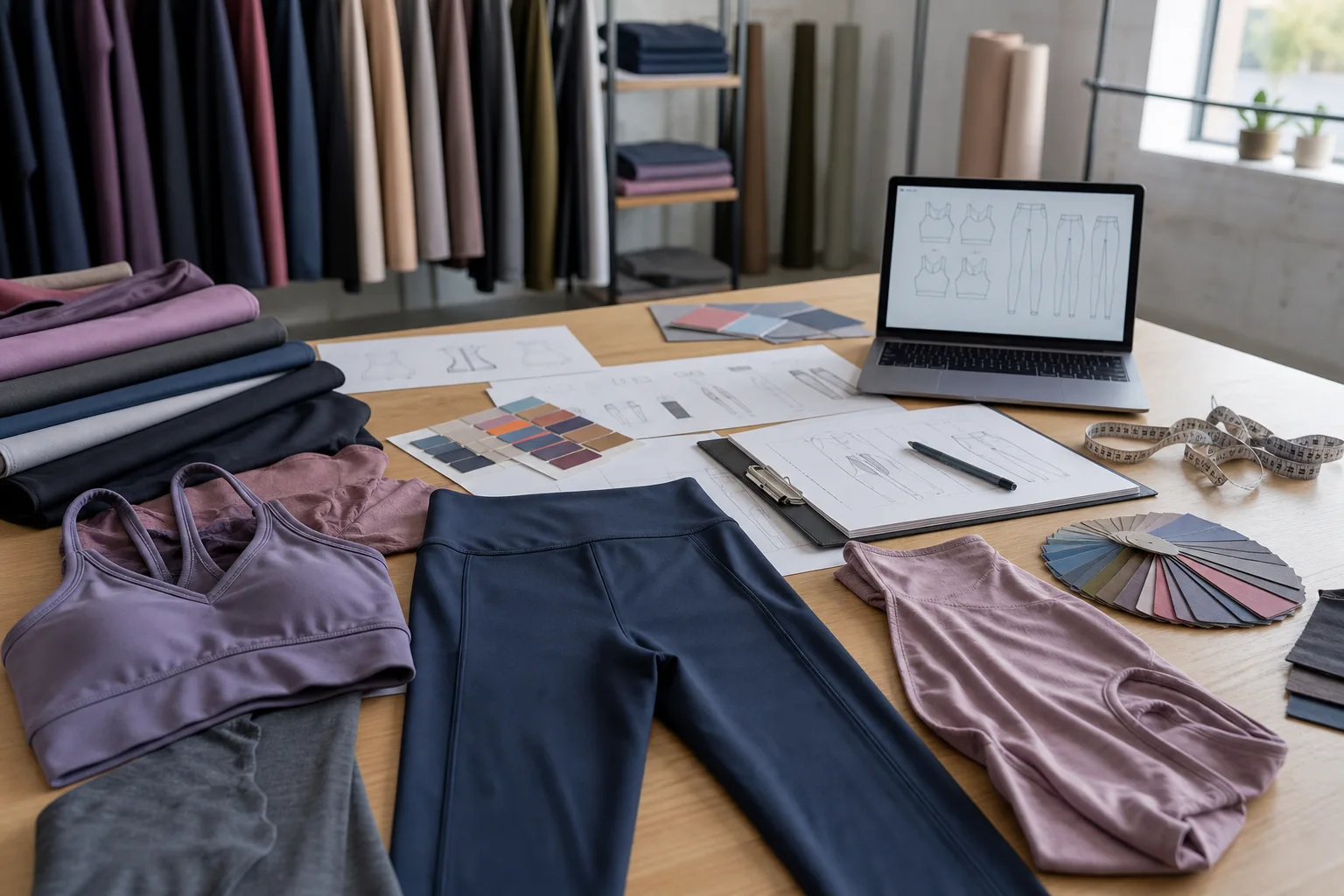
Production control path
Make workflow, quality checkpoints, material preparation, and delivery variables easy to understand.
Sourcing
Can the factory support the right construction route, such as seamless or cut-and-sew?.
Products
Ninghow Yoga is headquartered in Shenzhen, China, with company-owned production bases and production support in.
What scope can
Custom yoga apparel development based on buyer specifications, reference garments, or approved product direction.
Sourcing
Product type, intended fit, size range, quantity, branding, packaging, target market, and shipment destination.
Where buyers usually need visibility during manufacturing
A capable factory should provide defined approval points, especially for stretch garments where appearance alone is not enough. The sequence matters because later changes can affect materials, measurements, branding, and delivery planning. For inspection details after pre-production approval, check quality control stages and measurement inspection before confirming bulk release.
- Requirement review for product type, intended fit, size range, quantity, branding, packaging, target market, and shipment destination
- Fabric and construction review for composition, weight, stretch direction, recovery, opacity expectations, and logo method suitability
- Pattern or specification development based on the tech pack, reference sample, or approved measurements
- Sample development for the first physical review
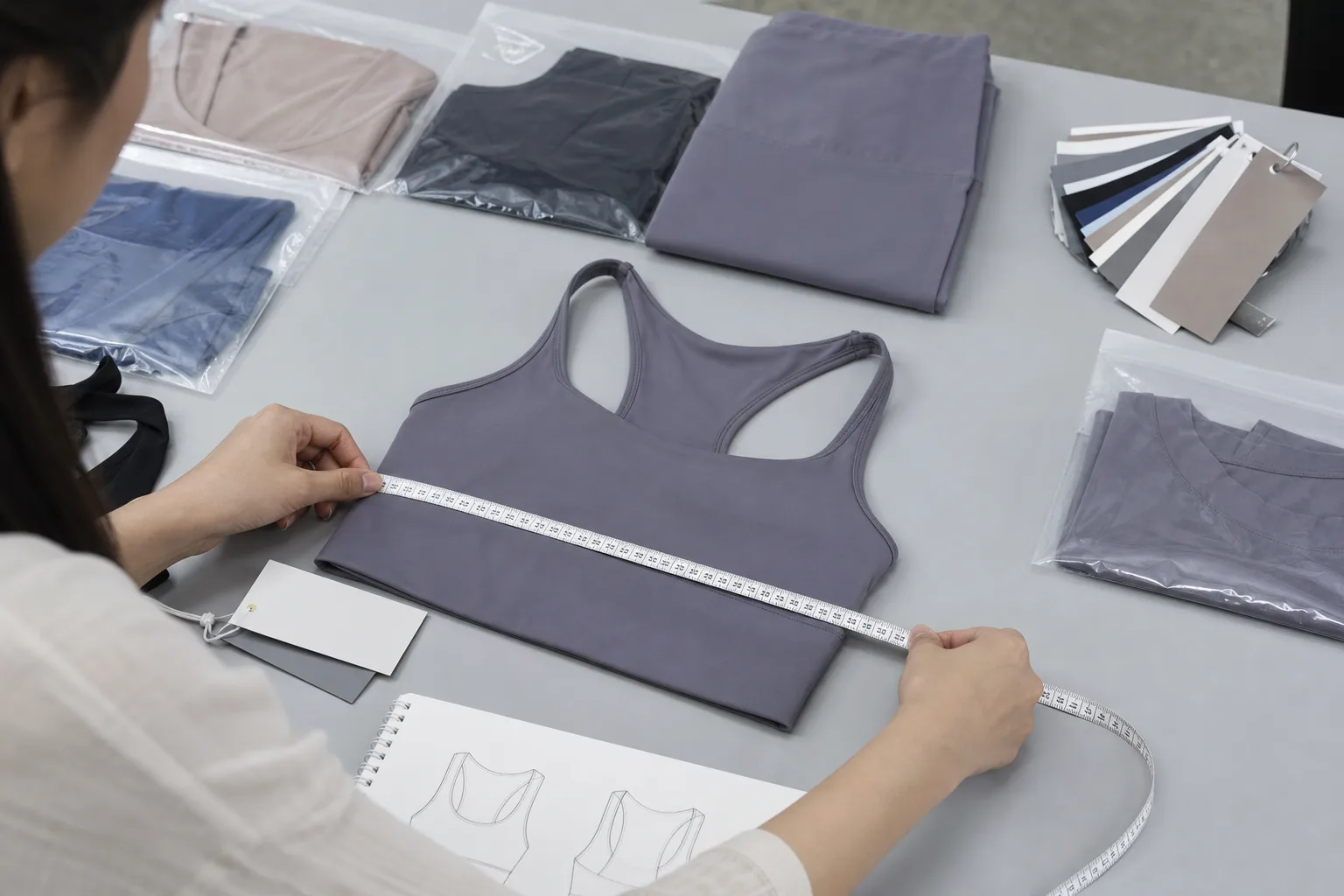
- Fit and measurement review to confirm how the garment fits against the body and whether the size strategy is workable
- Sample revisions if fabric, construction, logo placement, or grading needs adjustment
- Pre-production approval before bulk release
- Material readiness check for main fabric, trims, labels, and packaging items
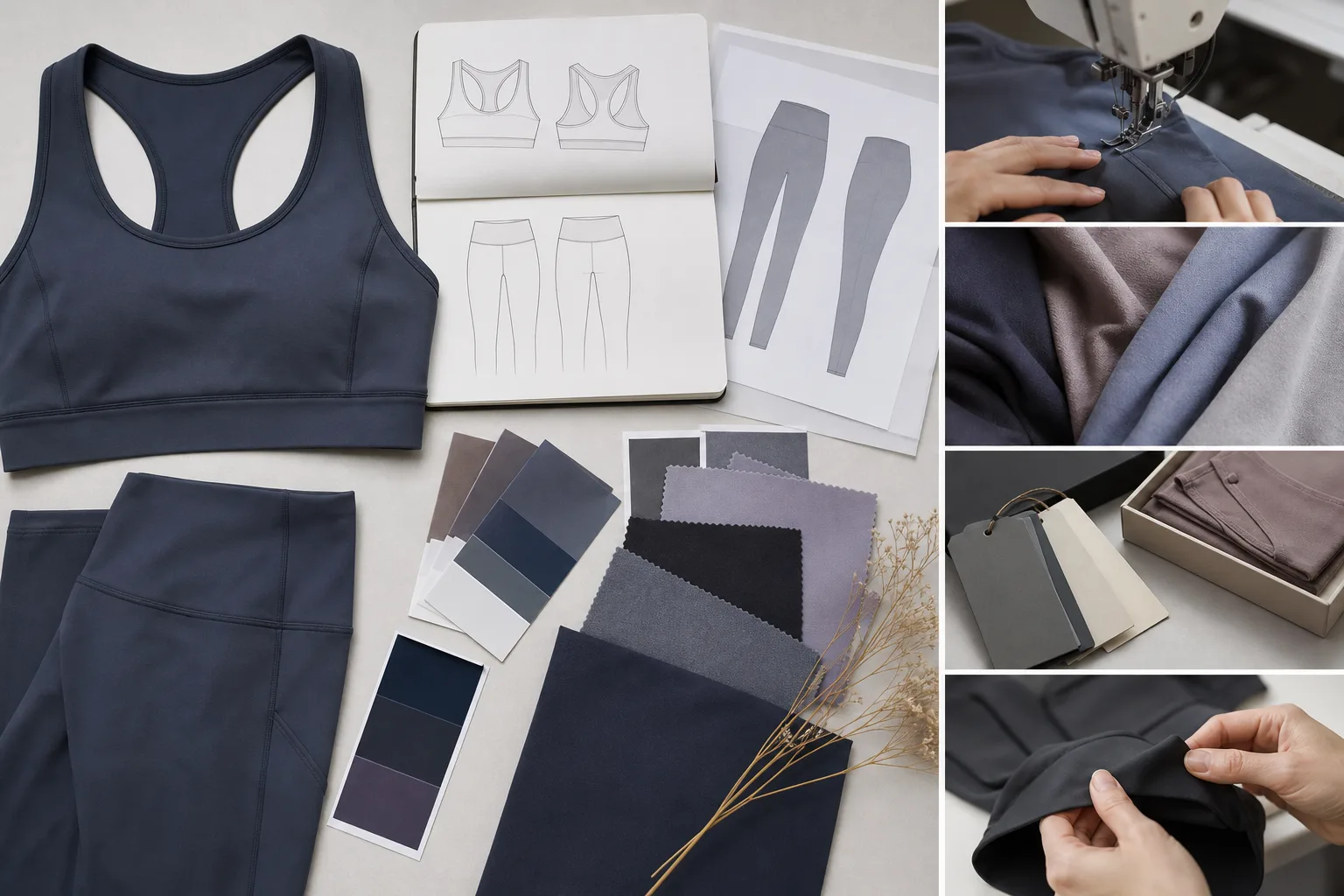
What manufacturing scope can be covered
Factory capability should match the garments you plan to source. Ninghow Yoga helps yoga and activewear categories that may include leggings, pants, shorts, bras, tops, sets, and selected specialized constructions depending on the project requirements. Buyers choosing between construction methods can compare cut-and-sew production with seamless production before approving the sample plan.
01
Planning
Material readiness, workmanship, inspection, and packing.
02
Private Label
Project requirements defines which factory-side checks should happen before the next approval stage.
03
Construction
Styles requiring panel shaping, seam placement, pockets, gussets, or mixed materials with timing, quality.
04
Construction
Projects that need body-mapped stretch zones or reduced seam construction, subject to style confirm as a.
05
Sampling
Pattern making, sample development, size grading, and pre-production detail confirmation defines which.
06
Quality
Understand.
Why the same factory may handle two activewear projects differently
Capability depends on the match between your product details and the current production plan. A basic legging order and a multi-style private label launch do not place the same demand on development, scheduling, or packaging control. Reference MOQ starts from 300 pieces. The final MOQ and size or color allocation depend on the product, fabric, construction, branding, and packaging.
- Fabric type and availability, especially when recycled materials, brushed finishes, or custom dyeing are requested
- Construction complexity, such as bonded details, pockets, contrast panels, padding, or seamless structures
- Number of SKUs, colors, and sizes included in the order
- Branding requirements, including heat transfer logos, woven labels, hang tags, care labels, and custom packaging
- Sample revision rounds before pre-production approval
- Order timing versus the current production schedule
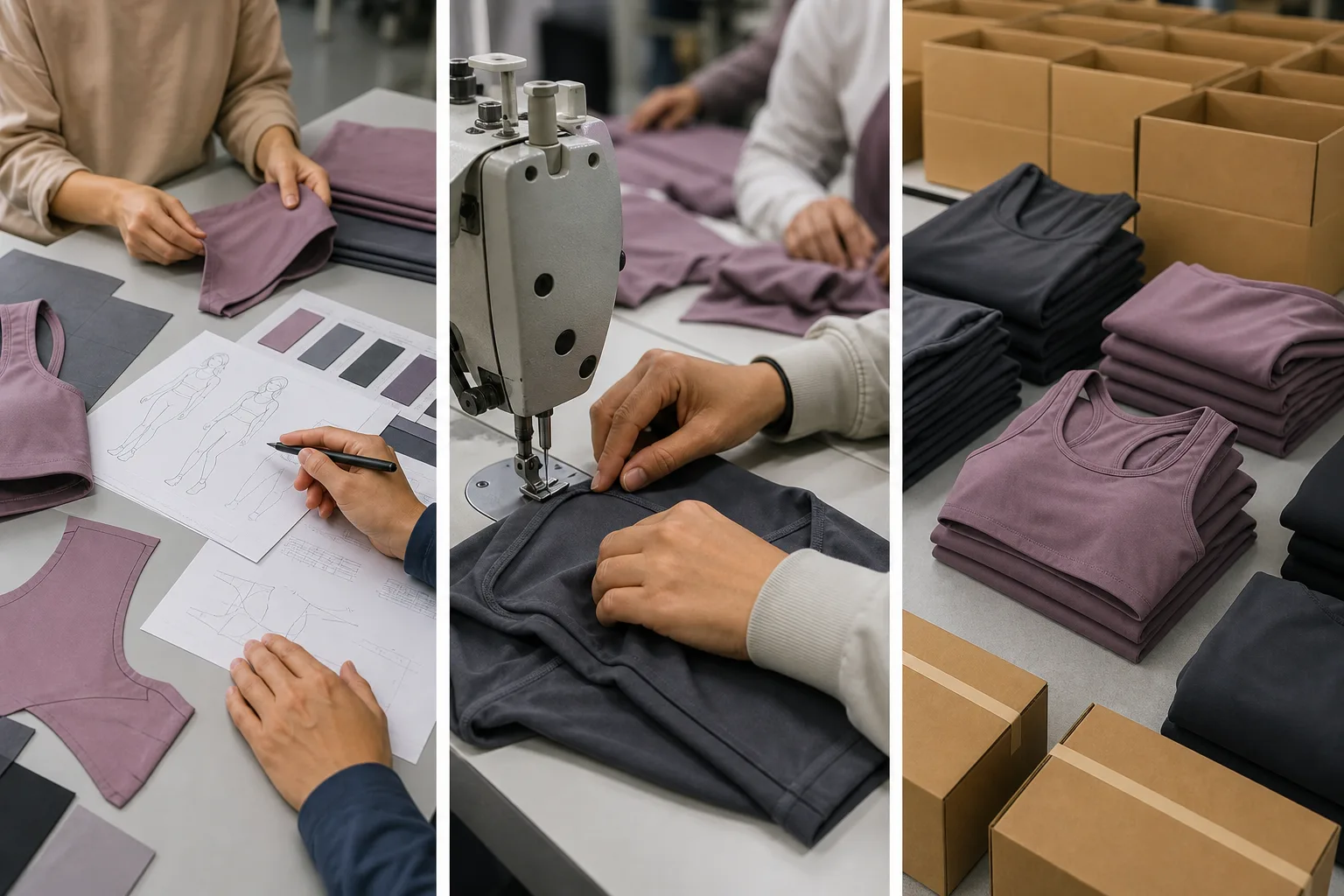
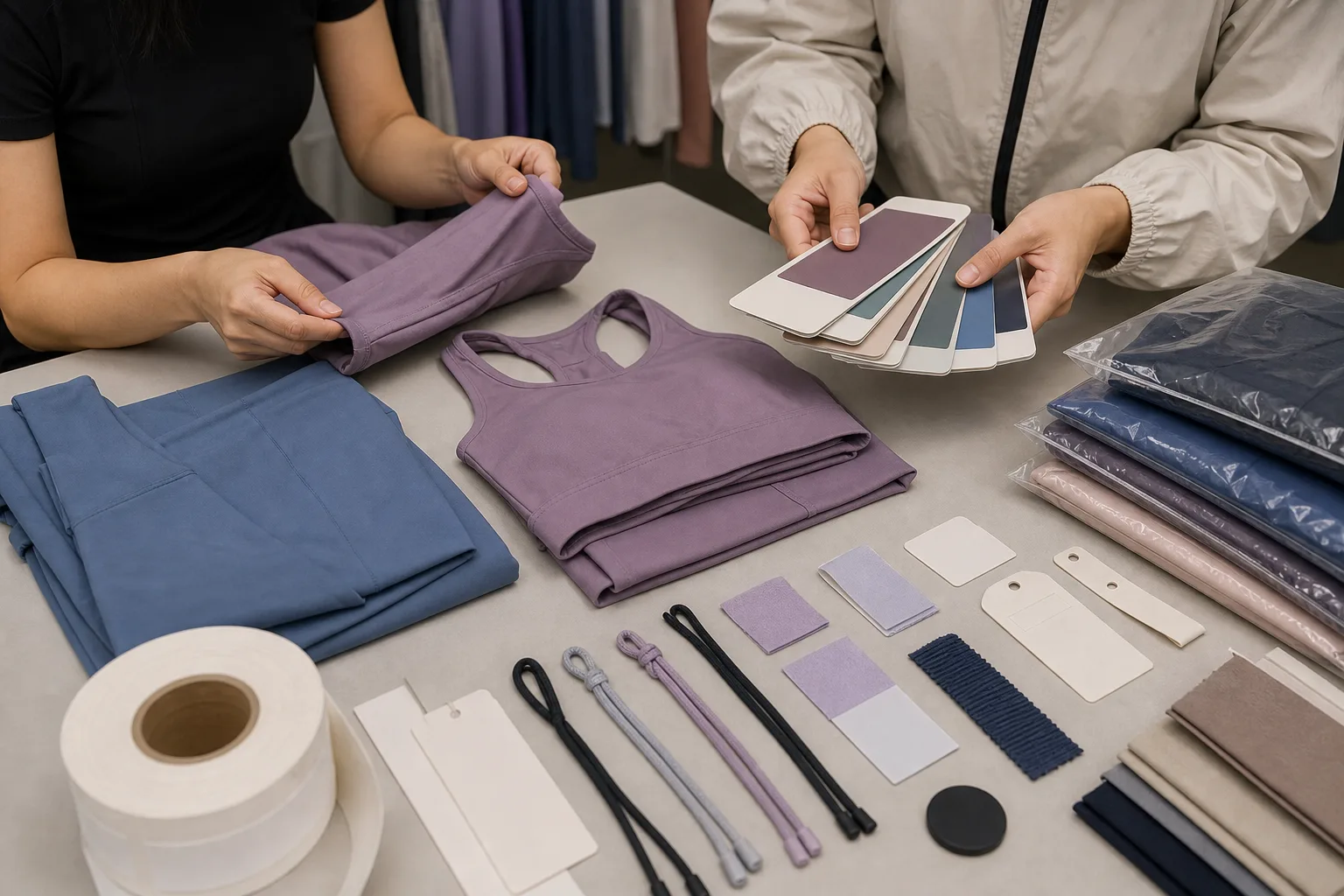
Examples of when factory capability becomes the deciding factor
A buyer may know they need leggings. Bras. And tops but still need help deciding which styles should use seamless construction and which should stay cut-and-sew for easier fit control. A collection with custom labels, packaging, size grading, and multi-SKU launch planning usually needs stronger coordination between development, bulk production, and packing review. Larger or repeat programs often require early discussion on line planning. Order split. Material readiness. And bulk timing rather than waiting until the sample is approved.
Reference sample time is around 5-7 days for standard samples and around 7-10 days for more complex samples. Reference bulk production time is around 20-35 days after approvals and material readiness. Final timing depends on product complexity, materials, branding details, revision rounds, order quantity, and the current production schedule.
- When the product is clear but the execution route is not
- A buyer may know they need leggings. Bras. And tops but still need help deciding which styles should use seamless construction and which should stay cut-and-sew for easier fit control.
- When a private label program includes several approval layers
- A collection with custom labels, packaging, size grading, and multi-SKU launch planning usually needs stronger coordination between development, bulk production, and packing review.
- When delivery planning depends on scale-up potential
Information that helps the factory review your project accurately
You do not need every detail to start, but better input usually leads to clearer technical review and a more accurate quotation. If you already have measurements and construction details, use Upload Your Tech Pack. If you need to review the factory setup and workflow first, the stronger next step is to schedule an online factory meeting.
- Product type, reference images, or tech pack
- Measurement chart or target size range
- Fabric preference, performance priorities, and color direction
- Logo artwork and preferred application method
- Label requirements, hang tags, barcode needs, and packaging preferences
- Estimated quantity by style
- Target market and shipment destination
- Target timeline and any known launch window
Answers buyers usually need before starting
Keep the project conversation practical with clear expectations around sampling, production and quotation inputs.
What does factory capability mean for a custom yoga apparel project?
It usually refers to the factory’s ability to manage development, sampling, construction choice, branding, size grading, bulk production, inspection support, and packaging in a controlled workflow. For yoga apparel, stretch fabric behavior, fit review, and measurement checkpoints are often as important as sewing output.
Does Ninghow Yoga support both seamless and cut-and-sew production?
The project scope may include both seamless yoga wear and cut-and-sew activewear, depending on the product requirements. The suitable route should be confirmed after reviewing the style, fabric, fit target, branding details, and sample expectations.
What is the MOQ when evaluating factory capability for a new style?
Reference MOQ starts from 300 pieces. The final MOQ and size or color allocation depend on the product, fabric, construction, branding, and packaging.
What information should we send before asking for a factory review or quotation?
Useful inputs may include product type, reference images or a tech pack, measurement chart, fabric preference, logo details, labels, packaging needs, estimated quantity, target market, and shipment destination. The more complete the information is, the easier it is to review workflow and quotation variables.
How long do samples and bulk production usually take?
Standard samples are often around 5-7 days, while more complex samples may take around 7-10 days. Reference bulk production is often around 20-35 days after approvals and material readiness. Final timing depends on construction, fabric availability, revisions, branding details, order quantity, and the current production schedule.
Can inspection support be arranged during production?
Quality-control review, AQL-based inspection support, and third-party inspection support may be arranged when required. The exact inspection points should be confirmed according to the garment type, approval standard, and destination-market requirements.
Review your production plan before bulk order.
Send the project stage, confirmed materials, expected quantity, packing needs, and target shipping window so the team can discuss production feasibility.