Products
What is reviewed: Style details, construction points, measurement logic, fabric direction.
Why it matters to buyers: Reduces avoidable changes after sample approval.
Ninghow Yoga supports B2B yoga apparel manufacturing for brands, sourcing teams, and private label buyers that need development, production, inspection, and shipment coordination in one managed process. Compare production methods, understand approval stages, and prepare the right information before moving a project into sampling or bulk production.
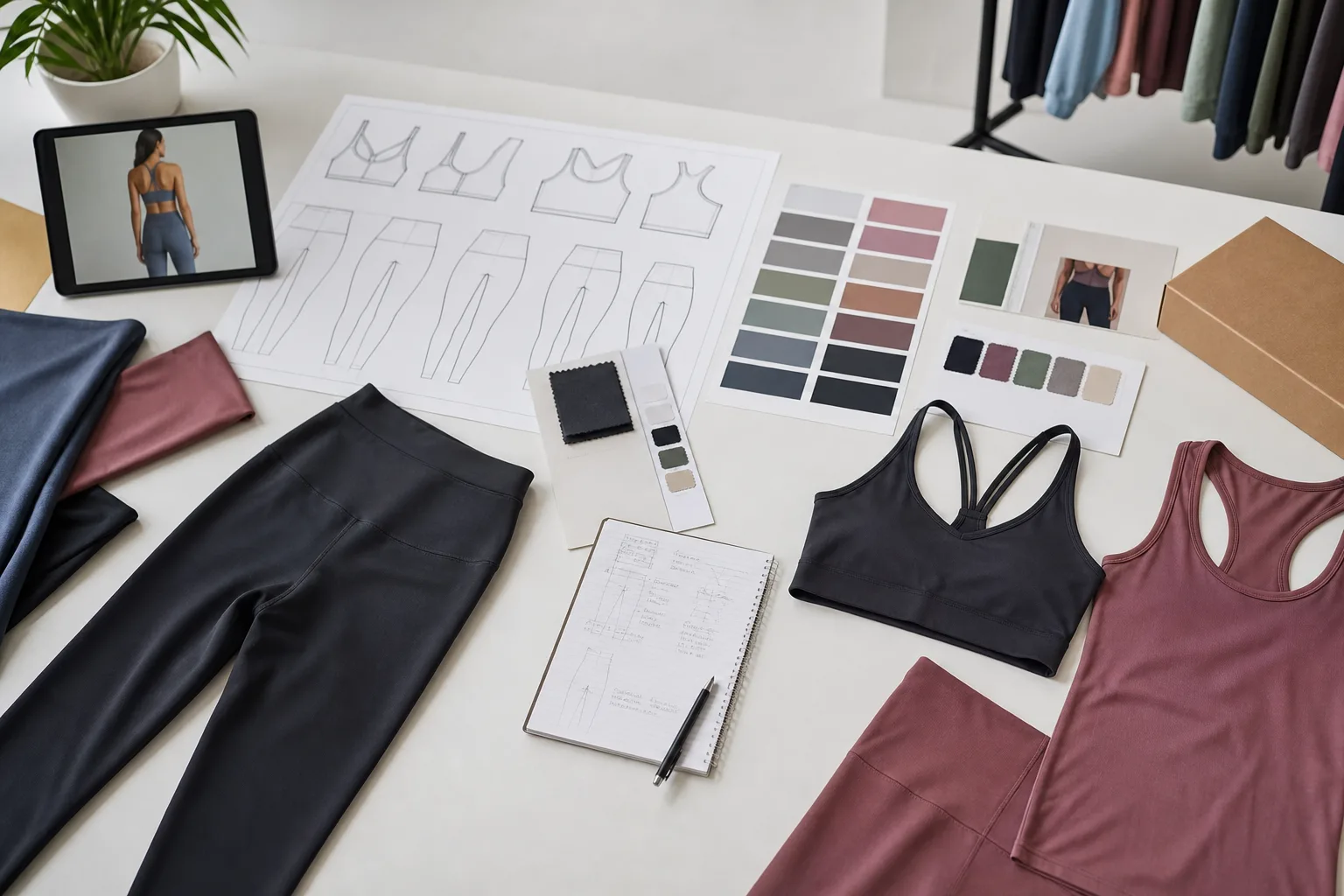
Make workflow, quality checkpoints, material preparation, and delivery variables easy to understand.
Scope and workflow, then compare production capacity for quantity and scheduling factors.
Close-fitting yoga and training styles.
Requirement confirm.
Fabric appearance, color consistency, and hand feel confirm before cutting or production release.
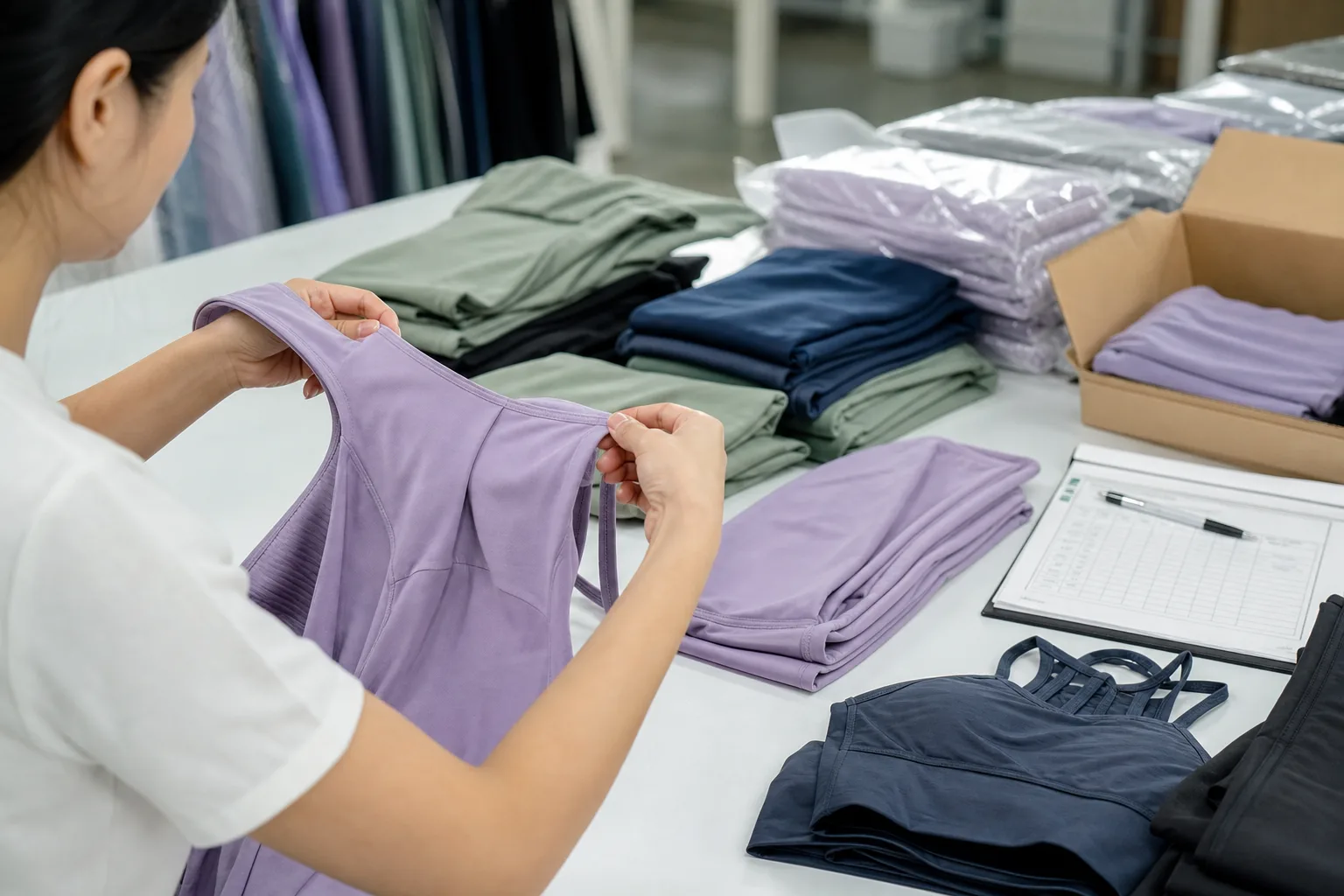
Yoga apparel manufacturing is not only about sewing garments. It includes development review, fabric and construction checks, sample approval, bulk planning, in-line inspection, final inspection, and packing review before shipment coordination. Buyers usually need visibility on these checkpoints before confirming quantities, colors, branding details, and delivery plans.
For yoga apparel projects, the manufacturing route often depends on: If the product direction is still being defined, it helps to compare OEM yoga apparel requirements with ODM activewear development before requesting the next manufacturing step.
Material readiness, workmanship, inspection, and packing.
Construction method, including seamless or cut-and-sew defines which factory-side checks should happen before.
Understand.
Material readiness, workmanship, inspection, and packing.
Order structure across sizes, colors, and sku count defines which factory-side checks should happen before the.
The process is easier to manage when buyers know what to confirm before the next stage.
You do not need to submit every document to start the discussion, but clearer inputs usually lead to a more accurate manufacturing review and quotation. If the style package is complete, send it through Upload Your Tech Pack. If the project is still at concept or reference stage, start with Get OEM/ODM Consultation so the manufacturing route can be defined before sampling.
Some buyers need to evaluate process control first. Others already have a style package and need a quotation. The next step depends on how complete the project information is today.
Production method changes the development path, the sample review points, and the bulk planning requirements. For many activewear programs, the main decision starts with whether the garment should be made through seamless production or cut-and-sew production. Compare seamless production with cut-and-sew production if the collection includes different fabric, silhouette, or performance goals.
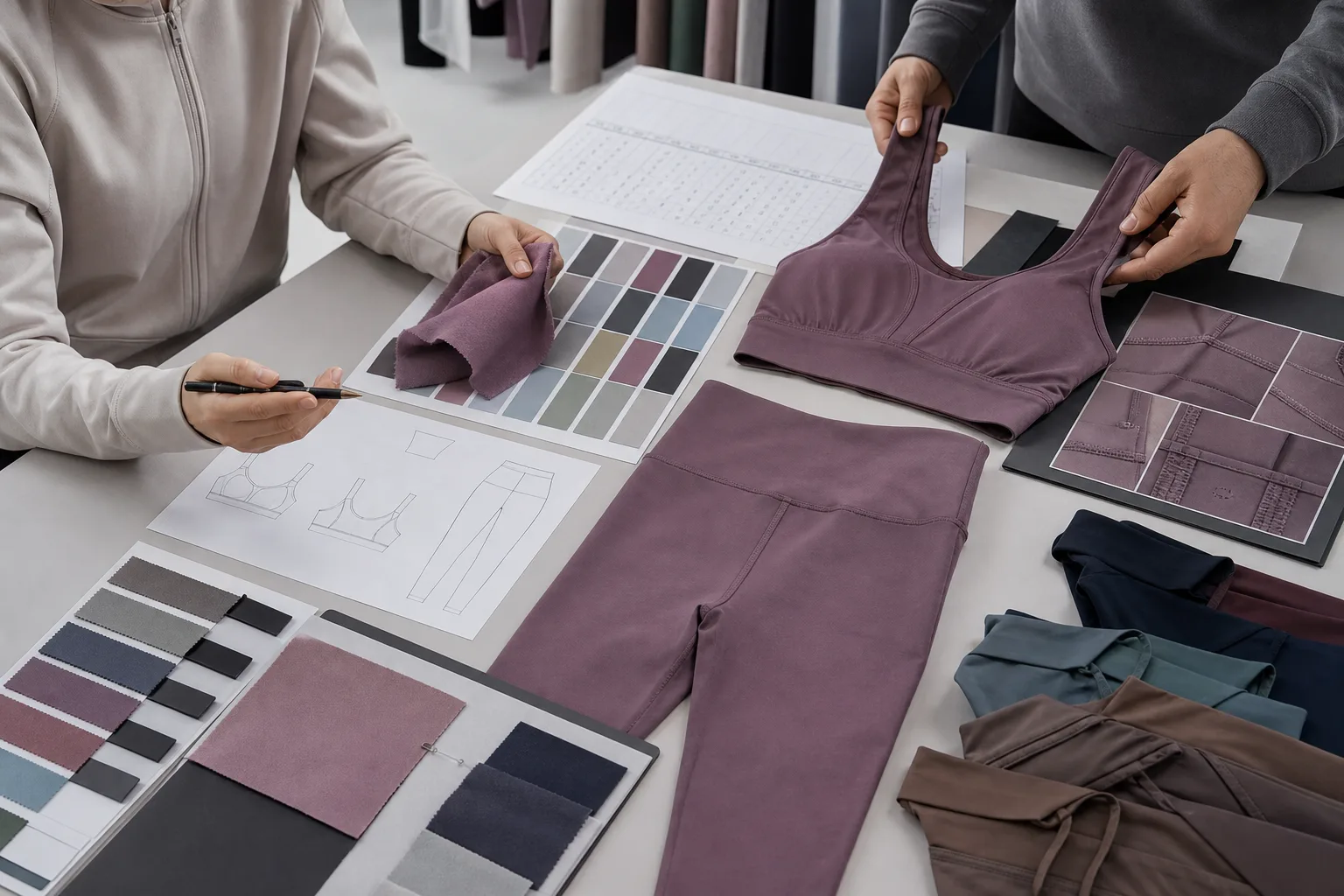
Ninghow Yoga helps manufacturing activities that connect early product decisions with bulk execution. This is useful when a buyer needs one team to review product specifications, coordinate samples, follow production progress, and prepare orders for export. Buyers comparing manufacturing capability in more detail can review factory capabilities for scope and workflow, then compare production capacity for quantity and scheduling factors.
What is reviewed: Style details, construction points, measurement logic, fabric direction.
Why it matters to buyers: Reduces avoidable changes after sample approval.
What is reviewed: Fit, workmanship, branding placement, material match.
Why it matters to buyers: Creates a clearer approval basis before bulk release.
What is reviewed: SKU count, quantity allocation, material readiness, schedule fit.
Why it matters to buyers: Helps buyers check whether the order structure is practical.
What is reviewed: In-line confirm, measurement checks, branding checks, final inspection.
Why it matters to buyers: Supports defined control points across production stages.
What is reviewed: Folding method, label match, carton marks, export coordination.
Why it matters to buyers: Helps avoid late packaging or shipping changes.
Most yoga apparel orders move more smoothly when approval points are defined in order. A typical manufacturing flow may include the following stages, with final timing depending on the product, materials, branding details, and current production schedule. Standard samples may take around 5–7 days, while more complex samples may take around 7–10 days. Bulk production is often in a reference range of around 20–35 days after approvals and material readiness. Final timing depends on specification completeness, fabric availability, construction, branding methods, revision count, order quantity, and the production schedule that applies when the order is confirmed.
If your team needs a deeper view of stage-by-stage execution, review the product development process and the steps from sampling to bulk production before confirming the order plan.
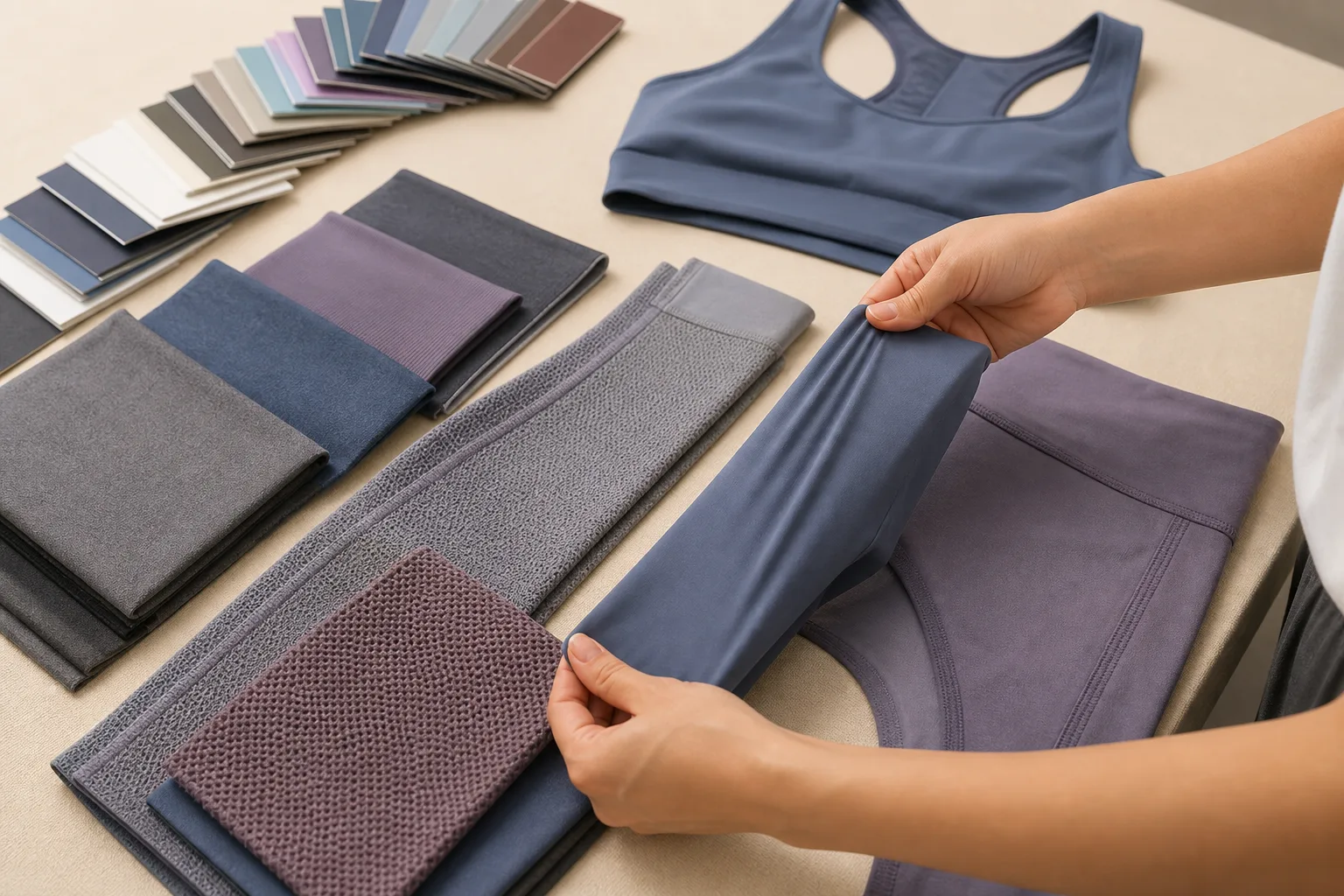
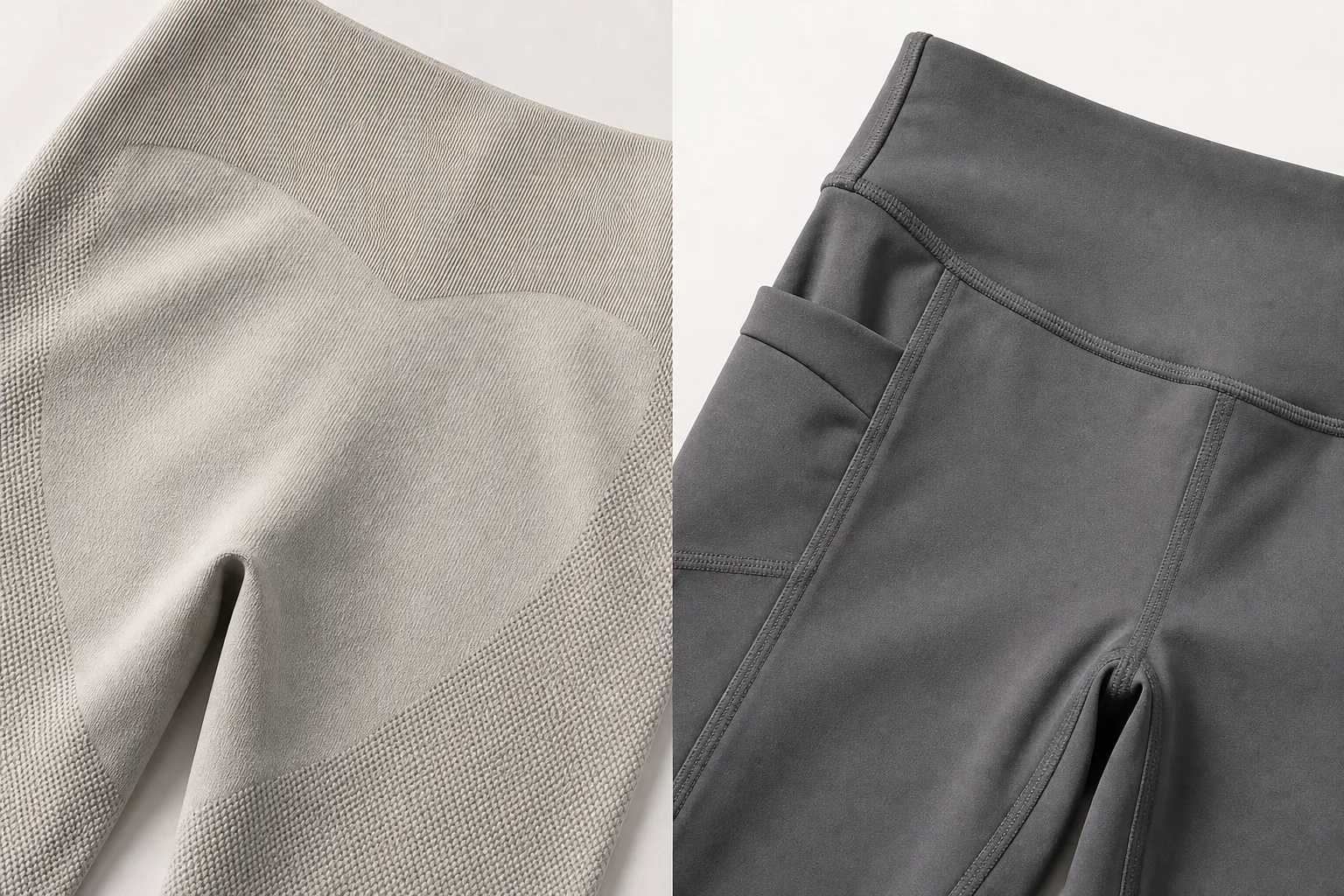
Yoga apparel most teams focus on a smaller group of production risks than in general apparel. The most relevant checks depend on the garment category and fabric behavior, but common review points include: Buyers who want to separate process inspection from material evaluation can compare quality control, fabric testing, and measurement inspection before bulk release.
Manufacturing planning should be reviewed at order level, not only at style level. Ninghow Yoga has company-owned production bases and production support in Shenzhen. Zhongshan. And Jiangxi. With development. Production coordination. Sewing. Finishing. Packaging. And larger-order capacity planning supported across these functions. Around 350 people. Approximately 10–15 production lines. And a reference monthly capacity of about 80,000–120,000 pieces may support different project types. But actual allocation depends on product complexity. Material readiness. SKU count. And the live schedule at the time of booking.
Reference MOQ starts from 300 pieces. The final MOQ and size or color allocation depend on the product. Fabric. Construction. Branding. And packaging.
Buyers often run into avoidable delays when they split smaller orders across too many colors or sizes. Or when packaging details are approved too late for the production plan. Early alignment on SKU structure and packing method usually gives a clearer production schedule.
Compare related service, product, and contact options when you are ready to move forward.
Keep the project conversation practical with clear expectations around sampling, production and quotation inputs.
Yoga apparel projects move through development review, sample coordination, bulk planning, inspection stages, packaging review, and shipment coordination. The goal is to help buyers compare manufacturing control points before choosing the next step.
Yes. The project route may include seamless production, cut-and-sew production, or a mix of both depending on the garment category, fit requirements, fabric behavior, and construction details that need to be achieved.
Reference MOQ starts from 300 pieces. The final MOQ and size or color allocation depend on the product, fabric, construction, branding, and packaging.
Standard samples may take around 5–7 days, and more complex samples may take around 7–10 days. Bulk production is often in a reference range of around 20–35 days after approvals and material readiness. Actual timing depends on the specifications, materials, revisions, order quantity, and current production schedule.
Helpful inputs may include product type, reference images or a tech pack, measurement chart, fabric preference, logo details, label and packaging requirements, estimated quantity, target market, timeline, and shipping destination. The more complete the information, the easier it is to confirm the manufacturing route.
AQL-based inspection support and third-party inspection support may be arranged when required. The scope, timing, and standard used should be confirmed for each project.
Send the project stage, confirmed materials, expected quantity, packing needs, and target shipping window so the team can discuss production feasibility.