Heat transfer
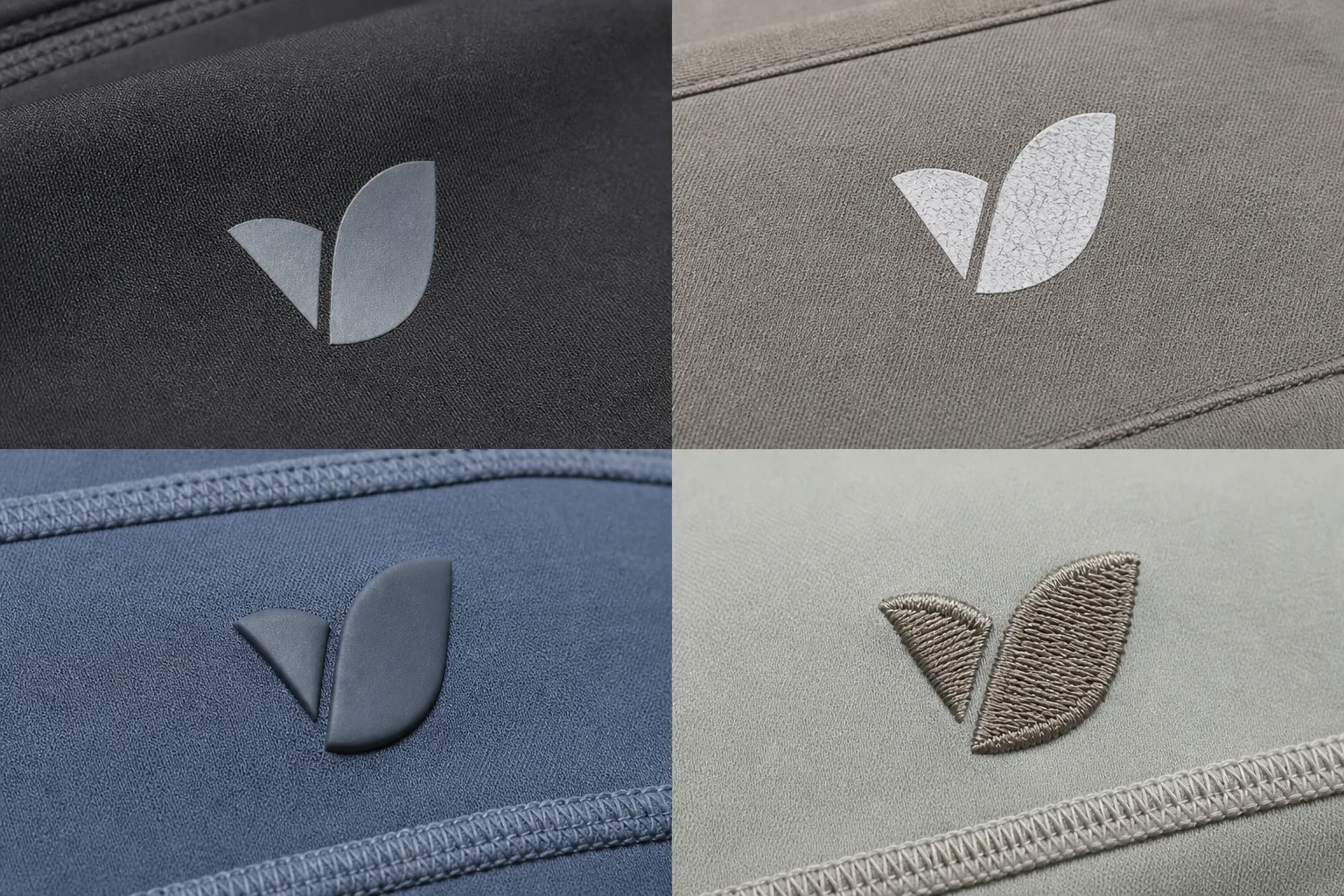
Common use: Clean logos on smooth activewear surfaces.
What buyers should check: Stretch response, edge finish, placement accuracy.
Typical consideration: May vary by fabric texture and recovery.
Logo application explains one customization workflow so buyers can tell what input is needed, what gets confirmed, and what affects approval speed. It turns a developed garment into a branded product for yoga apparel and activewear. The right method depends on fabric stretch, garment position, logo size, color detail, and how the item is expected to move and recover during wear. Ninghow Yoga supports logo application as part of custom manufacturing projects, with buyer review points for artwork, placement, hand feel, durability expectations, and sample approval before bulk production.
Match your order model, launch timing, and sourcing maturity with a practical production route.
Line thickness, color detail, and file quality.
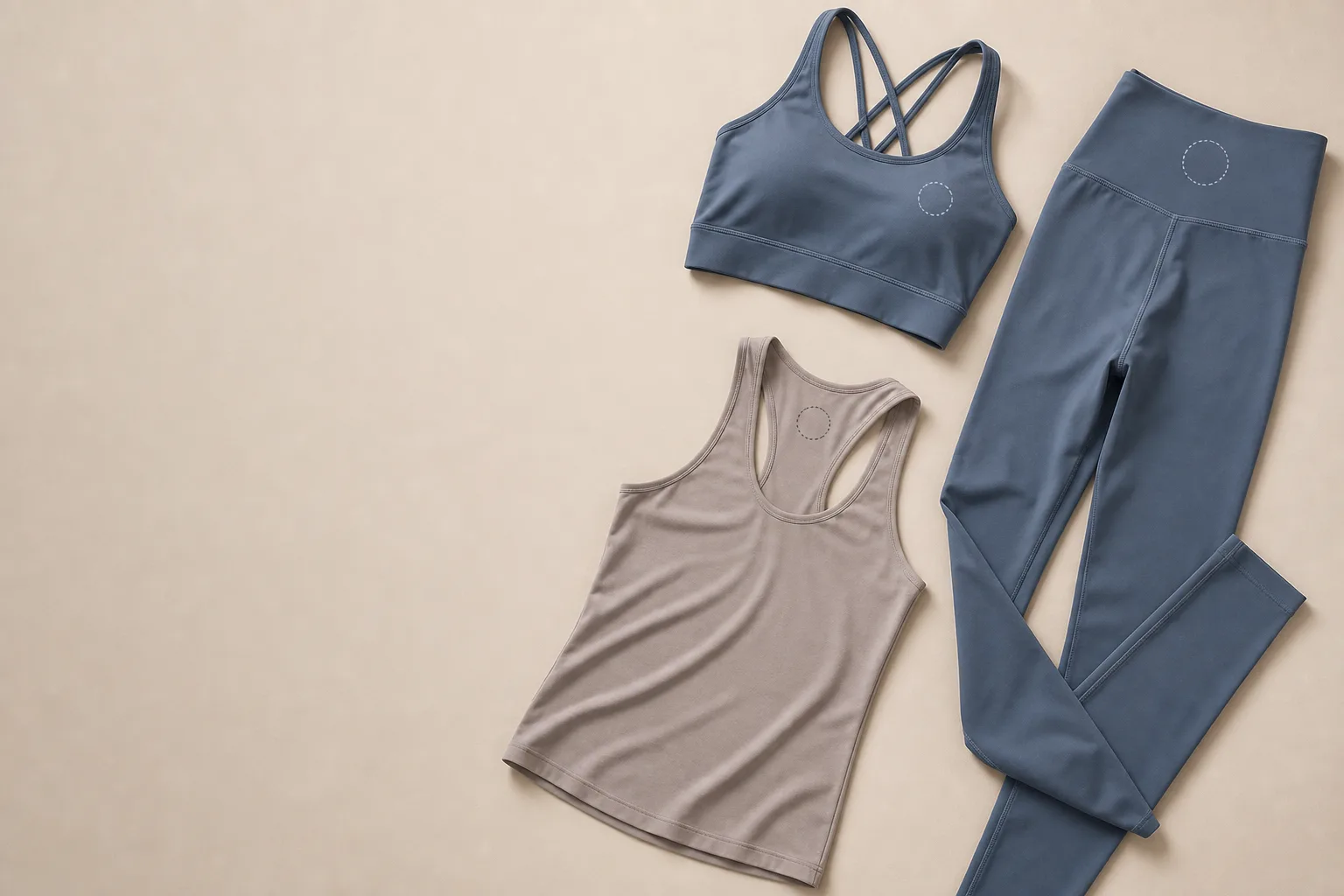
Different methods. A small chest logo on a yoga bra may need a different approach than a waistband logo on.
Back waistband or hip area on leggings and shorts.
Stretch direction affects how the logo reacts during wear.
Logo placement changes how branding is seen in retail images, studio wear, and movement. It also affects application difficulty on curved seams, waistbands, rib areas, and high-stretch panels. If your project also includes neck labels, wash labels, and retail presentation, review private label yoga apparel support together with logo application.
Logo application covers more than adding artwork to a finished garment. It includes choosing a suitable branding method, confirming placement, reviewing fabric compatibility, and checking how the logo performs after application and garment handling. If the garment material is still under review, it helps to check fabric sourcing options before confirming the branding method.
Line thickness, color detail, and file quality affects product mix, MOQ expectations, packaging details, and.
Method selection based on fabric type, stretch level, and logo effect helps sourcing teams choose consultation,.
Placement confirm on leggings, bras, tops, shorts, sets, and outer layers connects the buyer scenario with the.
Size, position, appearance, and hand feel affects product mix, MOQ expectations, packaging details, and brief.
Logo consistency, placement, and packaging presentation helps sourcing teams choose consultation, samples,.
Different garments and brand directions call for different methods. A small chest logo on a yoga bra may need a different approach than a waistband logo on leggings or a back-neck logo on a fitted top. For products that need yoga-specific fit and stretch review, sample the branding together with the garment rather than approving the logo in isolation.
Common use: Clean logos on smooth activewear surfaces.
What buyers should check: Stretch response, edge finish, placement accuracy.
Typical consideration: May vary by fabric texture and recovery.
Common use: Simple graphics or larger branding areas.
What buyers should check: Ink feel, opacity, color match, cracking risk.
Typical consideration: Artwork detail and print area affect suitability.
Common use: Dimensional brand presentation.
What buyers should check: Thickness, flexibility, adhesion on stretch fabric.
Typical consideration: Needs careful confirm on high-stretch zones.
Common use: Selected outer layers or lower-stretch positions.
What buyers should check: Backing, stitch density, fabric distortion.
Typical consideration: Some lightweight compression fabrics.
Common use: Special branding accents.
What buyers should check: Attachment method, edge comfort, garment weight.
Typical consideration: Works better on some categories than others.
The same logo can perform differently on brushed leggings, slick interlock, rib fabric, seamless garments, or lightweight tanks. Fabric composition alone is not enough to choose the method. Projects with engineered knit zones or body-mapped structures should also check seamless production details before confirming logo positions.
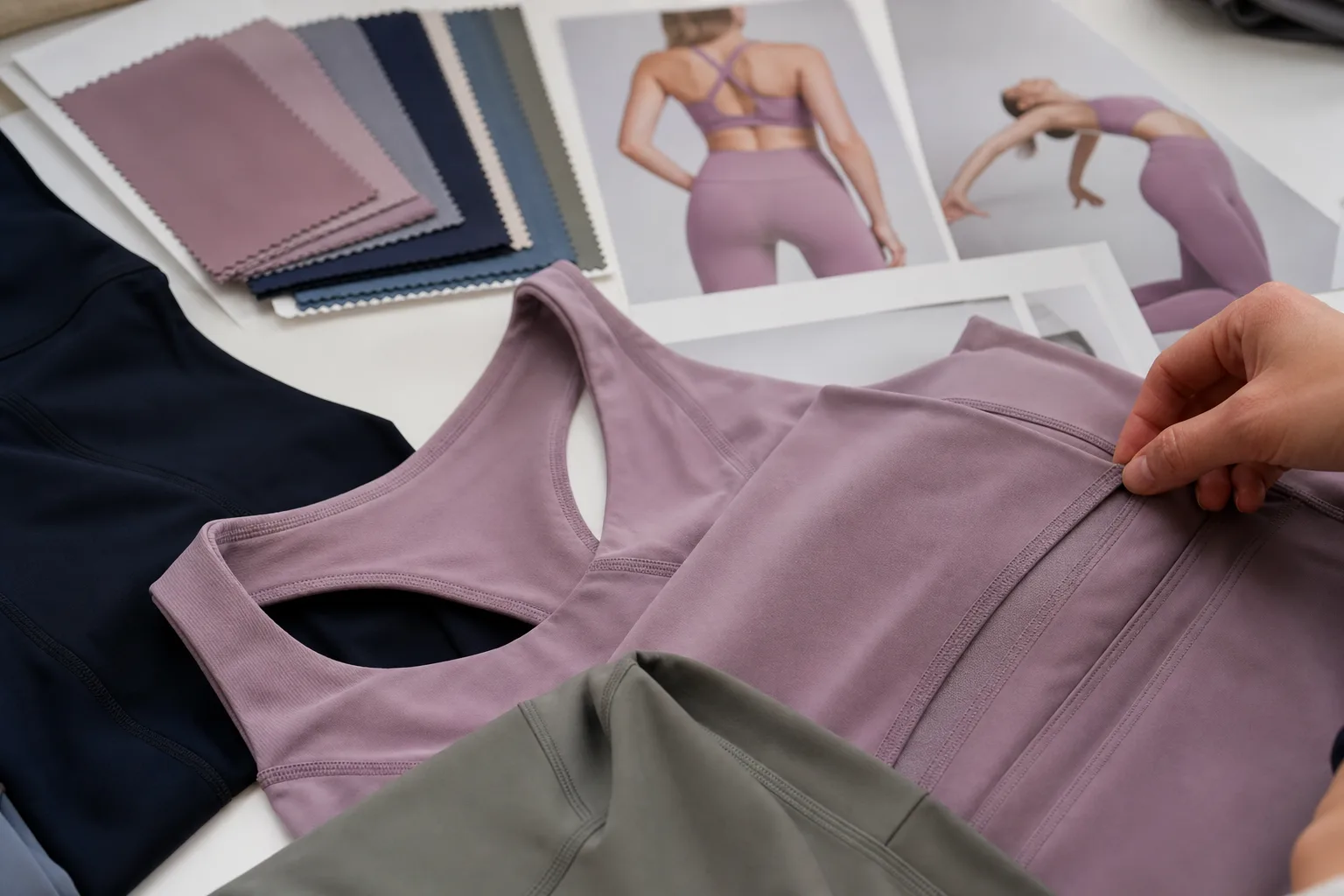
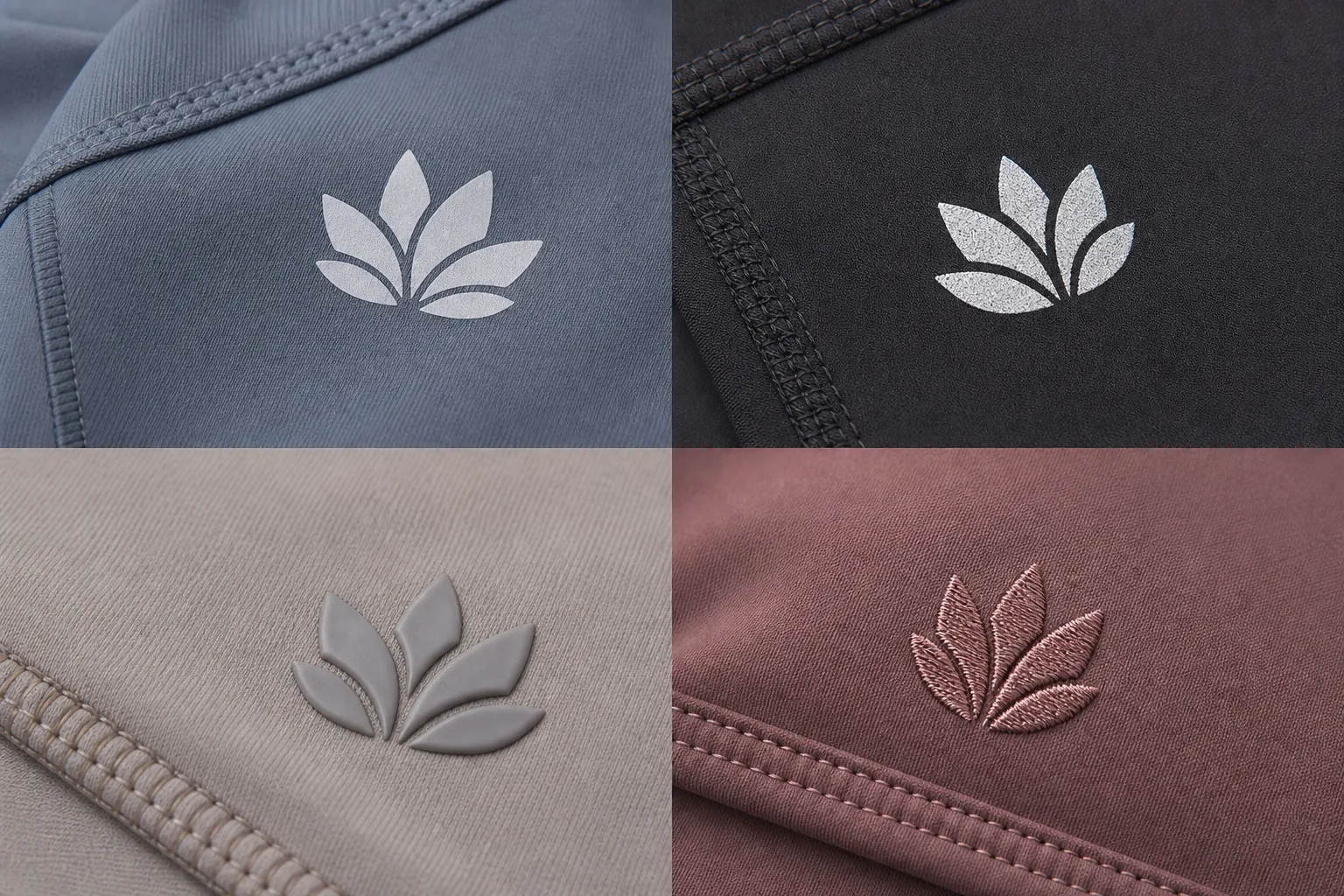
Logo approval should happen on the intended garment or on a fabric panel that closely matches the approved material. This helps reduce surprises after pre-production release. For projects still being developed from sketches or reference garments, sample development is usually the better next step than going straight to quotation.
A clearer approval path usually includes artwork confirmation, placement notes, a branded sample, and a pre-production check before bulk release. Buyers who also need packaging alignment can review custom packaging options before final approvals.
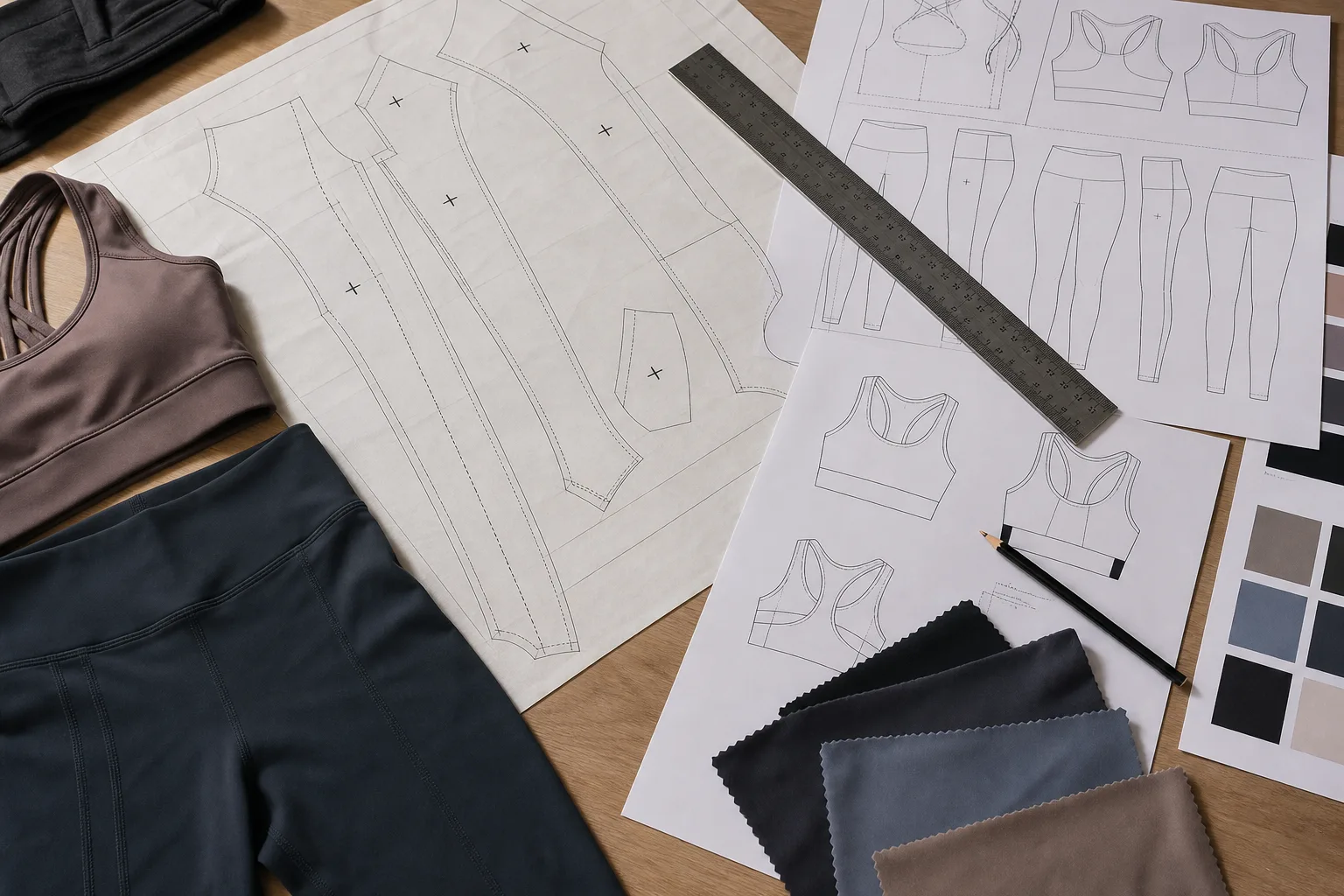
The process is easier to manage when buyers know what to confirm before the next stage.
You do not need every detail at the start, but clearer inputs lead to a more accurate project-specific quotation and sample recommendation. Reference MOQ starts from 300 pieces. The final MOQ and size or color allocation depend on the product. Fabric. Construction. Branding. And packaging. Sample timing often depends on artwork clarity. Fabric availability. Application method. And revision needs. Standard samples are often around 5-7 days, while more complex sample work may take around 7-10 days. Bulk production timing should be confirmed during quotation and usually depends on order details, approvals, and the current production schedule.
If you already have confirmed artwork and a developed garment specification. Send your file set through Upload Your Tech Pack for review. If you have reference garments. Logo ideas. Or partial specifications but still need to compare methods. Placements. Or fabric compatibility. Use Request Samples to evaluate branding on the intended product. If the collection is still being developed. Start with Get OEM/ODM Consultation to align garment development. Logo application. Labels. And packaging. Sampling.
Keep the project conversation practical with clear expectations around sampling, production and quotation inputs.
The best method depends on the garment, fabric stretch, logo size, placement, and visual effect required. Heat transfer, print, silicone effects, embroidery, or badge applications may each suit different projects, so sample review is recommended before bulk approval.
Sometimes, but not always. Different fabrics, panel shapes, and stretch levels can change how a logo performs. Multi-style collections often need method or placement adjustments by product category.
Helpful inputs include product type, reference images or tech pack, fabric information, logo artwork, preferred placement, estimated quantity, and target market. If some details are still open, sample review can help narrow the right method.
Reference MOQ starts from 300 pieces. The final MOQ and size or color allocation depend on the product, fabric, construction, branding, and packaging.
Timing depends on specification completeness, fabric availability, logo method, and revision needs. Standard samples are often around 5-7 days, while more complex sample work may take around 7-10 days.
Yes. Buyers usually review artwork, method, placement, and appearance during sampling, then confirm final details before pre-production release. Additional in-line, final, AQL-based, or third-party inspection support may be arranged when required.
Tell us whether you are building a brand launch, studio retail program, e-commerce assortment, or wholesale order so the team can suggest a practical path.