Individual bag
Typical use: Basic garment protection and unit separation.
Buyer decisions to confirm: Material type, closure, vent holes, warning text, size sticker.
Risk if left unclear: Folded garment or missing retail details.
Custom packaging explains one customization workflow so buyers can tell what input is needed, what gets confirmed, and what affects approval speed. It helps activewear brands present products clearly, protect garments in transit, and match channel requirements for retail, e-commerce, studio sales, or wholesale delivery. Ninghow Yoga supports packaging development as part of a broader apparel project, including poly bags, boxes, inserts, size stickers, barcodes, care labels, hang tags, and outer carton requirements according to approved specifications.
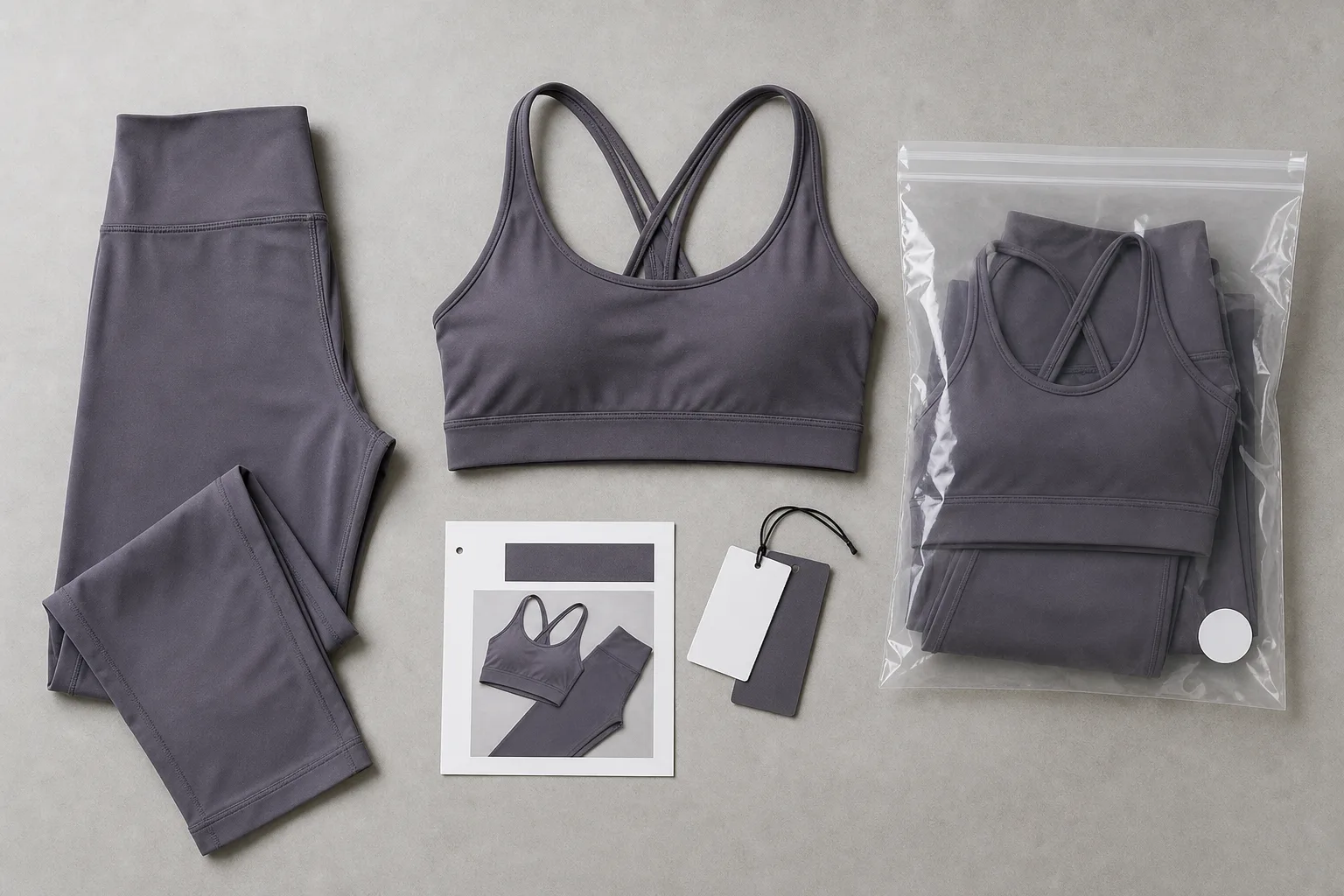
Separate confirmed details from development needs, required files, and sample references.
ConfirmRisk if left unclear.
Confirm product style, color range, size range, and branding direction.
Simple packaging usually requires fewer approval points than multi-piece branded packaging sets.
Garment type and folded dimensions if available.
For yoga apparel and private label activewear, packaging is more than a final add-on. It affects how each item is folded, identified, grouped, shipped, and received. Good packaging planning reduces confusion at the packing stage and helps buyers avoid last-minute changes after sample approval.
Packaging development may include: Packaging should be confirmed alongside the garment, not after bulk production has already been arranged. Buyers often need to approve how the product is folded. What goes inside each unit. How the outside label reads. And how mixed sizes or colors are packed into cartons.
Confirm individual garment packaging such as poly bags, zip bags, paper wraps, or belly bands early so.
Brand presentation items such as hang tags, insert cards, thank-you cards, or tissue paper separates confirmed.
Retail and warehouse identification such as size stickers, sku labels, barcodes, carton marks, and assortment.
Confirm label coordination with private label yoga apparel requirements early so sampling, branding, pricing,.
Logo positioning aligned with logo application and approved artwork separates confirmed details from decisions.
Carton packing details that should match the bulk shipping plan reviewed under packaging and shipment affects.
Packaging decisions should move in a clear order. Once the garment specification is settled, buyers can review label content, artwork, barcode structure, fold method, and carton instructions before bulk packing begins. Across sample approval, bulk production, and final packing, buyers usually want checkpoints for garment presentation, label accuracy, logo consistency, barcode readability, and quantity matching. If fabric, branding, or sizing is still under review, it is often better to settle those first through sample development and colors and size grading.
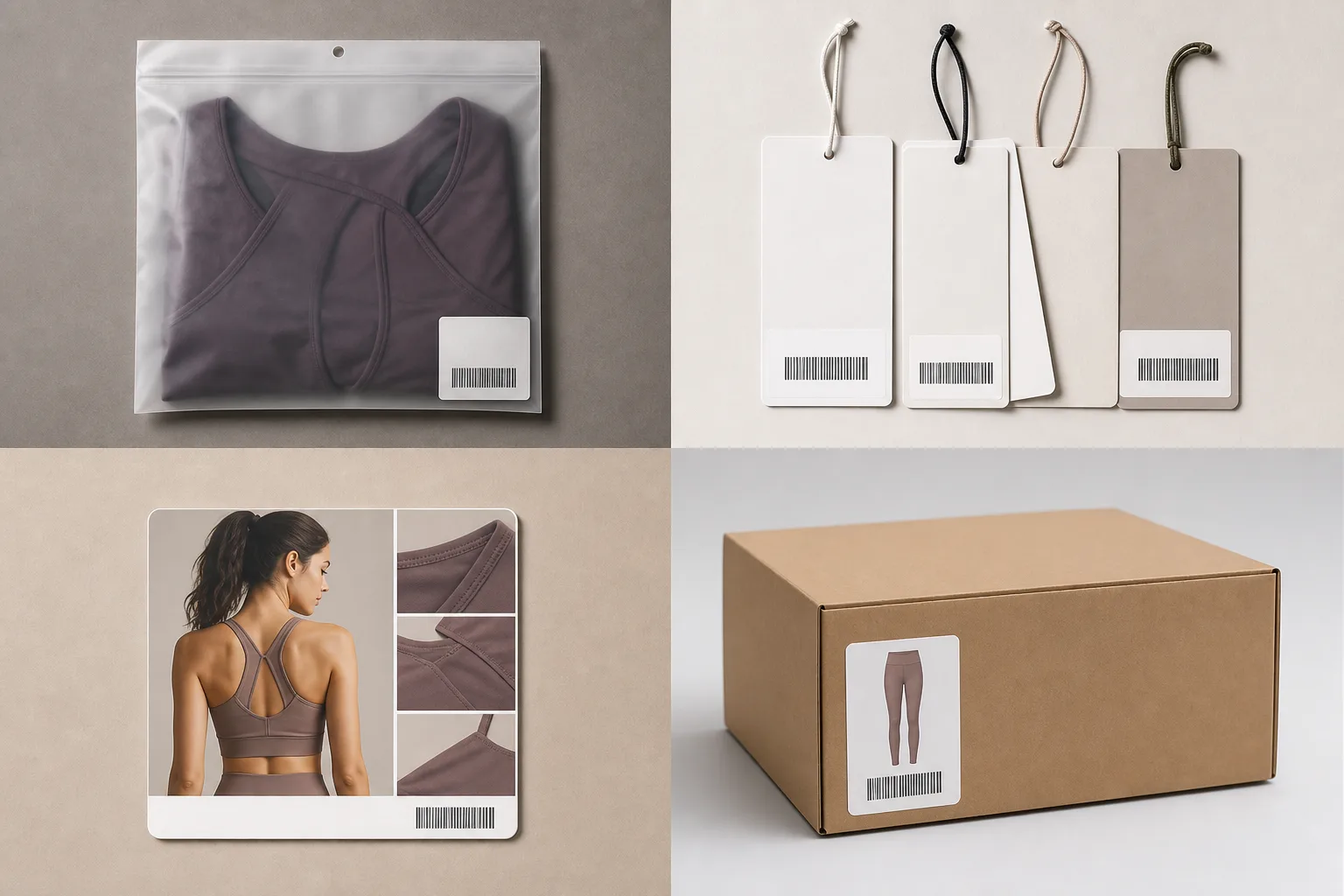
The right packaging format depends on where the garment goes next. A yoga studio starter collection may need simple branded presentation. A wholesale order may need clearer carton labeling and ratio packing. An e-commerce order may need cleaner unboxing details and barcode accuracy. If the apparel range still needs definition. It helps to review collection development first so packaging is built around the approved product mix rather than guessed too early.
Typical use: Basic garment protection and unit separation.
Buyer decisions to confirm: Material type, closure, vent holes, warning text, size sticker.
Risk if left unclear: Folded garment or missing retail details.
Typical use: Brand presentation and product information.
Buyer decisions to confirm: Tag size, paper type, hole position, string, barcode, language.
Risk if left unclear: Incorrect SKU data or weak visual presentation.
Typical use: E-commerce presentation or collection messaging.
Buyer decisions to confirm: Artwork, dimensions, print finish, quantity per unit.
Risk if left unclear: Late artwork changes affecting packing readiness.
Typical use: Warehouse receiving and shipment identification.
Buyer decisions to confirm: Carton label format, assortment details, destination marks.
Risk if left unclear: Receiving errors or relabeling after arrival.
Typical use: Retail, distributor, or chain-store allocation.
Buyer decisions to confirm: Color split, size ratio, units per carton, packing sequence.
Risk if left unclear: Mismatch between order plan and carton contents.
Packaging costs do not come only from printing. They may also change with material choice, number of components, pack-out complexity, and whether the order uses custom sizes, special finishes, or destination-specific labeling. Reference MOQ starts from 300 pieces. The final MOQ and size or color allocation depend on the product. Fabric. Construction. Branding. And packaging.
If the project needs custom labels. Trims. And packaging as one branded set. Compare the broader route under private label yoga apparel. If the product is already fully specified, a packaging-specific quotation review is usually the next step.
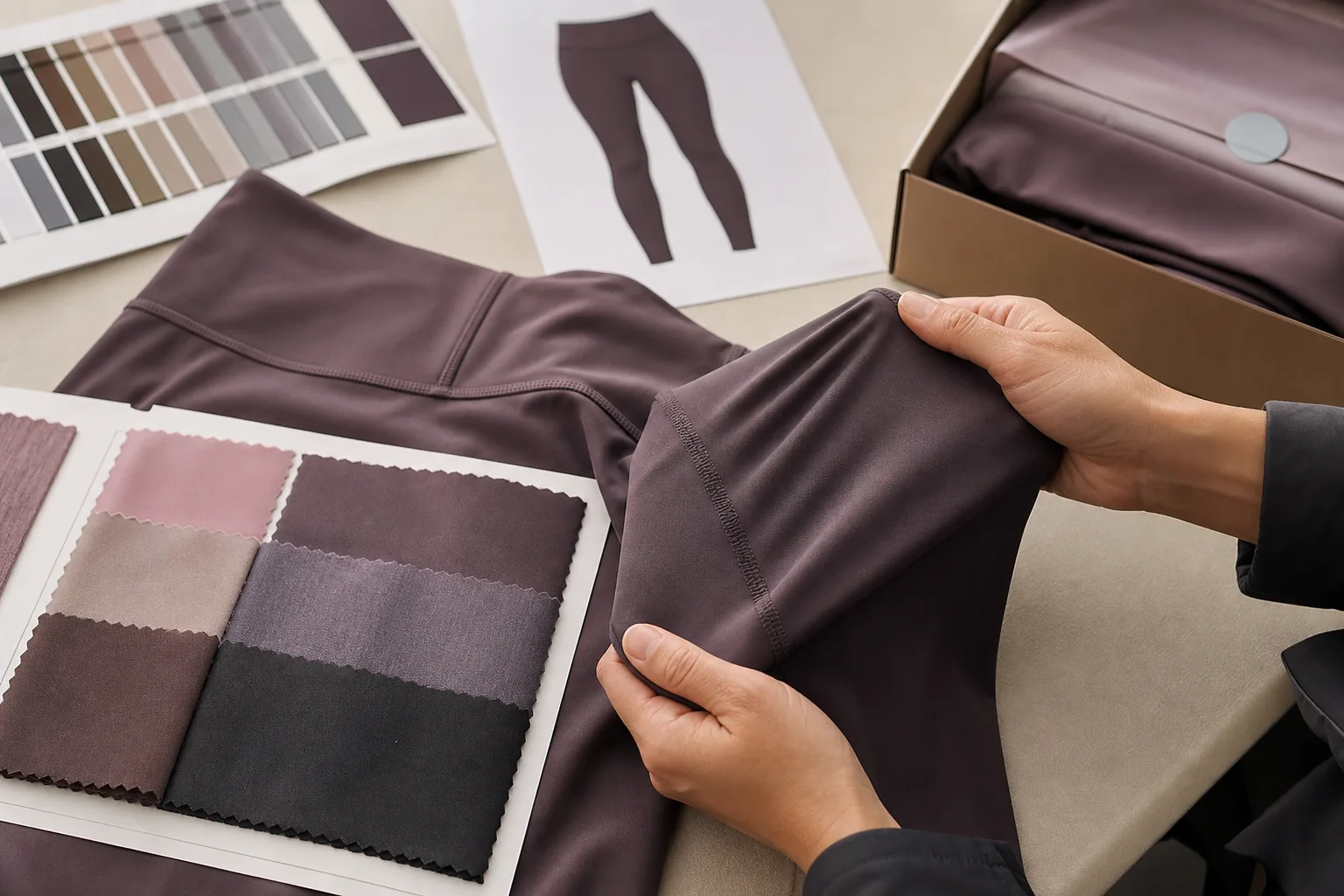
Compare related service, product, and contact options when you are ready to move forward.
Keep the project conversation practical with clear expectations around sampling, production and quotation inputs.
Packaging may include individual poly bags, zip bags, paper wraps, belly bands, hang tags, insert cards, barcode labels, size stickers, care labels, carton marks, and other project-specific packing details. Final options depend on the garment, branding, destination market, and packing method.
Yes. Reference MOQ starts from 300 pieces. The final MOQ and size or color allocation depend on the product, fabric, construction, branding, and packaging.
Helpful inputs include garment type, packing method, folded size if available, quantity, logo files, artwork references, barcode or SKU format, label content, carton requirements, target market, and shipping destination. A complete brief usually supports a more accurate quotation.
Yes. Packaging can be coordinated with private label requirements such as care labels, main labels, hang tags, logo application, barcode labels, and collection presentation. The final combination depends on the approved product direction and branding plan.
It is better to confirm packaging before bulk packing begins and after the main garment specifications are stable. Buyers often confirm artwork, label content, fold method, and carton markings before final material preparation and packing release.
Project-specific barcode, carton marking, and assortment requests can usually be confirmed during quotation and pre-production planning. Buyers should provide the required format early so the packing details can be checked before bulk packing.
Share references, technical files, fabric direction, branding needs, target quantity, and launch timing so Ninghow Yoga can suggest the right route.