Requirement review
What happens: Style, quantity, size range, colors, branding, packaging, target market, and delivery window are reviewed.
What can extend timing: Missing measurements, unclear artwork, or incomplete packing details.
Lead time management in yoga apparel production is the process of planning sample development, approvals, material readiness, bulk production, inspection, packing, and shipment in the right order. For yoga apparel buyers, the main goal is not only a shorter calendar, but a clearer production plan with fewer avoidable delays around fabric, fit, branding, packaging, and booking windows.
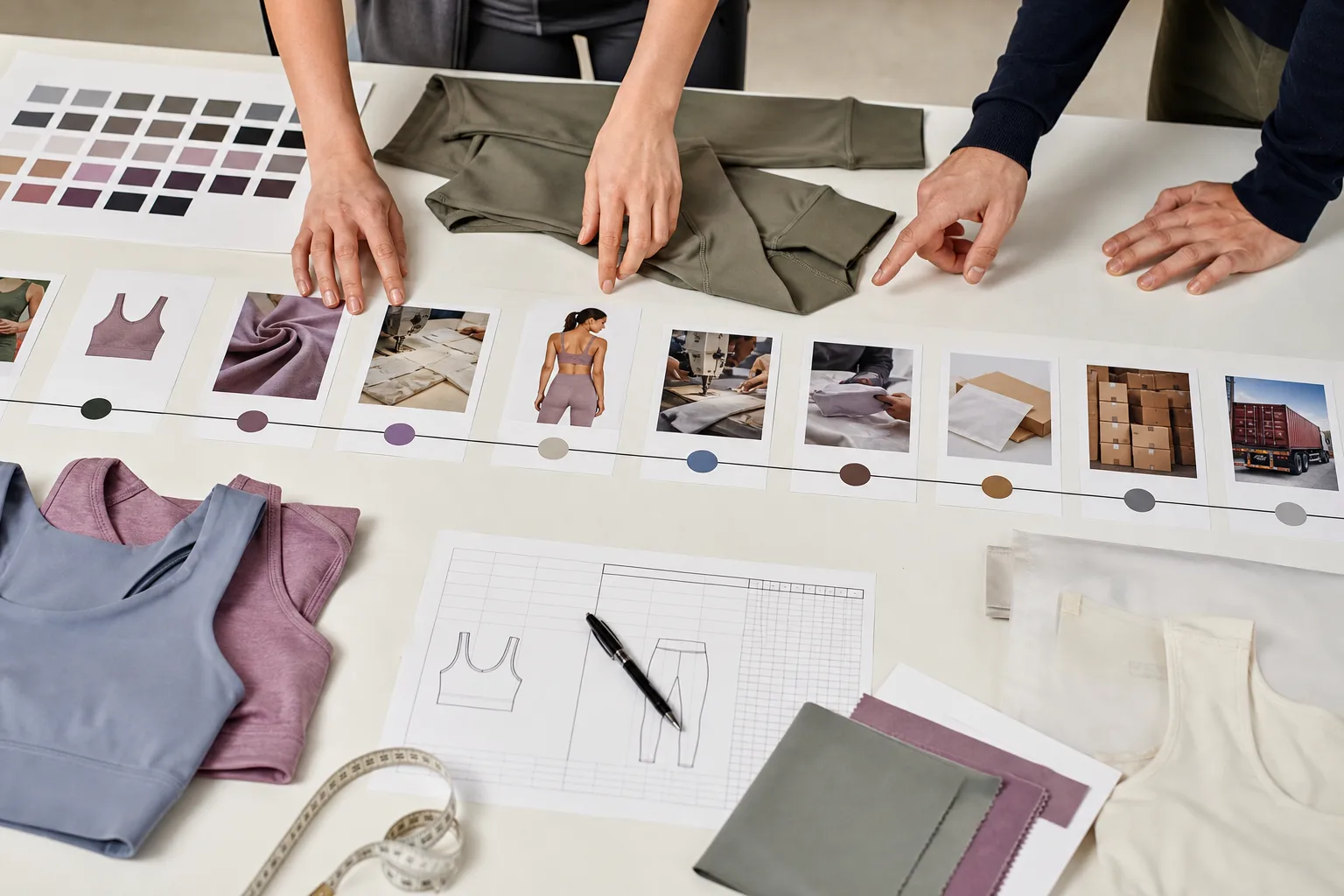
Make workflow, quality checkpoints, material preparation, and delivery variables easy to understand.
Sampling or bulk cutting.
Shipment coordination. This helps sourcing teams see where approvals are needed and which tasks can run in.
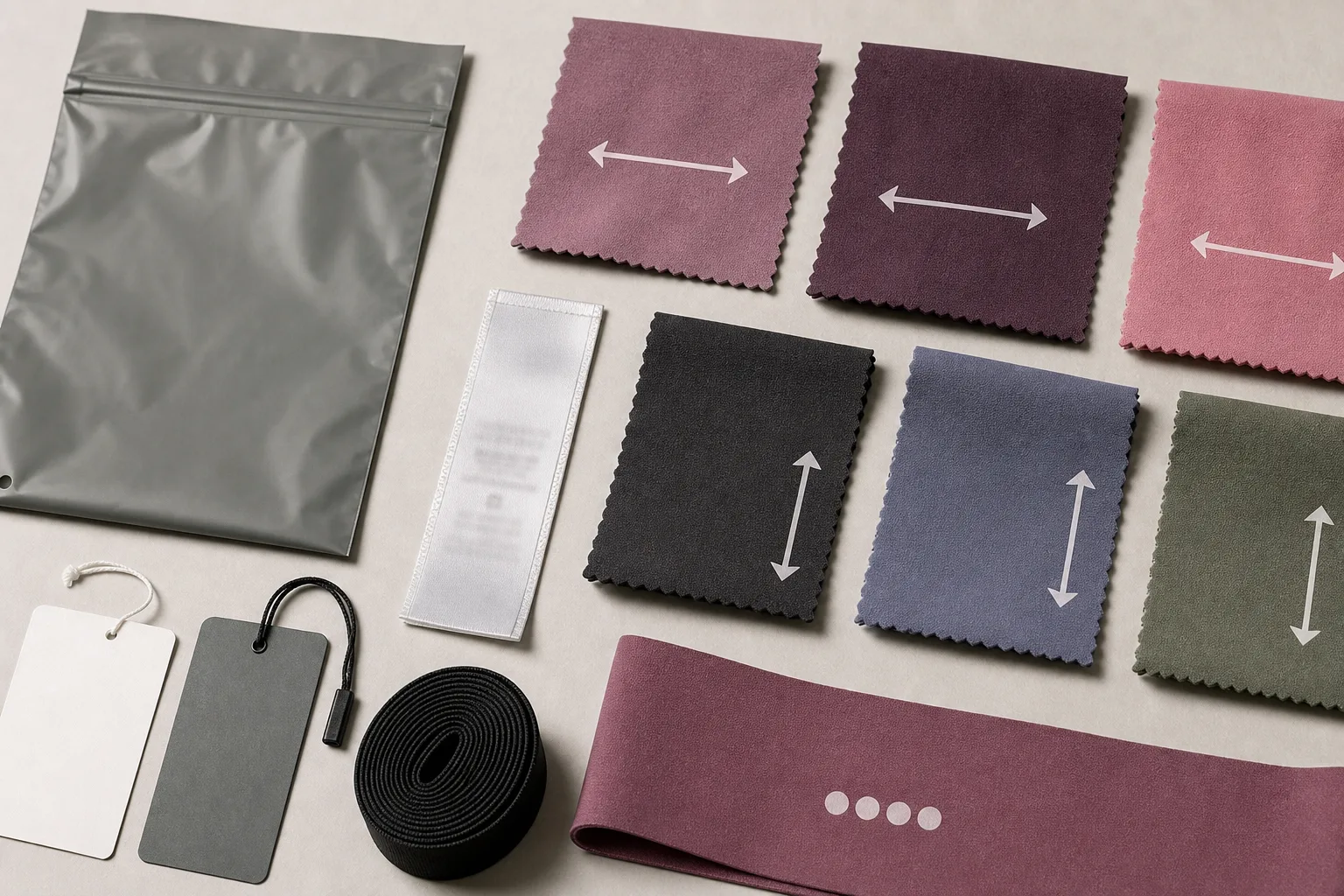
Check stretch direction, recovery, hand feel, opacity requirement, and weight.
Not every yoga apparel order should be scheduled the same way. A development-heavy project and a repeat order.
Lead time in activewear manufacturing depends on how complete the project information is and how many approval points remain open. A simple repeat style with confirmed fabric, grading, logo placement, labels, and packaging usually moves differently from a new yoga collection with multiple SKUs and custom trims. Before locking the calendar. Many buyers compare sample development flow under sampling to bulk production and review material options through fabric sourcing so the timeline is based on real project conditions rather than assumptions.
Sampling or bulk cutting as a production control point for material readiness, workmanship, inspection, and.
Construction details such as bonded seams, removable padding, pockets, or seamless structures may need more.
Understand.
Material readiness, workmanship, inspection, and packing.
Late packaging approval often delays final packing even when sewing is finished defines which factory-side.
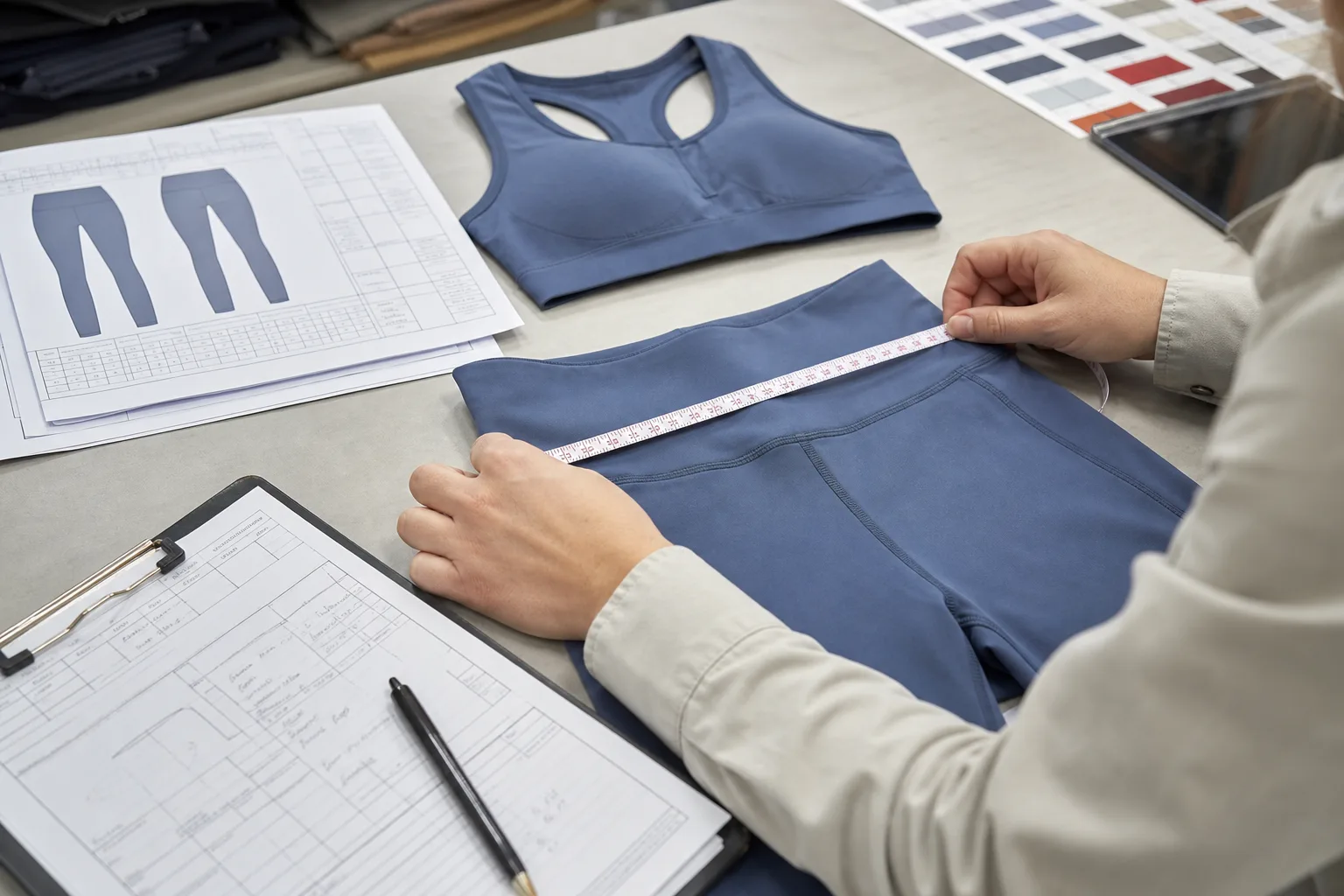
Lead time control is strongest before production starts. The more decisions that are approved during development, the easier it is to protect the bulk schedule. Buyers who want more visibility into inspection timing often review quality control stages together with measurement inspection so fit approval and in-line checks stay connected.
A workable timeline follows the production sequence from requirement review to shipment coordination. This helps sourcing teams see where approvals are needed and which tasks can run in parallel. As a reference range, bulk production may take around 20-35 days after approvals and material readiness. Final timing depends on product complexity, order quantity, materials, colors, size range, branding, packaging, sample approval, and the current production schedule.
What happens: Style, quantity, size range, colors, branding, packaging, target market, and delivery window are reviewed.
What can extend timing: Missing measurements, unclear artwork, or incomplete packing details.
What happens: Fabric composition, weight, stretch, recovery, opacity needs, and garment construction are checked.
What can extend timing: Special material sourcing, custom dyeing, or uncertain performance requirements.
What happens: The sample.
What can extend timing: Frequent spec changes or unclear fit direction.
What happens: Standard samples may take around 5-7 days, while more complex samples may take around 7-10 days.
What can extend timing: Fabric readiness, logo method, construction complexity, and revision needs.
What happens: Buyers confirm how the garment fits against the body and whether measurements match the approved chart.
What can extend timing: Fit changes, grading changes, or added comments after confirm.
What happens: Approved sample, branding, labels, and packaging direction are confirmed before bulk release.
What can extend timing: Late decisions on trims, hangtags, barcodes, or folding method.
What happens: Bulk fabric, labels, elastic, pads, packaging, and other approved materials are prepared.
What can extend timing: Custom components or revised quantity allocation.
What happens: Cutting, sewing, in-line checks, finishing, final inspection, and packing are arranged.
What can extend timing: Order quantity, SKU count, construction complexity, and current production schedule.
Not every yoga apparel order should be scheduled the same way. A development-heavy project and a repeat order create different timing risks. Reference MOQ starts from 300 pieces. The final MOQ and size or color allocation depend on the product, fabric, construction, branding, and packaging.

A useful timeline review starts with practical information, not just a target ship date. Your team can send the details already available and add the rest during development. If your specifications are complete, submit them through Request a Quote. If the project still needs production planning review, use Schedule Online Factory Meeting to discuss timeline variables before you commit to sampling or bulk booking.
Keep the project conversation practical with clear expectations around sampling, production and quotation inputs.
Lead time management usually covers requirement review, fabric and construction review, pattern or specification development, sample development, fit and measurement review, sample revisions, pre-production approval, material readiness, bulk production, inspection, packing, and shipment coordination.
Standard samples may take around 5-7 days, and more complex samples may take around 7-10 days. The actual timing depends on specification completeness, fabric availability, construction, logo method, custom materials, and revision requirements.
As a reference range, bulk production may take around 20-35 days after approvals and material readiness. Final timing depends on product complexity, order quantity, materials, colors, size range, branding, packaging, sample approval, and the current production schedule.
A preliminary timeline can be discussed earlier, but a more reliable production plan usually requires clearer information on fabric, fit, branding, packaging, quantity, and approval status.
Reference MOQ starts from 300 pieces. The final MOQ and size or color allocation depend on the product, fabric, construction, branding, and packaging.
Useful inputs include product type, SKU count, reference images or tech pack, measurement chart, fabric preference, size range, logo artwork, label and packaging details, estimated quantity, target market, shipping destination, and the requested delivery window.
Send the project stage, confirmed materials, expected quantity, packing needs, and target shipping window so the team can discuss production feasibility.