
Product Planning
What to provide: Garment category, style references and intended use
Why it matters: Sets the construction and material context
Already know the product direction? Share the style, quantity, branding and target requirements for a focused project review.
Discuss your product →Not sure which application fits? Describe your customer, sales model and product plan for a manufacturing recommendation.
Discuss your project →Have project files ready? Upload the tech pack, artwork or specifications so the team can review the correct service route.
Upload specifications →Evaluating manufacturing capability? Review the proof pages for facilities, quality control, export experience and team coverage.
Review company evidence →Want the product range first? Request the yoga apparel catalog and share the categories you are evaluating.
Request the catalog →Ready for direct discussion? Book a manufacturing consultation or submit a quotation request with your project details.
Request a consultation →Ninghow Yoga is the specialized yoga apparel division of Ninghow Apparel. We provide OEM yoga apparel manufacturing for brands that already have a defined design, technical pack or reference sample and need a production partner to turn those requirements into finished garments.
Our support can cover requirement review, fabric and trim sourcing, sample coordination, bulk production, quality control, packaging and international delivery coordination. We work with yoga, activewear and fitness brands on project-specific specifications rather than consumer-ready stock purchases.
Send us your product files, material direction, expected quantity and branding requirements so our manufacturing team can review the project route.
Upload Your Specifications or request a project-specific quotation .
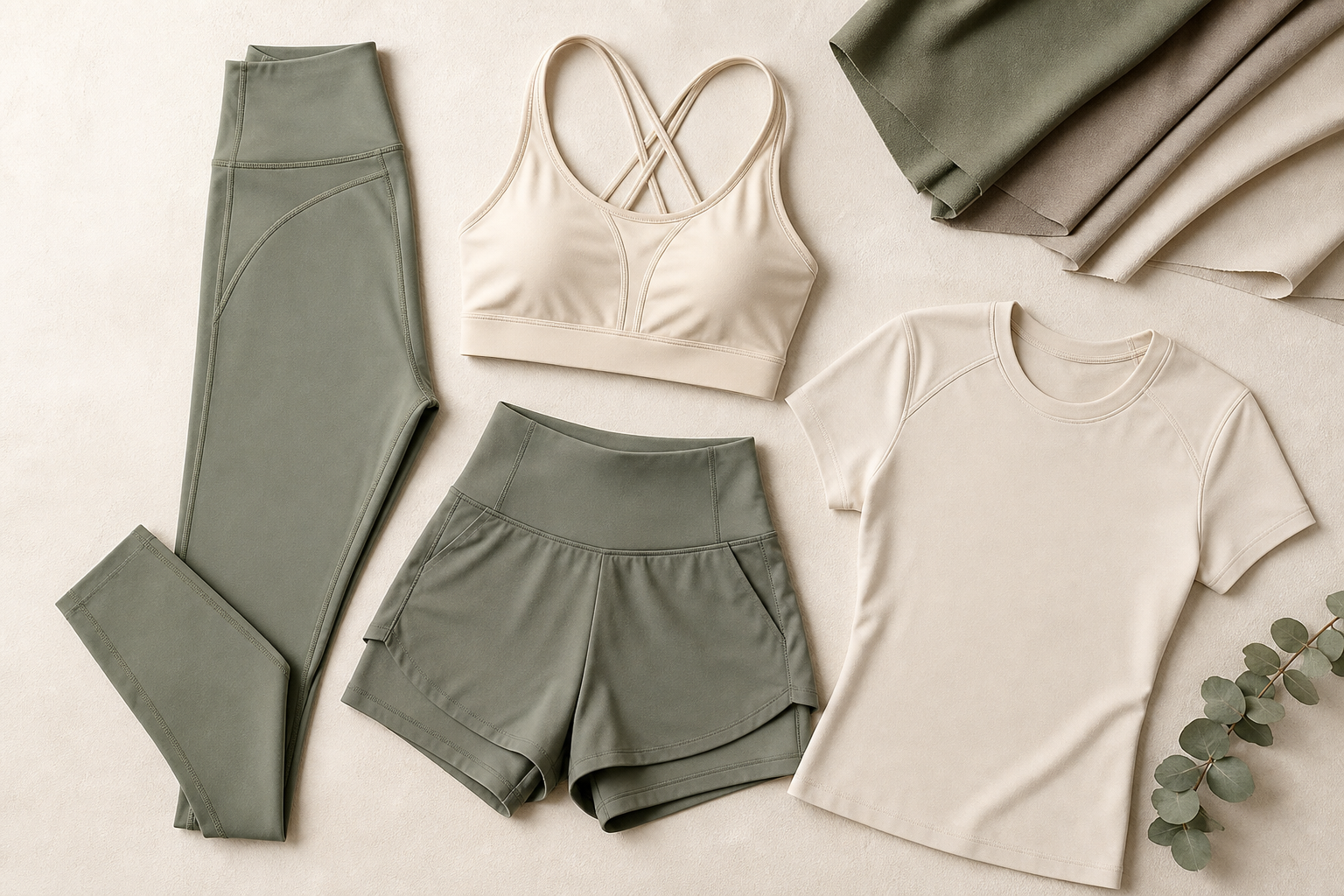
An OEM review establishes what must be made, how the garment should be constructed and which details need confirmation before sampling.
Yoga leggings, yoga pants, high-waist leggings, flare pants and other performance bottoms
An OEM review establishes what must be made, how the garment should be constructed and which details need confirmation before sampling.
Once the design requirements are understood, our team can coordinate fabric and trim sourcing for the selected product.
Compare the garment with the technical pack or agreed reference.
Once the design requirements are understood, our team can coordinate fabric and trim sourcing for the selected product. The material direction must match the garment structure, colour, measurements, intended branding and other technical requirements stated in the project brief.
The manufacturing scope can then connect material preparation with cutting, sewing, logo application and finishing. These activities are coordinated around the defined product rather than used to redesign the original concept. Buyers who need a closer review of patterns and development activities can refer to our pattern and sample development capability.
Brand applications may include embroidery, screen printing, sublimation or heat transfer. The suitable route depends on the product, fabric and design requirements. Artwork format, logo size, placement, colour and the proposed material should therefore be reviewed together before the decorated sample is confirmed.
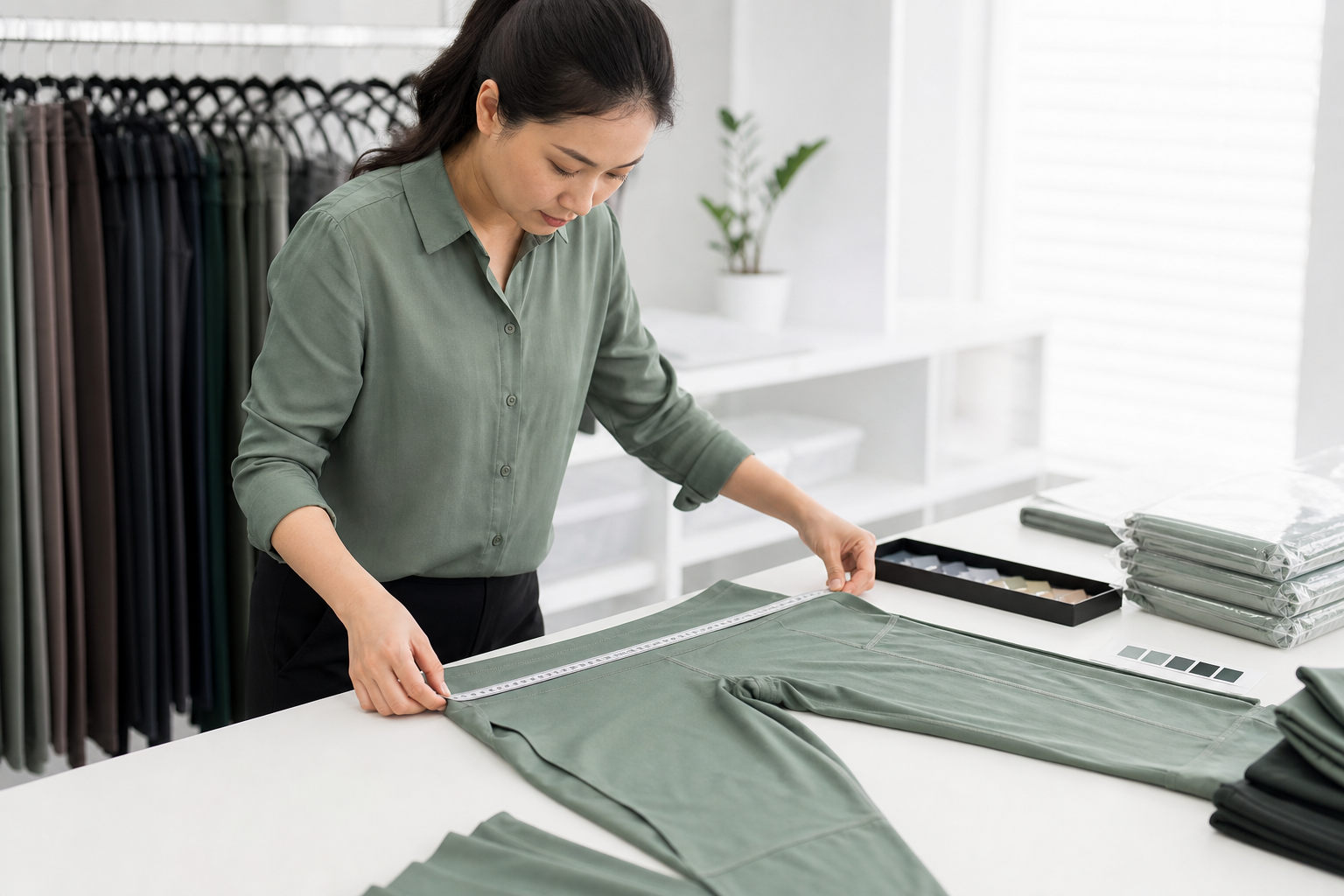
The OEM route is suitable when your brand controls the product design and needs manufacturing support based on documented requirements. A technical pack is the clearest starting point, but we can also review a reference garment or sample together with written measurements, materials and construction details.
Available product directions include:
Buyers can review the complete custom yoga apparel product range before selecting styles for an OEM brief. If your project begins with an undeveloped concept rather than a defined design, use our manufacturing services overview to compare the available engagement routes.
Yoga pants, high-waist leggings, flare pants and other performance bottoms
Fitted yoga shorts and stretch performance shorts
Yoga bras and supportive performance bras
Crop tops, T-shirts, long-sleeve tops and performance tops
Tops, leggings and shorts for matching sets
Hoodies, pullovers, zip-up layers and warm-up apparel
An OEM review establishes what must be made, how the garment should be constructed and which details need confirmation before sampling. Clear inputs reduce interpretation gaps between the design file, sample and production order.
MOQ is flexible and confirmed according to the product, fabric, colour, quantity and customization requirements. It is not treated as one universal minimum across all garments. Missing or changing specifications can affect material availability, sample work and production planning.
What to provide: Garment category, style references and intended use
Why it matters: Sets the construction and material context
What to provide: Technical pack, drawings, measurements or reference sample
Why it matters: Defines shape, dimensions and construction requirements
What to provide: Fabric and trim specifications, reference swatches or required characteristics
Why it matters: Guides sourcing and sample preparation
What to provide: Colour direction, size range and measurement requirements
Why it matters: Supports material, pattern and order review
What to provide: Logo artwork, placement, dimensions and preferred method
Why it matters: Allows decoration compatibility to be assessed
What to provide: Quantity by style, colour and size, packaging needs and destination
Why it matters: Supports MOQ, timing and shipment discussions
The sample is the practical checkpoint between a brand’s specification and the production handover. It allows the project team to review how the confirmed fabric, measurements, construction details and branding have been interpreted in a finished garment.
Sample development is typically5-7 days after the design, fabric and technical details are confirmed. Complex styles or projects using special fabrics may require7-10 days. These periods begin after the required inputs are confirmed, not from the first general enquiry.
A useful sample review should focus on the requirements that affect the approved design:
Detailed development stages can vary with the garment and specification. The purpose of the OEM sample is to establish a clear, reviewed reference before materials and the pre-production sample are released for bulk production.
Bulk production starts from confirmed project conditions. The required deposit, material confirmation and pre-production sample approval must be in place before the stated production period applies.
Bulk production is typically20-35 days after those conditions are met. Final timing depends on the product, order quantity and customization requirements. A multi-style order, special material or complex decoration requirement may therefore need a different schedule from a simpler project.
Ninghow’s apparel production operations have an approximate network-level capacity of80,000-120,000 pieces per month. This figure describes the wider operating context; it is not a capacity reservation or output promise for an individual order. Project allocation is reviewed against style details, quantities, materials, approvals and the production schedule.
The approved sample and confirmed order information form the basis of the production handover. Changes after this point require review because they can affect materials, construction, timing and commercial terms.
Quality control for an OEM order begins with the buyer’s stated product requirements. Ninghow Yoga can support product requirement review, fabric and colour checking, measurement and sewing inspection, process quality control, final inspection and packaging review.
These checks connect the production output to the agreed specification at several points. Fabric and colour are reviewed before they become finished garments. Measurements and sewing are checked during the production process. Final inspection and packaging review address the completed order before shipment preparation.
AQL inspection can be supported when required. Customer-appointed or third-party inspection can also be coordinated according to project requirements, including providers such as SGS or Intertek. The applicable inspection route, criteria and appointment arrangements should be agreed for the specific project rather than assumed as standard for every order.
For an OEM buyer, the main control document remains the confirmed product requirement. Technical files, approved samples, measurement information, branding details and packaging instructions give the inspection process a defined basis for review.
A qualified OEM enquiry gives our team enough detail to identify the product, assess the specification and determine what needs confirmation. You can submit one style or a coordinated group of garments, provided the requirements for each item are clear.
Include the following information where available:
We will use these inputs to review manufacturing fit, identify open technical questions and discuss the applicable MOQ, sample route, production conditions and quotation requirements.
Product categories and number of styles
Drawings or reference samples
Trim and colour direction
Ninghow Yoga supports standard export packaging and customized private label packaging according to project requirements. Packaging instructions should identify the required presentation, labels, hangtags or other brand elements as well as any order-specific packing information.
International shipment coordination is available for global B2B projects. EXW, FOB, CIF and DDP trade terms can be discussed according to the project and shipment requirements. The applicable term affects the responsibilities and information needed for the order, so it must be confirmed for each shipment.
Buyers should provide the destination, expected shipment arrangement and preferred trade-term discussion when requesting a quotation. This allows packaging and shipment needs to be considered with the product scope instead of being added after production planning.
Share what you want to develop and our manufacturing team can review the right product, material, sampling and production route for your project.
Include them with your inquiry so we can give you a more focused manufacturing response.
Share your product type, estimated quantity, target market and any specifications you already have. The more detail you provide, the more specific our reply can be.
What happens next: your inquiry is reviewed against product, material and production requirements so our team can respond with the most relevant next step. Your project information is treated as confidential.