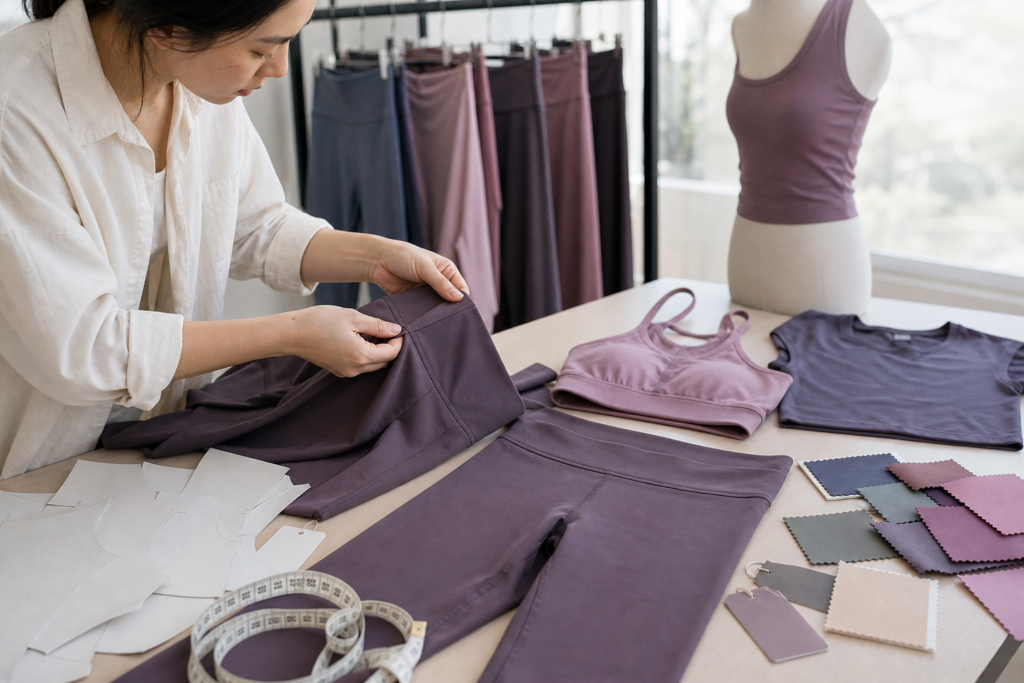
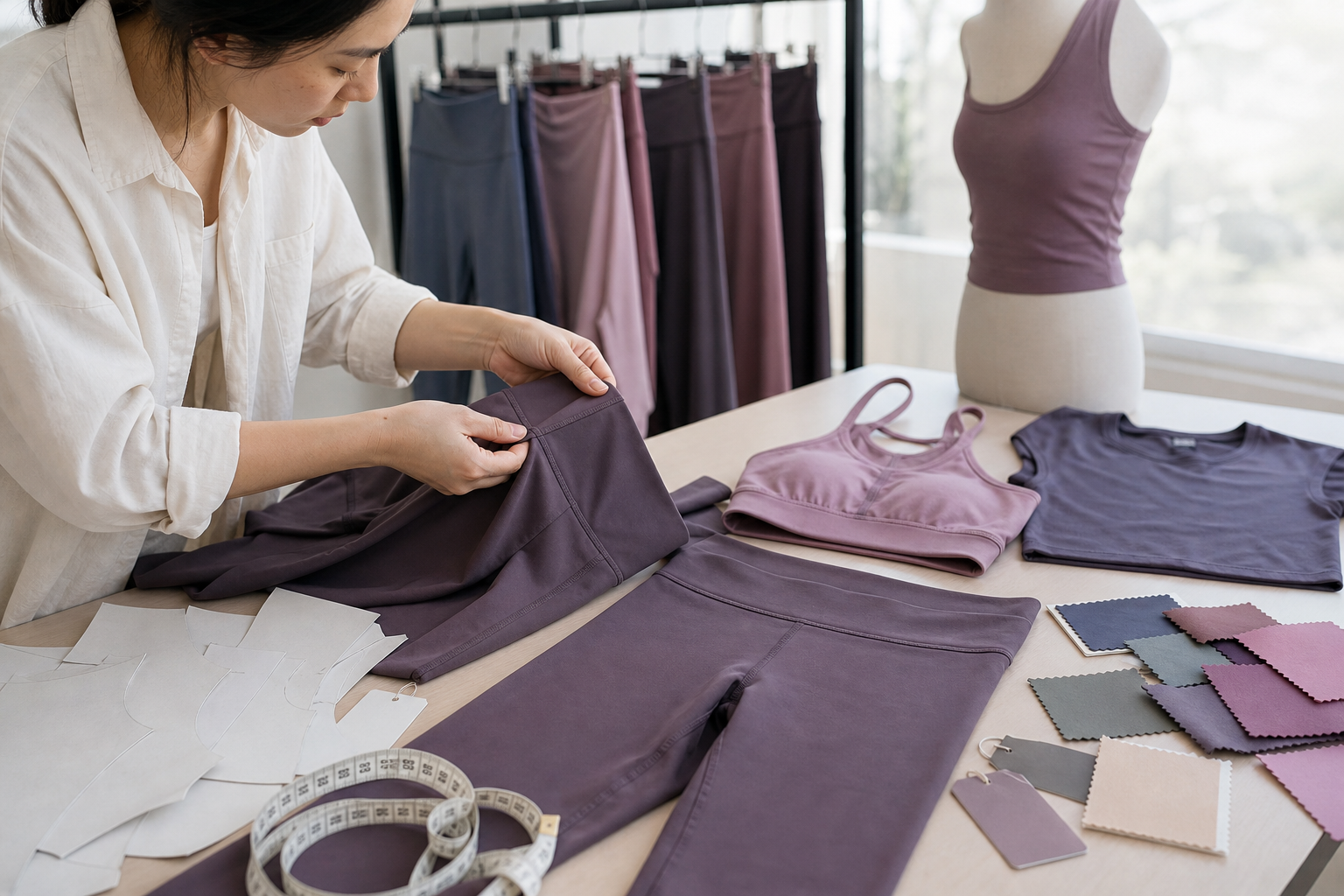
The cost to start a fitness clothing brand has no single reliable number. A launch budget changes with the number of styles, technical complexity, fit and size requirements, material direction, branding level, order plan, and delivery responsibilities. Before asking for a quote, treat the budget as a set of connected manufacturing workstreams rather than the cost of garments alone.
For a new brand, the practical path is to map the work from concept through shipment: brief, sourcing, samples, production-ready specifications, bulk production, quality review, packing, and delivery coordination. Working with OEM and activewear services can help turn that scope into a more usable manufacturing plan, but the manufacturer needs clear inputs before it can assess feasibility or the budget structure.
This guide explains the cost categories behind fitness clothing brand manufacturing costs. It does not offer a universal price estimate, because a sketch, a fully controlled tech pack, a simple private-label legging, and a multi-style performance collection do not require the same development or production effort.
What Actually Drives the Cost to Start a Fitness Clothing Brand?
An activewear startup budget is shaped first by product scope. Adding more SKUs can add fabric options, patterns, measurement charts, samples, labels, packaging components, approvals, and inventory decisions. Complexity also matters: a basic fitted top, high-waist legging, lined sports bra, seamless style, and outer layer each involve different materials, construction details, and fit risks.
Budget planning is most useful when each activity has a defined output. The manufacturer can then distinguish what is ready for bulk production from what still needs development.
Illustrative manufacturing budget workflow
- Brand brief: product category, target wearer, market, positioning, and launch scope.
- Development and sourcing: patterns, materials, trims, colour direction, and technical requirements.
- Sampling and approvals: construction, measurements, fit, material, colour, branding, and production readiness.
- Bulk preparation and production: approved specifications, materials, components, production planning, and controlled revisions.
- Quality, packaging, and shipment coordination: inspection approach, presentation, packing, destination, and commercial delivery responsibilities.
Early planning also protects cash flow. General start-up budgeting guidance recommends accounting for multiple upfront categories rather than one headline expense; the same principle applies when manufacturing is a core launch activity. Business.gov.au’s start-up cost guidance is a useful general reference for building that broader view.
Budget Product Development Before You Commit to Bulk Production
Development is the work that converts design intent into a repeatable garment. Plan separately for tech packs, pattern work, grading, measurement expectations, fit assessment, material selection, sample rounds, and approval administration. A visual sample may show the right look while leaving fit, stretch recovery, support, opacity, or bulk-material suitability unresolved.
OEM development generally starts from buyer-controlled requirements, such as a tech pack, measurements, construction callouts, and artwork. ODM development may begin with a concept, reference, or existing supplier direction and needs more definition before it can become a controlled specification. Neither route is automatically lower cost; the relevant question is how much information is already approved and how much product-development work remains.
Each garment in a coordinated set needs its own technical specification. A bra-and-legging set may share a fabric or use intentional contrast, but the bra’s coverage, straps, underband, lining, and support intent are different from the legging’s waistband, gusset, seam placement, and ankle opening. Do not treat one set as one technical product or assume one size ratio fits both pieces.
A controlled document also limits costly ambiguity. For a tech pack or specification sheet, use Document Control fields such as Style Code or Style ID, Version, Issue Date, Revision, Approval Status, Responsible Owner, and Sample Stage. Changes sent by email or image should not silently replace the approved version.
| Product | Development focus | Sample approval points | Budget implication |
|---|---|---|---|
| Leggings | Waistband stability, gusset, seam placement, stretch recovery, coverage | Measurements, fit, fabric behavior, logo location | Pattern and fit work can change with fabric and size range |
| Sports bra | Coverage, underband, straps, back construction, lining, intended activity | Fit, support intent, strap adjustment, material and trim compatibility | More components and support-related decisions can increase development scope |
| Coordinated set | Two separate garment specifications plus colour, branding, and grading alignment | Each style’s fit plus set presentation and shade matching | Shared materials may simplify sourcing, but do not remove separate development needs |
Use staged pattern and sample development to make approval points explicit. The goal is not to approve every detail at once; it is to close the highest-risk decisions before a bulk commitment.
Assess Manufacturing Cost Factors by Product Type
A factory budgets by the actual garment detail, not the category name. Leggings may require decisions on waistband construction, gusset shape, pocket placement, seam layout, opacity expectations, and recovery. A low-support yoga bra still needs its intended activity and coverage defined, because support comes from the combined pattern, underband, straps, back, fabric, lining, and size range—not one feature.
Tops, shorts, jackets, and seamless yoga wear introduce their own planning questions. Seamless capsules can include leggings, bras, tops, shorts, and sets, but construction and fit requirements still need to be specified. For any product, fabric performance needs, trim choices, seam placement, colour options, decoration method, and target presentation affect the development path.
Extended sizing deserves its own budget line. Larger sizes may need dedicated blocks, non-linear grading, waistband and gusset evaluation, and fit validation rather than simple proportional scaling. Build this requirement into the brief at the beginning, not after the core-size sample is approved.
For example, nylon/elastane interlock may be considered for fitted activewear because it can offer a smooth hand, coverage, and multidirectional stretch. Yet composition or fabric weight alone does not prove opacity, cooling, wicking, compression, or squat-proof performance. The approved specification and buyer-defined evaluation criteria govern the decision.
Plan Material, Fabric, and Trim Costs Around the Approved Specification
Fabric is often a major planning factor, but it must be evaluated in the garment rather than in isolation. A sourcing request needs more than “soft fabric.” State the intended product, composition direction, hand feel, weight range if relevant, stretch and recovery needs, colour intent, target cost, and any performance expectations that require testing or documentation.
Trims and components can be equally important: elastics, linings, drawcords, zippers, hooks, pads, labels, heat transfers, and decorative details all need to work with the approved construction. A material candidate is not fully approved merely because it looks appropriate on a swatch; it must match the product and buyer requirements in the sample and final specification.
For technical handoff, create a Bill of Materials (BOM). A BOM organizes fabrics, trims, labels, packaging components, and garment parts so sourcing, sampling, and production teams are using the same controlled reference.
| Component | Required detail | Approval status |
|---|---|---|
| Shell fabric | Composition direction, colour, weight/hand-feel target, stretch and recovery requirement | Proposed / sample approved / bulk approved |
| Elastic or lining | Location, width or construction requirement, colour, functional purpose | Proposed / sample approved / bulk approved |
| Branding component | Logo artwork version, method, placement, colour, size | Artwork approved / placement approved |
| Packaging | Bag, insert, hangtag, barcode, folding, carton or presentation requirement | Buyer approved |
Material changes after fit approval can affect measurements, handling, construction behavior, and production readiness. Record the change in the controlled specification rather than treating it as an informal substitution.
Budget Branding, Packaging, and Private-Label Presentation Separately from Garment Production
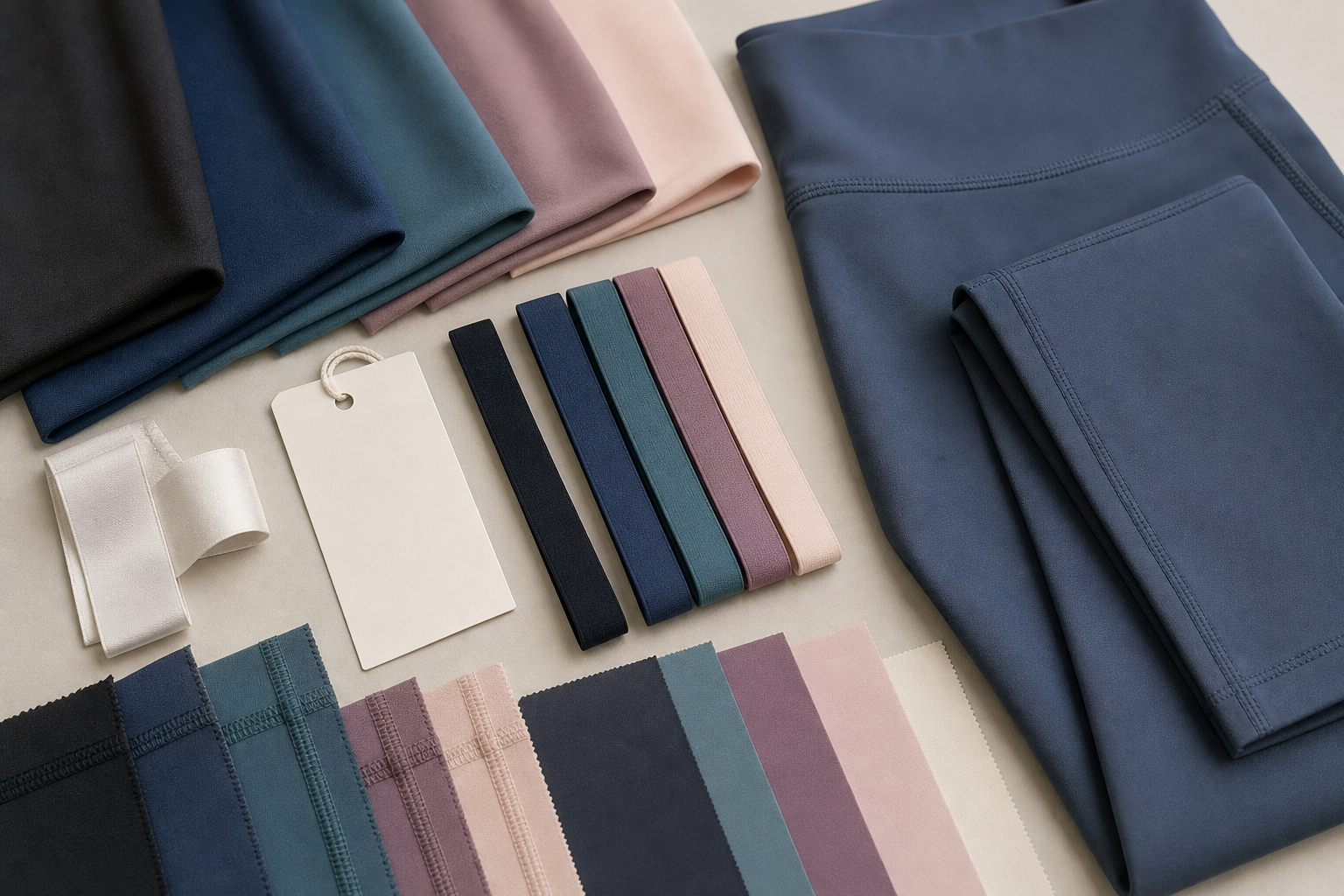
Private-label activewear is not simply adding a label to an existing garment. Labels, hangtags, logo application, artwork preparation, logo placement, colour alignment, individual bags, inserts, folding, and collection presentation all require decisions and approvals. Include them in the budget request from the start.
For a collection, presentation needs to align across pieces while respecting each style’s specification. A logo location that works on leggings may not suit a bra or fitted top. Likewise, a shared collection colour does not remove the need to approve shade matching across different fabrics and components.
Use the buyer-approved packaging requirement as a production input. If the product needs special presentation, retail-ready barcoding, inserts, or a particular fold, document it early and coordinate it through branding and packaging planning.
Include Quality Inspection and International Shipment Coordination in the Budget
Quality inspection is a separate planning area from garment sewing. Decide what will be checked, what the approved reference is, how packing presentation will be assessed, and who receives or approves findings. The approved sample, BOM, measurement chart, artwork, and packaging instructions all provide the reference point for finishing and inspection.
Shipment coordination also needs a defined handoff. Provide the delivery destination, preferred shipping approach, requested delivery window, carton or packing requirements, and any documentation needs. For United States deliveries, clarify the applicable freight, customs, and duty responsibilities with the parties handling the commercial terms; do not assume the manufacturer is responsible for every delivery obligation.
Planning these steps early makes finishing and inspection, packing, and shipment coordination part of production readiness rather than a late-stage scramble.
Build a Manufacturer-Ready Budget Request Checklist
A structured brief gives sourcing, sampling, and production teams enough information to assess the right route. It also reduces revision cycles caused by guessing. Attach controlled spec sheets, reference images, measurement information, and approval notes where available.
Manufacturer-ready budget request checklist
- Product types, SKU count, and whether styles are standalone garments or coordinated sets
- Reference designs, sketches, tech packs, or existing samples
- Target wearer, market, intended activity, size range, and measurement expectations
- Fabric direction, desired hand feel, composition preferences, colours, and performance requirements
- Construction details: seams, pockets, lining, support intent, closures, and trims
- Branding files, logo method and placement, labels, hangtags, and packaging requirements
- Target quantities by style, colour, and size, including any anticipated repeat order plan
- Sample stages required and approval criteria for fit, material, colour, branding, and production readiness
- Destination, shipment requirements, target delivery timing, and commercial responsibility assumptions
- Document Control details: Style ID, version, revision, issue date, responsible owner, and approval status
With this information, a manufacturer can evaluate whether OEM, ODM, or private-label support fits the project and can separate development work from bulk-production planning. If you need help structuring that first brief, request a manufacturing consultation with the available product information rather than waiting for every detail to be perfect.
FAQ
What should an activewear startup include in its first manufacturing budget?
Include product development, patterns and samples, materials and trims, branding, packaging, bulk production, quality inspection, packing, and shipment coordination. Also plan for revisions and approvals, not only the first garment order.
How do samples affect fitness clothing brand manufacturing costs?
Samples require materials, pattern or construction work, and review time. They also reduce the risk of committing to bulk production before fit, measurements, colour, branding, and material suitability are approved.
What information should I provide a yoga apparel manufacturer for budget planning?
Provide product types, references or tech packs, size range, fabric direction, colours, branding, packaging, quantities, approval criteria, destination, and delivery requirements. Controlled versions and clear notes make the assessment more accurate.