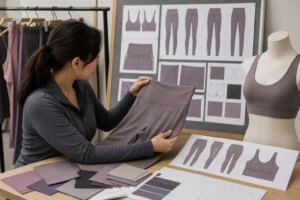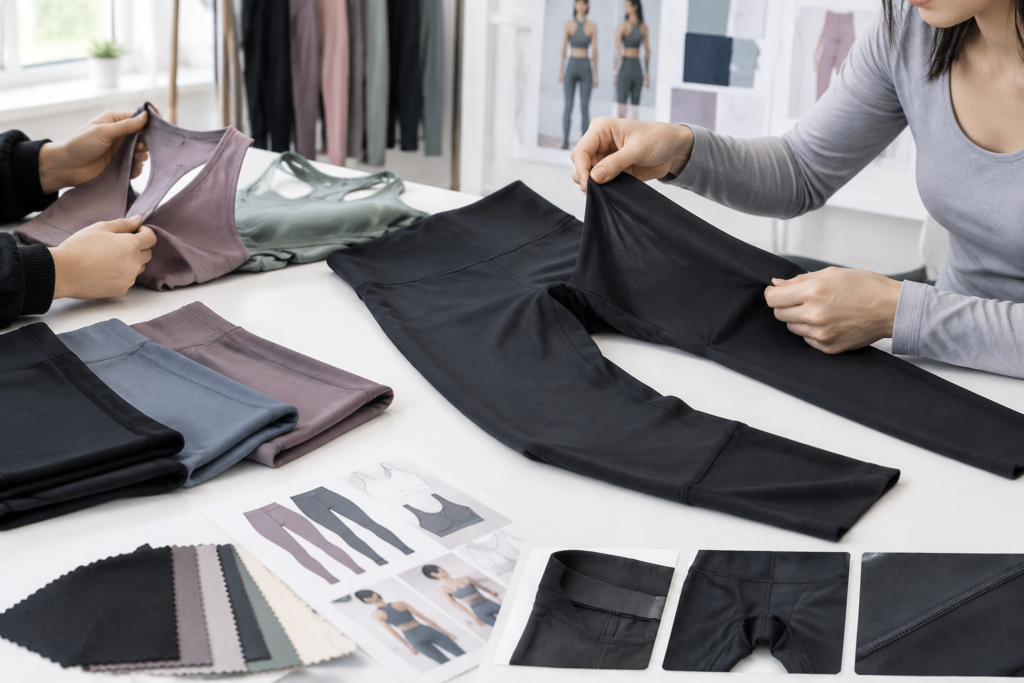
Knowing how to choose fabric for yoga apparel starts with the garment and its intended use, not with a fabric name alone. Leggings, sports bras, and coordinated sets can share a collection identity while requiring different decisions about stretch, recovery, opacity, support, hand feel, weight, color, and care.
For a custom project, define the buyer brief before discussing materials. A useful starting point is our guide to buying custom yoga apparel. Then provide the intended activity, target customer, fit preference, climate, price position, color or print direction, and care expectations. Ninghow Yoga reviews materials, construction, patterns, samples, branding, and bulk production against buyer-controlled specifications, so a clear brief helps the development team evaluate the right fabric for the right style.
Choose Fabric by Garment, Activity, and Wearer Expectation
Fabric selection changes according to how the garment will be worn. Gentle yoga and Pilates may prioritize soft hand feel, comfortable movement, and moderate coverage. Hot yoga may place greater emphasis on moisture-handling expectations, breathability, and care requirements. Gym training can require a different balance of stability, support, durability, and recovery. Studio-to-street and everyday athleisure may place more weight on surface appearance, color consistency, and styling.
Start with a written requirement matrix rather than asking for the “best” yoga clothing material. The buyer should define:
- Garment type, silhouette, and intended activity
- Target customer, size range, and expected fit or compression level
- Climate, season, and typical wear conditions
- Color, print, surface finish, and collection direction
- Required opacity, hand feel, stretch direction, and recovery behavior
- Care expectations, labeling needs, target price position, and available budget
Leggings need reliable coverage through lower-body movement and a stable waistband. A sports bra needs a considered relationship between fabric, pattern, lining, underband, straps, and coverage. A set must work visually and technically as a collection. Matching set styling does not automatically mean that the top and bottom should use identical fabric.
| Product | Primary fabric questions | How to verify before approval |
|---|---|---|
| Yoga leggings | Will the fabric extend comfortably, recover at the waistband and knees, and remain sufficiently opaque in the intended color? | Review a swatch, then assess the actual sample during movement and stretching. Check waistband stability, surface appearance, and fit. |
| Sports bra | Does the fabric work with the pattern, lining, underband, straps, and intended coverage? | Evaluate the finished sample across the planned size range and intended activity. Review edge comfort, body movement, and coverage. |
| Coordinated set | Do the pieces have compatible color, texture, gloss, opacity, stretch, and comfort while retaining separate specifications? | Review both garments together and individually. Compare shade, surface finish, fit, movement, and construction before bulk approval. |
Compare Stretch and Recovery Before Approving a Yoga Fabric
Stretch describes how far a fabric extends. Recovery describes how well it returns toward its original shape after extension. Both matter. A fabric can feel soft and flexible in the hand but still lose shape, affect waistband stability, or look stretched after repeated movement if recovery is not suitable for the style.
For leggings, assess extension and recovery at the seat, knees, waistband, inseam, and gusset area. For sports bras, review movement across the body, underband, back, and strap area. The direction of stretch also matters because a pattern may require different behavior across the width and length of the garment.
Do not rely only on fiber composition, a supplier description, or a single swatch touch test. Use the swatch to shortlist options, then evaluate a prototype in the actual pattern. A practical sample review should cover:
- Stretch in the directions used by the pattern
- Recovery after repeated extension at key pressure and movement points
- Waistband or underband stability during movement
- Comfort at seams, edges, straps, and close-fitting areas
- Fit changes after movement and after the planned care process
Ninghow Yoga’s sample development approach uses staged samples to review construction, measurements, fit, material, color, branding, and production readiness. The relevant question is not whether a fabric feels suitable in isolation, but whether it performs appropriately in the exact garment and movement pattern the buyer plans to sell.
Evaluate Yoga Leggings Fabric for Opacity, Weight, and Surface Appearance
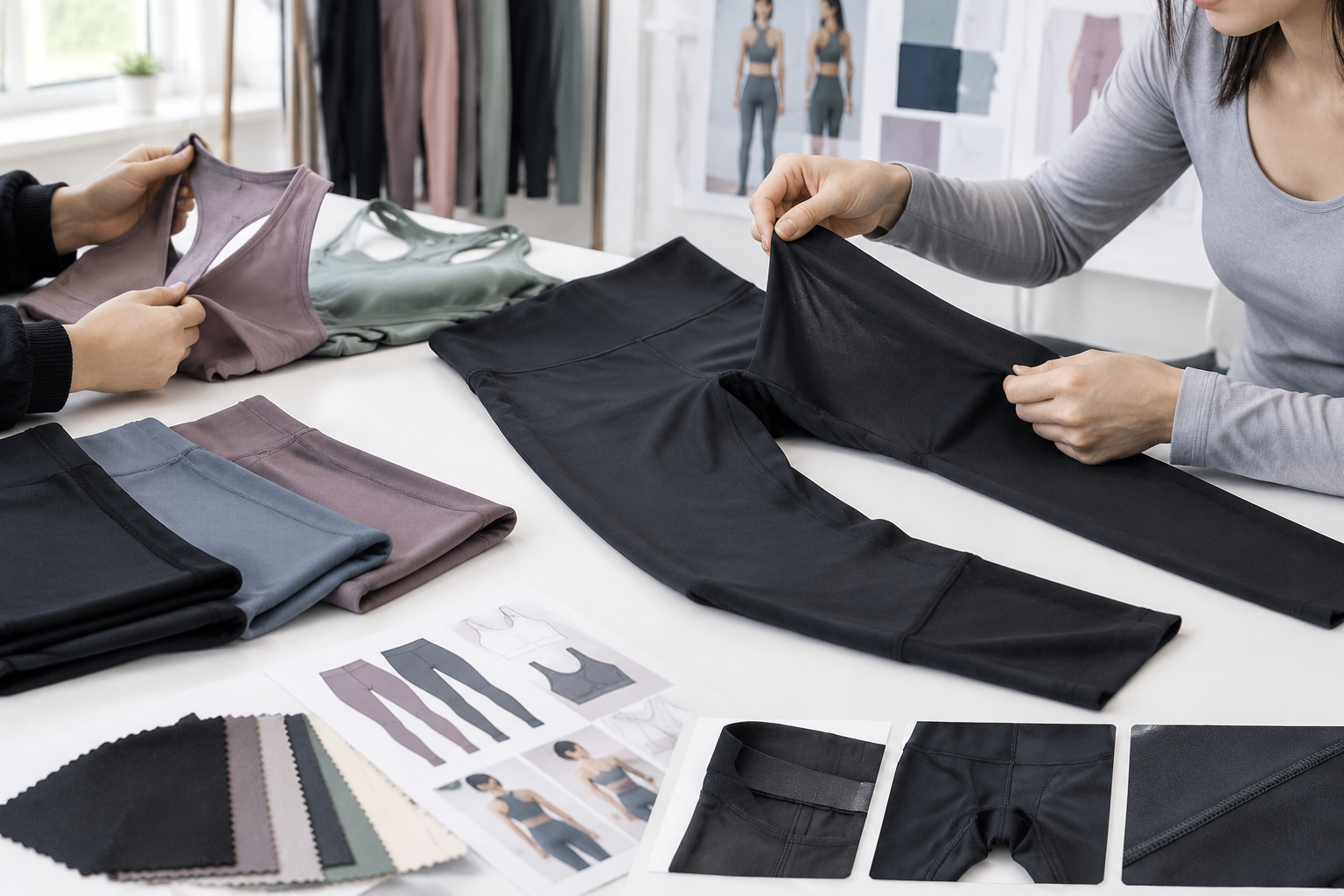
Yoga leggings fabric must be assessed during stretch and movement, especially for light colors, prints, and close-fitting silhouettes. A fabric that appears opaque when relaxed may reveal more when extended. Perform a movement-based coverage check on the sample rather than making assumptions from a swatch or fabric name.
Weight is useful context, but it does not determine suitability on its own. Construction, color, surface structure, and the amount of stretch in the finished garment also affect appearance and coverage. A heavier option is not automatically the right option, and a lighter fabric is not automatically unsuitable.
Review the surface for sheen, texture, print visibility, and changes after repeated stretching and laundering. A buyer may prefer a matte appearance for a studio collection, a more polished surface for studio-to-street clothing, or a particular texture for a seasonal range. Those are product-positioning decisions that need to be specified before sampling.
For a high-waist legging, consider the fabric together with waistband stability, stretch recovery, gusset shape, seam placement, and ankle opening. The fabric should be reviewed in the complete construction because pattern and components influence the finished appearance. Ninghow Yoga’s high-waist leggings development scope emphasizes balancing these elements rather than judging the product by softness alone.
Use this sample checklist before approving a leggings fabric:
- Check opacity while standing, bending, stretching, and moving in the intended size.
- Compare the approved color or print on the actual garment, not only on a flat swatch.
- Inspect surface sheen, texture, print clarity, and visible stress lines.
- Assess waistband recovery, seam comfort, gusset coverage, and ankle opening.
- Record any change after the defined care review or wear trial.
Choose Sports Bra Fabric Around Support, Comfort, and Construction
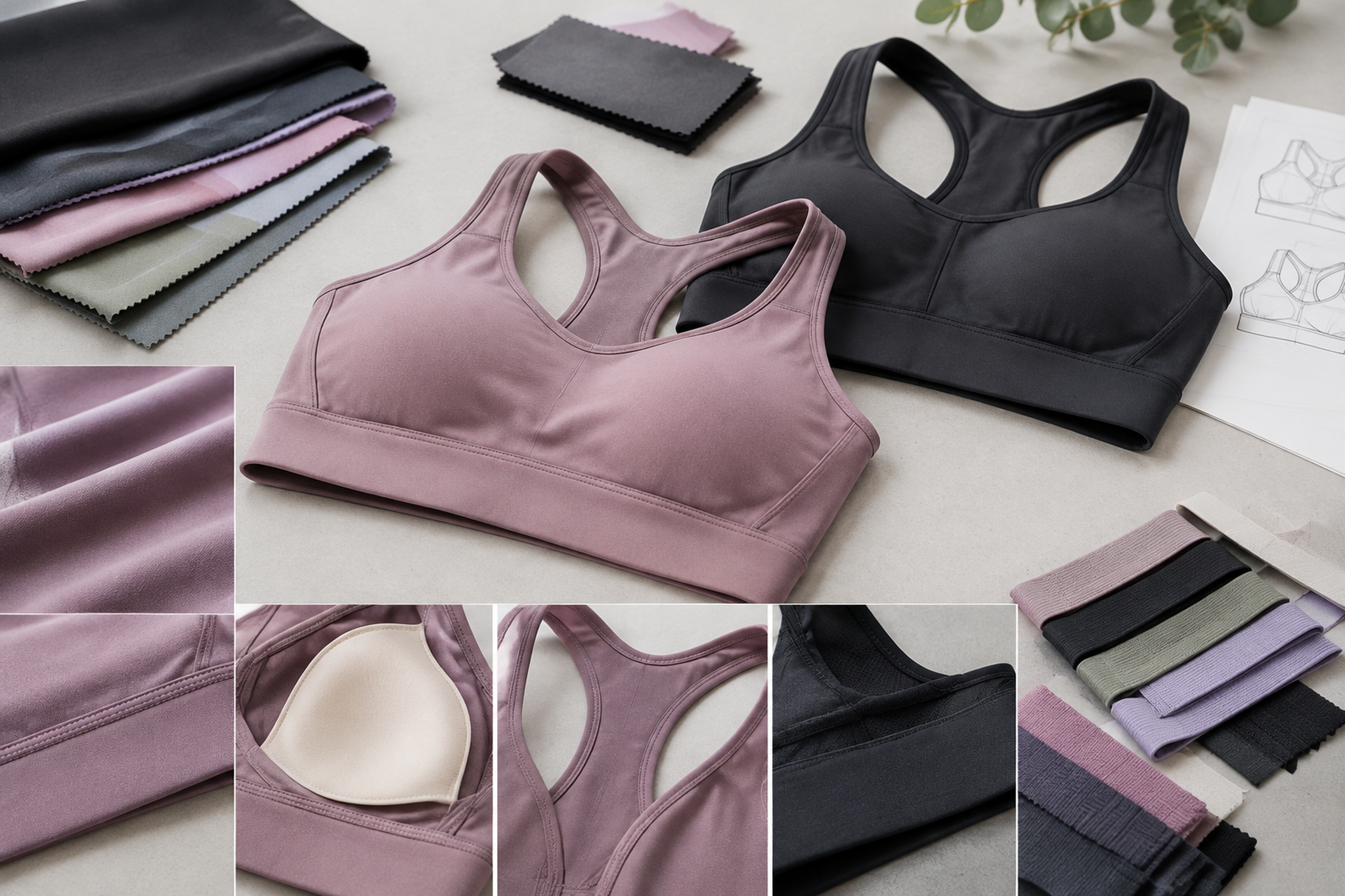
The best sports bra fabric cannot be selected independently from the bra’s construction. Support and comfort are influenced by fabric, pattern shape, lining, elastic or underband components, cup treatment, back design, and strap construction. A longer body may provide more coverage, but it does not automatically create more support.
First define the activity and coverage expectation. A yoga or Pilates bra may use a different construction brief from a garment intended for higher-impact training. Do not publish a low, medium, or high support rating from appearance alone unless the buyer has a defined evaluation protocol.
During development, compare next-to-skin hand feel, stretch direction, edge comfort, lining requirements, and moisture-handling expectations. Review the underband and straps during movement, paying attention to rolling, pressure, shifting, and coverage. A longline style also requires attention to torso length, hem behavior, and grading from the underbust toward the waist.
Review the finished sample across the intended size range. Support, coverage, and fit can change with grading, so a successful base-size sample does not automatically validate every size. For a private-label project, record the base size, body data, garment measurements, ease or compression intent, grading approach, and fit-review checkpoints.
Ninghow Yoga’s sports and yoga bra scope includes yoga bras, sports bras, and supportive performance bras, but the intended support and coverage still need to be defined by the buyer before sampling. Fabric, pattern, and components jointly determine the result.
Build Coordinated Sets with Compatible Fabrics, Color, and Performance
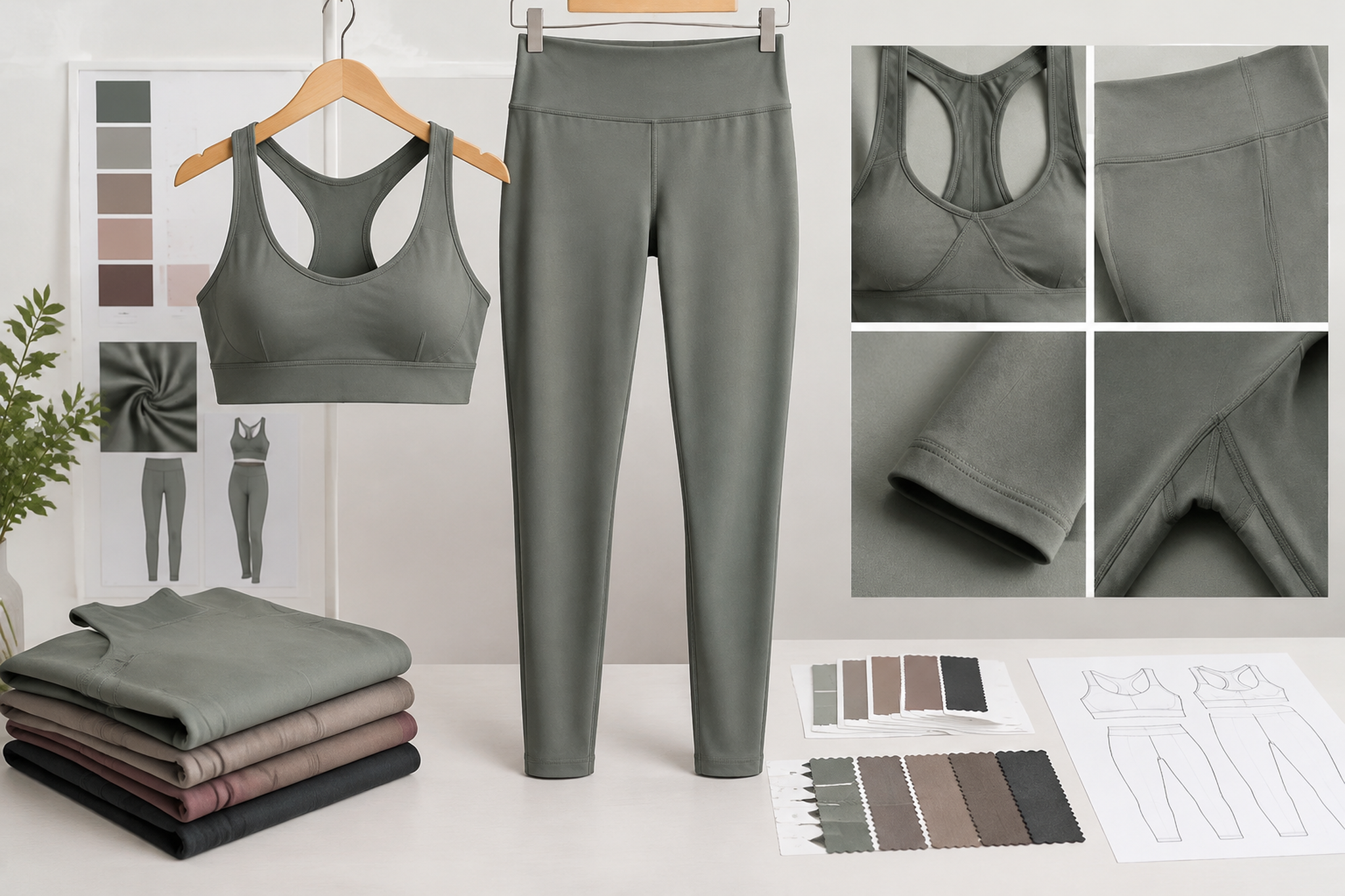
A coordinated set should be treated as two related technical products. Leggings and bras may need different weight, stretch, lining, or recovery specifications while still presenting a unified collection. Using identical fabric for both pieces is a choice, not a requirement.
Check the following points across the set:
- Color or shade consistency under the intended lighting
- Texture and gloss-level compatibility
- Print scale, placement, and visibility
- Appropriate opacity for each garment
- Comfort and stretch behavior for each body area
- Compatible branding, logo placement, and care information
- Separate grading and size options where the customer may not purchase the same size in both pieces
Ninghow Yoga treats coordinated products as a collection rather than one technical item. The bra and leggings should perform properly on their own and look intentional together. Product specifications should therefore state which characteristics must match and which may differ by garment.
Use a Fabric Approval Process That Reduces Rework
A staged approval process gives buyers practical control over material and fit decisions. It also helps separate a fabric issue from a pattern or component issue before bulk production.
- Prepare the requirement matrix. Record intended use, garment type, stretch and recovery expectations, opacity, weight, hand feel, color or print, care, size range, and budget parameters.
- Shortlist swatches. Compare available materials against the matrix. Record fabric identifiers and any supplier documentation or test information supplied for the project.
- Review the development sample. Assess construction, measurements, fit, color, hand feel, stretch, recovery, and surface appearance in the actual style.
- Run a movement trial. Check coverage, comfort, waistband or underband stability, shifting, and appearance during the intended activity.
- Resolve revisions. Separate changes to fabric, pattern, components, color, or construction, and issue a new version when the approved direction changes.
- Confirm the bulk material. Match the production material to the approved fabric identity, color standard, construction details, and care requirements before bulk approval.
For material discussions, buyers can review Ninghow Yoga’s activewear fabric and trim sourcing capability. Buyers ready to assess development samples can also review pattern and sample development requirements.
Document the Fabric Decision Clearly for Sampling and Bulk Production
Clear documentation prevents a later visual approval from overriding unresolved fit, coverage, or material questions. Add the approved fabric identity, construction details, color standard, care requirements, and relevant sample stage to the product specification or tech pack.
For projects with material revisions, use Document Control. A practical illustrative structure can include:
| Field | Illustrative entry | Purpose |
|---|---|---|
| Style Code or Style ID | Buyer-defined style reference | Connects the material decision to the correct garment. |
| Version | Buyer-defined document version | Separates current specifications from earlier files. |
| Issue Date | Date issued by the responsible owner | Shows when the specification became active. |
| Revision | Short description of material or construction change | Explains what changed between versions. |
| Approval Status | Draft, sample review, approved, or rejected | Shows whether the material can move to the next stage. |
| Responsible Owner | Buyer or development contact | Clarifies who controls the decision. |
| Sample Stage | Swatch, prototype, fit sample, or pre-production | Identifies the point at which the decision applies. |
This is an illustrative template, not a customer record or factory document. The buyer should confirm the approved version at each handoff. For extended-size or special-fit styles, also record how the fabric choice will be reviewed across the intended size range.
Good activewear fabric selection is therefore a documented product decision. Choose by garment, activity, wearer expectation, and construction; test stretch and recovery in the actual sample; check opacity and appearance through movement; and record the approved material before bulk production. To discuss a project-specific fabric direction, book a manufacturing consultation.
Frequently Asked Questions
What fabric properties matter most for yoga leggings?
Prioritize suitable stretch and recovery, movement-based opacity, hand feel, weight, surface appearance, care requirements, and compatibility with the waistband, gusset, seams, and intended fit. No single property determines whether a fabric is suitable.
How can a buyer check whether yoga leggings fabric is opaque enough?
Assess the actual sample during stretching and movement in the intended color, print, and size. Check bending, seated movement, and other relevant positions rather than relying only on a relaxed swatch or fabric description.
Is the best sports bra fabric the same as the best leggings fabric?
Not necessarily. A bra must work with its pattern, lining, underband, straps, and coverage requirements. Leggings may place greater emphasis on lower-body coverage, waistband recovery, gusset construction, and surface appearance.
Should a matching yoga set use the same fabric for the top and bottom?
No. A set can use different fabrics if the color, texture, gloss, and collection direction are compatible. Each piece still needs its own specification for stretch, opacity, comfort, support, fit, and care.