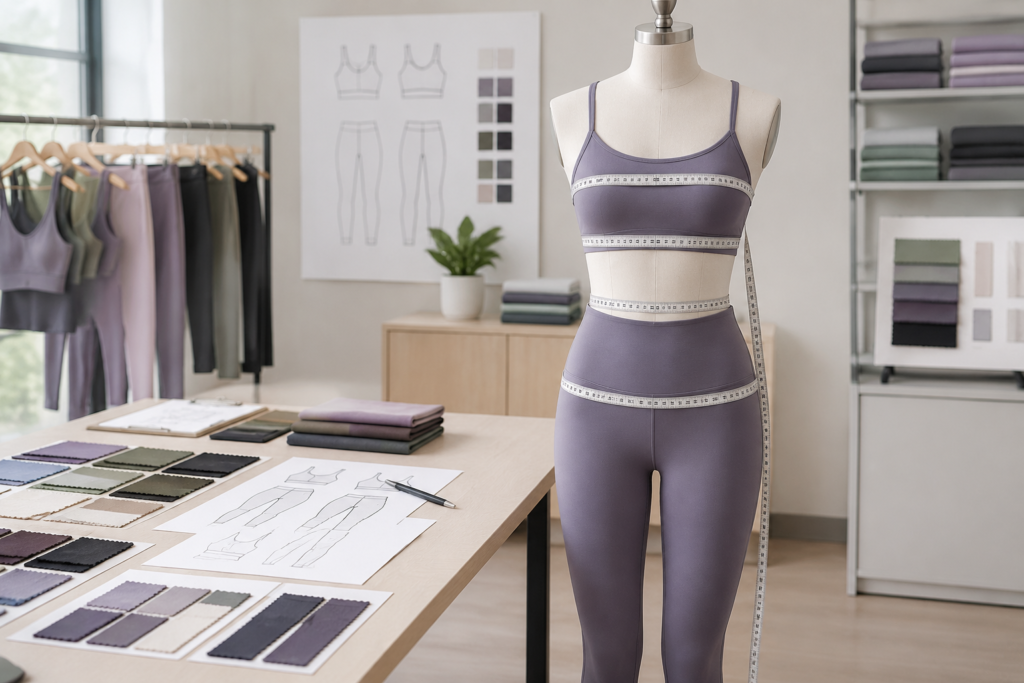
An activewear size chart for ecommerce brands is more than a table of S, M, and L labels. It is the customer-facing result of a controlled process linking body measurements, garment specifications, grading rules, fit samples, and product-page language. When those elements are developed separately, the same size can feel different across leggings, sports bras, tops, shorts, and sets.
For brands investing in ecommerce activewear development, the practical goal is not to force every garment into identical measurements. It is to create one collection-level fit direction, then validate the technical details of each style. The process below shows how manufacturers and buyers can align that system before bulk production and online launch.
Start With One Collection-Level Fit Standard
Begin with a written fit standard before individual patterns are finalized. This document defines the target customer, intended activity, preferred silhouette, base size, and fit language for the collection. A second-skin legging, a relaxed layering top, and a high-support sports bra may use the same brand size labels, but they do not need the same ease, compression, or finished measurements.
First establish the relevant body measurements in US inches, such as bust, underbust, waist, hip, and inseam where applicable. Then separate those wearer measurements from finished garment measurements. Body measurements help a shopper select a size; garment measurements help a development team construct and evaluate the product.
A useful master framework might use the following structure. This is an illustrative buyer template, not a Ninghow Yoga customer chart or factory record.
| Collection field | Illustrative definition | Owner or approval point |
|---|---|---|
| Target customer | Define intended body range, activity, and market | Brand product team |
| Base size | Specify the size used for first pattern and fit review | Brand and development team |
| Body measurements | Bust, underbust, waist, hip, inseam, or other relevant points | Brand-approved size framework |
| Fit direction | Compression, second-skin, regular, or relaxed | Style brief and sample review |
| Category relationship | Define how bras, bottoms, tops, and sets relate without identical specs | Collection fit owner |
For coordinated products, preserve one brand fit direction while retaining a separate specification for every garment. A bra and legging sold as a set remain two technical products. Their color, fabric, logo placement, and size options may be coordinated, but their grading and fit checkpoints are different.
At Ninghow Yoga, sizing is treated as part of pattern development, sample review, and buyer-controlled specifications rather than as a generic retail chart. The initial handoff should therefore include both the collection standard and the style-specific brief.
Build an Activewear Size Chart Customers Can Use
A customer-facing chart should answer one question quickly: which size is the best starting point for this garment? Use familiar body-measurement terms, state the unit clearly, and explain whether the values describe the wearer or the finished product. Do not place body and garment measurements in one unlabeled table.
For most activewear categories, relevant body points may include bust, underbust, waist, hip, and inseam. A sports bra may need bust and underbust guidance, while leggings may require waist, hip, and inseam. A loose jacket may need shoulder or sleeve information. Only include points that help the customer make a decision.
The following is an illustrative measurement-chart template in US inches. It intentionally uses blank fields because approved brand measurements were not supplied.
| Size | Bust | Underbust | Waist | Hip | Inseam, if applicable | Status |
|---|---|---|---|---|---|---|
| XS | ___ | ___ | ___ | ___ | ___ | Brand approval pending |
| S | ___ | ___ | ___ | ___ | ___ | Brand approval pending |
| M | ___ | ___ | ___ | ___ | ___ | Brand approval pending |
| L | ___ | ___ | ___ | ___ | ___ | Brand approval pending |
Pair the chart with concise fit guidance. For example, an approved note might explain that a style is designed for a close fit, that a high-rise bottom has a different rise than a mid-rise version, or that a bra and bottom can be purchased in separate sizes. Avoid promising that one size will fit every body shape or that a fabric will provide a universal level of support.
The online activewear fit guide should use the same terms as the development documents. If the technical team calls a measurement “high point shoulder to hem,” the ecommerce team should not introduce a conflicting label without explanation. Consistent terminology reduces questions between merchandising, customer service, and shoppers.
Translate the Size Chart Into Garment Specifications
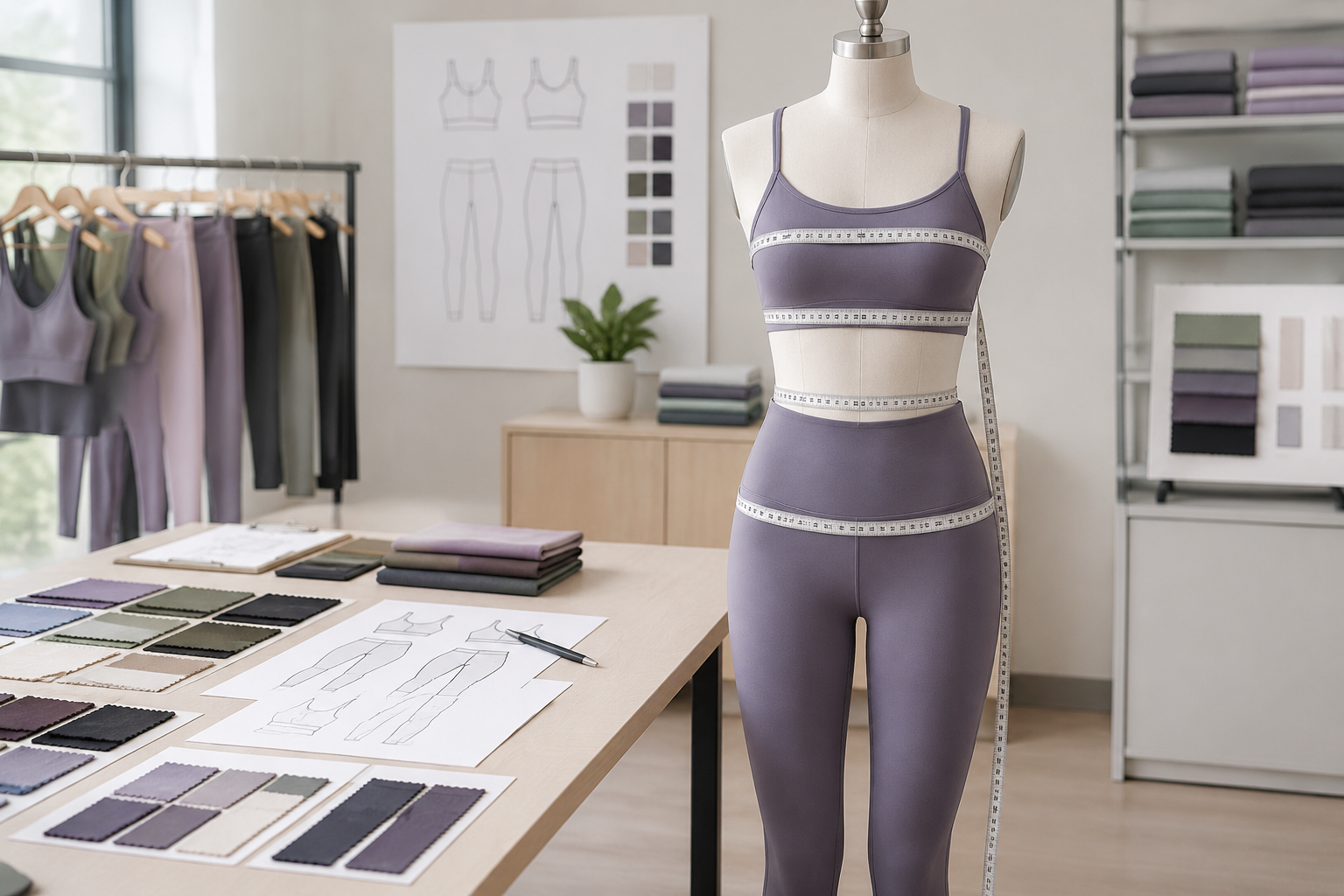
The size chart tells a shopper how to compare body measurements. A measurement specification sheet tells the development and manufacturing teams how to make and assess a style. Each product needs its own sheet, including the point of measure, base size, finished measurement, tolerance where agreed, construction notes, and approval status.
Finished measurements must account for more than the nominal size label. Fabric stretch and recovery, lining, seam construction, waistband design, gusset shape, intended activity, and the desired ease or compression all affect the pattern and sample. A legging and a sports bra may use the same size range but require different technical decisions.
A Bill of Materials (BOM) can support the same handoff by organizing fabrics, linings, elastics, labels, trims, and other garment components. It does not replace the measurement specification, but it helps connect fit decisions to the materials and construction used in the approved sample.
Document Control is important when samples move through multiple revisions. An illustrative structure should include:
| Field | Illustrative entry | Purpose |
|---|---|---|
| Style Code or Style ID | [Buyer style reference] | Connects the document to one product |
| Version | [v1.0] | Distinguishes the active file from earlier files |
| Issue Date | [YYYY-MM-DD] | Shows when the version was released |
| Revision | [Rev A: waistband measurement updated] | Explains the change |
| Approval Status | [Fit review pending / Approved for bulk] | Prevents premature production use |
| Responsible Owner | [Brand / development contact] | Clarifies who controls the document |
| Sample Stage | [First fit / revised fit / production sample] | Connects comments to the correct sample |
This is a blank example structure, not a real customer or factory record. In practice, the approved specification is the reference used by the pattern, sample, sourcing, and quality teams. Ninghow Yoga’s OEM development approach involves reviewing materials, construction, patterns, samples, branding, and bulk production against buyer-controlled specifications; a clear version record helps prevent old measurements from reappearing in later colorways or repeats.
Grade Sizes Without Losing the Intended Fit
Size grading is the controlled change from an approved base size to the other sizes in the range. It should preserve the intended relationship between body, garment, support, coverage, and movement. Simply adding the same increment to every measurement can distort proportions.
Start with grade rules for the key points of measure and record them in the specification sheet. Then assess the product category. A sports bra may prioritize bust, underbust, strap placement, and support-related proportions. A legging may require closer attention to waist, hip, rise, inseam, gusset, and ankle opening. A relaxed top may need different shoulder, sleeve, and body-length decisions.
Coordinated sets require another layer of planning. If customers can select separate top and bottom sizes, the product page should make that clear. If the set is sold only as a fixed combination, the brand needs to understand which size relationships were actually validated. Do not assume that one bra-to-legging ratio suits every customer.
Extended-size programs deserve dedicated validation rather than a direct extension of a standard grade. Plus-size leggings may need a dedicated block, non-linear grading, waistband and gusset review, fabric extension at larger sizes, and representative fit samples. Men’s, unisex, and maternity directions also require separate blocks or specialized review. Maternity styles, for example, need dedicated decisions around waistband, growth allowance, coverage, and mobility.
Use Fit Samples to Validate Each Style and Set
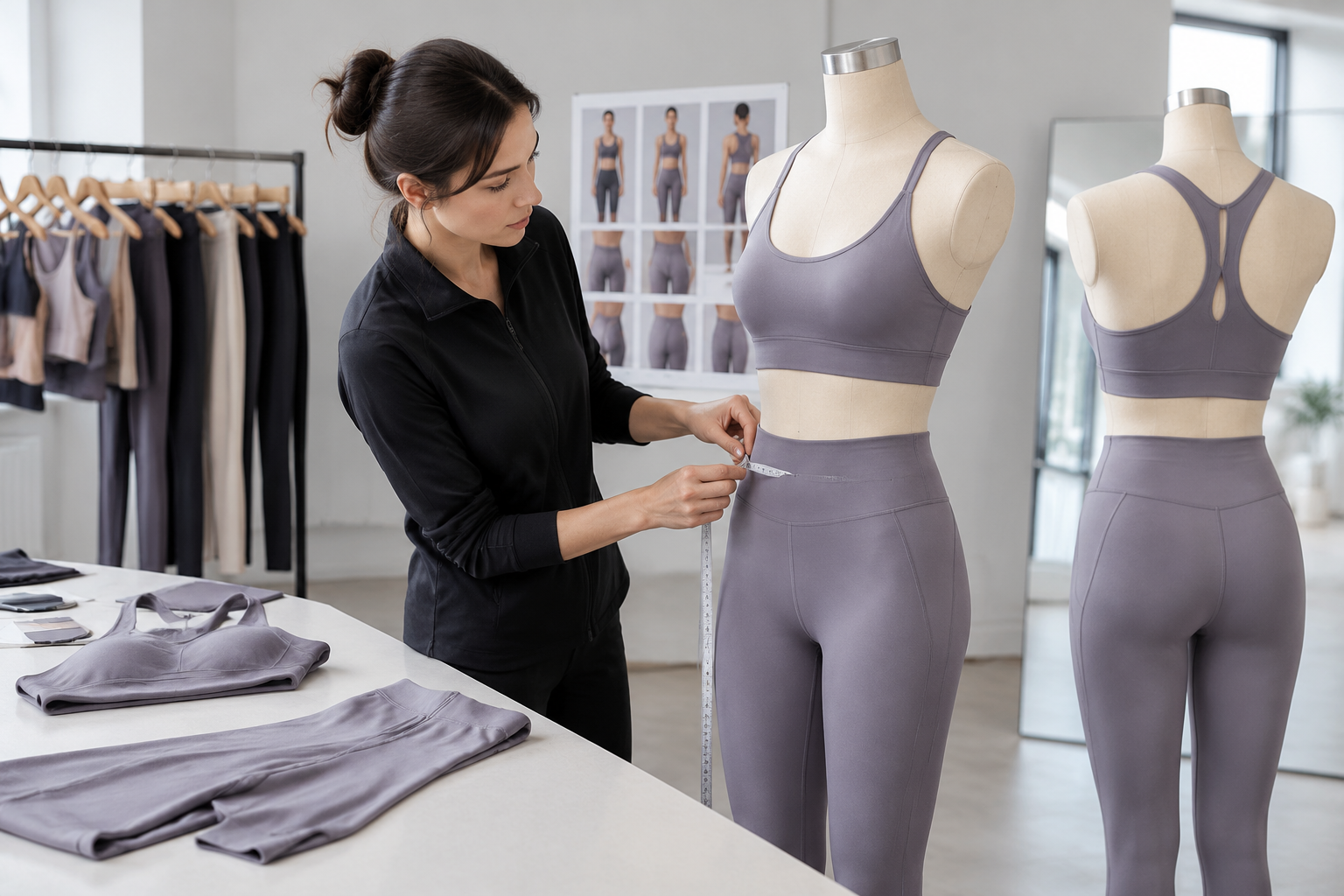
Fit samples convert the size system from a document into an observable product. Review the first sample against the specification sheet, construction requirements, intended use, and approved fit direction. Measurements alone cannot reveal every issue with rise balance, waistband behavior, bust coverage, arm mobility, or visual proportion.
Capture comments in a dated sample record. Each comment should state the location, observed issue, requested action, and responsible party. Add photographs or annotated images when they clarify where waist, hip, inseam, bust, or underbust measurements are taken. A useful revision workflow is shown below as an illustrative approval template.
| Version | Revision | Date | Change | Approval status |
|---|---|---|---|---|
| v1.0 | Initial fit sample | [YYYY-MM-DD] | Base pattern and first measurement review | Fit review pending |
| v1.1 | Rev A | [YYYY-MM-DD] | [Record approved change and affected points of measure] | Awaiting buyer approval |
| v1.2 | Rev B | [YYYY-MM-DD] | [Record construction or grading adjustment] | Approved for production sample |
| v2.0 | Final | [YYYY-MM-DD] | [Record final approved specification] | Approved for bulk |
Review a bra and a bottom separately even when they are marketed as one set. Confirm the production sample against the final approved standard before publishing measurements, fit labels, or support descriptions online. A manufacturer can support pattern development, sample coordination, measurement review, and fit communication, but the buyer’s approval remains essential for the intended brand fit.
Turn Fit Development Into Better Product-Page Guidance
Once fit information is approved, convert it into a repeatable product-page format:
- Collection or style size chart using clearly labeled body measurements.
- Fit label such as compression, close, regular, or relaxed when supported by sample review.
- Style-specific details such as rise, inseam, garment length, or adjustable features where relevant.
- Separate-size guidance for coordinated sets when that option is available.
- Short notes explaining meaningful construction or fabric differences.
- Care guidance based on the approved product information.
Keep collection-level guidance consistent, then add style-level notes where the product genuinely differs. For example, 7/8-length leggings need body-height and proportion checks rather than one inseam presented as correct for every market. Seamless capsules also require alignment across yarn, knit zones, color, fit, sizing, logo, and finishing; different knit structures should not be described as having identical stretch or compression.
Ninghow Yoga can help buyers translate approved fit notes into clearer ecommerce language, but product claims should remain tied to validated samples and controlled specifications. Avoid turning one fit review into a universal promise about every body type, market, or style.
Collection Scenarios That Need Extra Fit Attention
The same master system can cover leggings, shorts, bras, tops, jackets, and sets without making them technically identical. The following scenarios deserve an explicit checkpoint:
- Leggings and shorts: Review waist, hip, rise, inseam, gusset, and leg opening according to the intended silhouette.
- Sports bras: Separate bust and underbust logic from bottom grading, then validate coverage and movement for the intended activity.
- 7/8 leggings: Confirm the target height range because the shorter inseam changes ankle opening and visual proportion.
- Coordinated sets: Match color or intentional contrast, logo placement, fabric strategy, and size mapping while approving each garment independently.
- Seamless capsules: Coordinate yarn, knit maps, color, finishing, and size logic without assuming identical performance across styles.
- Extended, men’s, unisex, and maternity ranges: Use dedicated blocks and representative fit validation instead of simple grade extensions.
This approach supports activewear fit consistency while respecting the construction differences between categories. It also gives ecommerce teams a reliable foundation for an online activewear fit guide that is useful, specific, and traceable to product development.