The landed cost of custom activewear is the estimated total cost to move finished garments from production to your specified destination. It is not simply the factory price or an FOB unit price. For international buyers, a workable calculation is: landed cost = product cost + origin charges + freight + import charges + destination charges. Use it to compare supplier offers on consistent assumptions and support better purchasing decisions alongside broader international supply planning.
The final figure changes with the style, order quantity, shipping method, Incoterm, destination, tariff classification, packaging plan, and local charges. It is therefore a procurement estimate, not a universal fixed rate or a guarantee of customs clearance. A manufacturer can help organize production, packing, and export inputs; qualified freight, customs, and tax professionals remain the right parties to validate destination-specific obligations.
What Landed Cost Means for Custom Activewear
Custom clothing import cost begins with the garment but extends beyond it. A yoga set with custom fabric, heat-transfer decoration, branded labels, individual bags, and export cartons has a different cost structure from a stock-color private-label legging. Likewise, air freight, sea freight, and courier service create different transport and destination-cost assumptions.
For a useful estimate, set one destination and one shipment scenario first. Record the currency, quantity, delivery point, shipment method, and trade term. Trade terms allocate responsibilities for pickup, export, main freight, insurance, import, and delivery differently; they do not make every destination charge disappear. Production completion also is not the same as final delivery.
| Cost layer | Typical items to capture | Why it matters |
|---|---|---|
| Product cost | Garments, approved fabric, trims, construction | Forms the manufacturing baseline. |
| Origin charges | Export packing, handling, export documentation where quoted | May be separate from the garment unit price. |
| Freight | Main transport, fuel or carrier surcharges, insurance if applicable | Depends on route, mode, volume, weight, and booking conditions. |
| Import charges | Duties, import taxes, customs processing or brokerage | Depends on classification and destination rules. |
| Destination charges | Port, terminal, delivery, storage, or local handling where applicable | Can materially change the delivered total. |
Build the Product and Branding Cost Worksheet
Build the manufacturing side before adding logistics. This prevents an incomplete supplier quote from appearing cheaper simply because development, decoration, or packaging has been left outside the stated price. Separate one-time charges, such as pattern work, sampling, or artwork setup where applicable, from recurring per-unit charges, such as garments, labels, printing, and packing.
A complete request gives the development team enough information to quote the real scope: product category, technical file or design reference, fabric and trims, colors, quantity by size and color, measurements, branding, packaging, target market, and shipment requirements. Fabric selection affects more than fabric price; hand feel, composition, weight, stretch, recovery, color requirements, trim compatibility, minimums, and lead time can all alter the development path. Explore fabric and trim sourcing when these inputs still need to be aligned.
For custom development, prepare a Bill of Materials (BOM). A BOM organizes fabrics, trims, labels, and garment components so the supplier, sourcing team, and buyer are costing the same product. It also reduces the risk that a logo label, drawcord, cup, zipper, care label, or individual packing requirement is omitted from the activewear sourcing cost breakdown.
Buyer input checklist for a meaningful quotation
- Style name or Style Code, category, sketches or tech pack, and intended activity.
- Fabric requirements, color references, trim choices, and component approvals.
- Size range, graded measurements, quantity by SKU, and target order quantity.
- Branding method and placement for labels, printing, embroidery, or other decoration.
- Individual packaging, carton marks, barcode or SKU data, and carton preferences.
- Target market, destination, desired Incoterm, shipment mode, and delivery point.
- Separate indication of sample, development, setup, and recurring bulk costs.
Keep controlled files aligned. If details change after costing, update the product record rather than relying on scattered email notes or images. An illustrative Document Control block can include Style Code or Style ID, Version, Issue Date, Revision, Approval Status, Responsible Owner, and Sample Stage. This makes it easier to verify that the approved bulk product—not an earlier sample—is the version used in the cost model.

Add Packaging, Freight, and Customs-Related Costs
Packaging is both a product and shipment input. Individual bags, hangtags, tissue, cartons, carton marks, pallets, and protective materials can affect cost, carton dimensions, and freight calculations. On longer transits, humid routes, or extended storage, the packaging and pallet plan may also need a route-specific protection assessment. Do not assume one moisture-control approach fits every fiber, route, or destination.
Document each charge as included, excluded, estimated, or buyer-payable. The shipping file normally needs accurate carton data, a packing list, commercial invoice details, shipment term, booking status, and any required export or origin documents. Before release, approved goods can be segregated and checked against quantity, PO, inspection status, carton marks, and document requirements. Ninghow Yoga can support export packaging, documentation, and shipment coordination through international shipment support; this does not replace the buyer’s customs, tax, or local compliance responsibilities.
| Charge category | Questions for the written quote | Common payer location |
|---|---|---|
| Origin packing and handling | Are individual packing, cartons, export handling, and document preparation included? | Origin; depends on quote and term |
| Main freight | What route, mode, volume/weight basis, validity period, and surcharges apply? | Determined by agreed transport arrangement |
| Cargo insurance | Is it requested, included, excluded, or arranged separately? | Depends on agreed responsibility |
| Import duty and taxes | What classification and destination rules are being used for the estimate? | Usually destination-side responsibility unless otherwise agreed |
| Brokerage and delivery | Are clearance, terminal, local delivery, storage, and appointment fees included? | Often destination-side; verify locally |
FOB Price Versus Landed Cost: A Practical Comparison
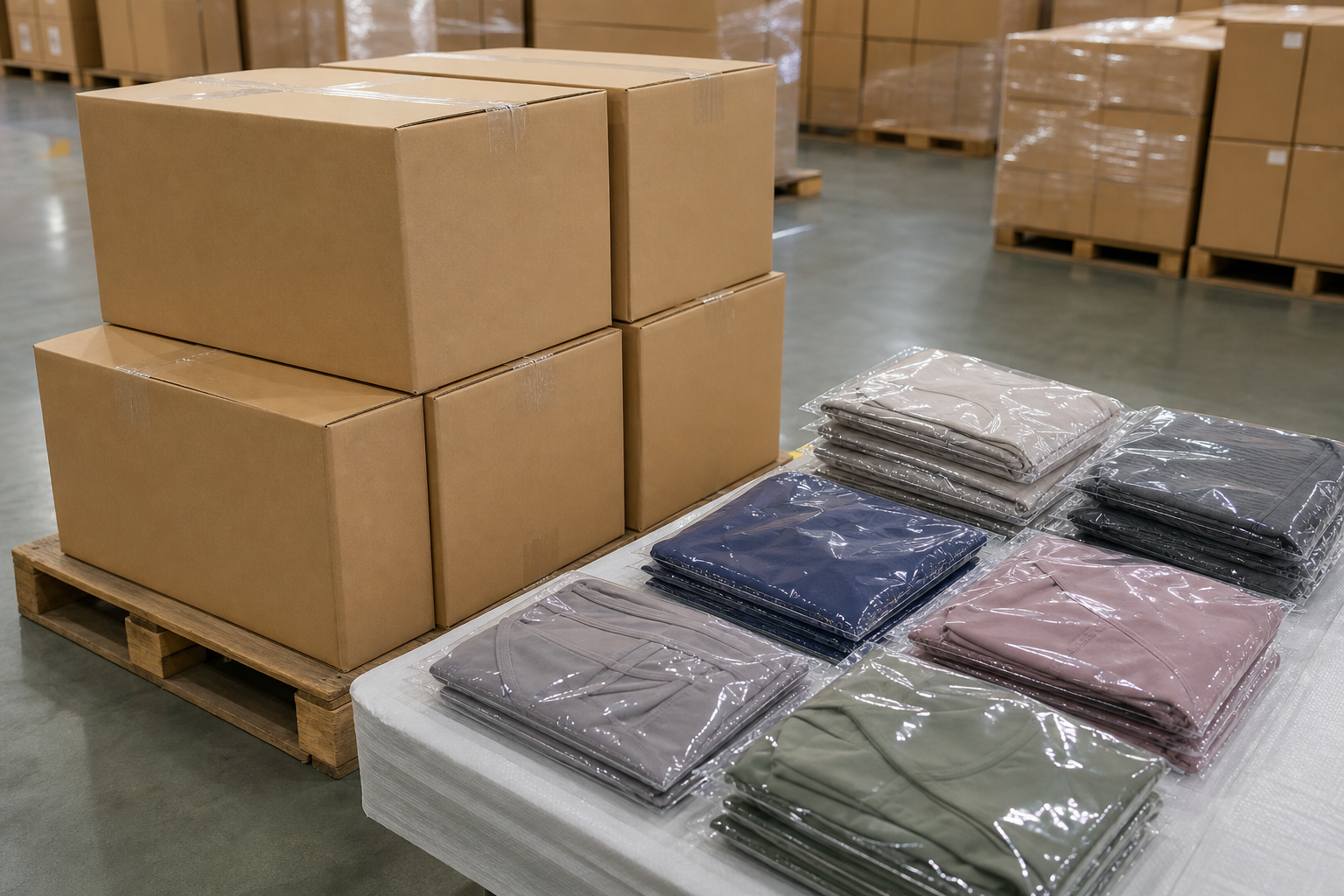
FOB versus landed cost apparel is not a choice between two equivalent numbers. FOB is a trade-term-based price and responsibility point; landed cost is a buyer’s total-cost model for a stated destination. An FOB offer can be appropriate for a buyer controlling freight and import, but it cannot be compared directly with a delivered estimate unless both offers use the same product and shipment assumptions.
| Comparison criterion | FOB quote view | Landed-cost view | Buyer decision use |
|---|---|---|---|
| Scope | Product and agreed origin responsibility to the FOB point | All estimated charges through the named destination | Separates supplier price from total delivered spend. |
| Freight and insurance | Often arranged by buyer after FOB responsibility point | Added as route-specific estimates | Tests whether a lower FOB price remains competitive after transport. |
| Import duties and taxes | Usually outside the FOB garment quote | Modeled using destination and classification assumptions | Supports budget planning; validate with customs professionals. |
| Quote comparison | Useful only when the term and inclusions match | Useful when every supplier uses the same inputs | Prevents false savings from omitted charges. |
Use this decision framework: first lock the style specification and quantity; next select the same Incoterm, destination, packaging assumption, and freight scenario for every supplier; then compare total cost, timing risk, document readiness, and responsibility boundaries. Do not select solely on the lowest unit price. A quote that excludes a necessary branded component, carton requirement, or origin charge is not comparable to one that includes it.
How to Validate a Landed-Cost Estimate Before Ordering
Validation happens at several approval points. At sample approval, cost the approved construction, materials, fit, and branding. Before bulk release, check the production version and BOM. At packing approval, use the approved individual packing, carton configuration, and marks. Before dispatch, reconcile actual quantity, final inspection status, carton data, booking, and export-document readiness. Where independent verification is part of the buying plan, arrange third-party inspection support early enough for findings to be addressed before shipment.
Pre-order landed-cost validation checklist
- Match the quote to the approved Style Code, Version, Revision, Issue Date, and Approval Status.
- Confirm the product classification assumption and destination with a qualified customs or logistics professional.
- State the Incoterm, named place, freight mode, currency, quote-validity period, and shipment window.
- List every inclusion and exclusion for garments, branding, packaging, export handling, freight, insurance, brokerage, duties, taxes, and delivery.
- Check whether development and setup charges are one-time costs or allocated across the order quantity.
- Obtain carton dimensions, carton count, gross weight, packing-list requirements, and carton-mark instructions when available.
- Verify the commercial invoice, packing list, PO, booking, inspection status, and required export or origin documents before dispatch.
- Recalculate if the quantity, material, packaging, route, shipment term, or delivery point changes.
A manufacturer can provide project-specific cost inputs and coordinate agreed shipment steps, but no party should treat an early estimate as final when freight, customs treatment, or destination charges remain subject to change.
Landed-Cost Worksheet Example for Custom Yoga Apparel
Copy the following illustrative buyer template into a spreadsheet. It contains no Ninghow Yoga quote values, customer figures, or promised rates. Enter buyer-provided or supplier-quoted amounts, label the source, and keep unresolved items visibly marked as estimates.
| Section | Cost item | Cost basis | One-time or recurring | Source / inclusion status | Amount | Currency | Confirmation status |
|---|---|---|---|---|---|---|---|
| Product | Approved yoga leggings or set production | Per unit × quantity | Recurring | Supplier quote; included/excluded | Buyer entry | Buyer entry | Pending / confirmed |
| Development | Pattern, sample, or setup work | Project total | One-time | Supplier quote; included/excluded | Buyer entry | Buyer entry | Pending / confirmed |
| Branding | Labels, print, embroidery, or approved decoration | Per unit or project total | As quoted | Supplier quote; included/excluded | Buyer entry | Buyer entry | Pending / confirmed |
| Packaging | Individual packing, cartons, marks, pallets if applicable | Per unit, carton, or shipment | Recurring | Packing quote; included/excluded | Buyer entry | Buyer entry | Pending / confirmed |
| Origin | Export handling and documentation | Shipment total | Recurring | Supplier/forwarder; included/excluded | Buyer entry | Buyer entry | Pending / confirmed |
| Freight | Main transport and insurance if applicable | Shipment total | Recurring | Forwarder quote; included/excluded | Buyer entry | Buyer entry | Pending / confirmed |
| Import | Duties, taxes, brokerage | Shipment total | Recurring | Broker/customs adviser estimate | Buyer entry | Buyer entry | Pending / confirmed |
| Destination | Terminal, local handling, delivery, storage if applicable | Shipment total | Recurring | Forwarder/local provider estimate | Buyer entry | Buyer entry | Pending / confirmed |
| Total | Landed cost and landed cost per unit | Total ÷ received units | Mixed | Worksheet calculation | Buyer entry | Buyer entry | Final validation required |
This format makes supplier comparison more disciplined: it exposes exclusions, allocates one-time development costs deliberately, and gives sourcing teams a clear record of what still requires confirmation. For a quote aligned to a specific product, packaging plan, and route, request a project-specific quote with the controlled specifications and shipment assumptions.
FAQ
What is included in the landed cost of custom activewear?
It usually includes product cost, approved branding and packaging, applicable origin charges, freight, cargo insurance where arranged, import duties and taxes, customs brokerage, and destination handling or delivery charges. The exact scope depends on the destination and agreed trade term.
How is landed cost different from FOB pricing for apparel?
FOB pricing reflects a defined trade-term responsibility point, while landed cost models the estimated total expense to a stated destination. Freight, import charges, and local delivery may sit outside an FOB apparel quote.
Can a manufacturer provide an exact landed cost before shipment?
A manufacturer can provide project-specific product, packing, and export-cost inputs, but final freight, customs, tax, and destination charges can change. Validate those items with qualified logistics and customs professionals before treating the estimate as final.