U.S. apparel import compliance for custom yoga and activewear is a buyer-side process that begins well before freight is booked. It requires the importer of record to work from accurate product facts, validate classification and origin, assemble consistent shipment documents, estimate import charges, and coordinate customs entry with a broker and carrier. It is separate from product development, quality inspection, and broader international apparel supply guidance, although all of those activities provide information needed for import readiness.
This guide is informational, not legal or customs advice. Apparel classification, origin, marking, and duty treatment can depend on product-specific facts and current rules. Have a qualified U.S. customs professional review decisions before production release or shipment.
What U.S. Apparel Import Compliance Covers for Custom Yoga and Activewear
The importer of record carries the central responsibility for entry accuracy and compliance. In a typical custom activewear order, the supplier supplies product, packing, and shipment data; the customs broker uses the importer-approved information to prepare or transmit entry information; and the carrier moves the cargo and provides transport documentation. A factory can support a controlled handoff, but it does not replace the importer’s responsibility or act as legal counsel or customs broker.
A practical sequence is: classify each garment, establish the proposed country of origin, prepare matching commercial and transport documents, build a duty and landed-cost estimate, then provide the final data to the importer and broker before shipment. This order matters. A late change to fiber content, garment construction, value, carton count, or origin statement may affect more than a packing list.
For custom programs, product development records create the foundation. Style specifications, approved samples, material details, labels, packaging requirements, and a controlled Bill of Materials (BOM) help organize the fabrics, trims, labels, and garment components behind each style. Ninghow Yoga can support product data, export-document checks, and shipment coordination for finished orders; final customs and tax decisions remain with the buyer and its advisers.
Which Customs Documents Do Apparel Buyers Need?
Exact entry and security requirements vary by shipment, transport mode, entry type, and broker instructions. Common apparel customs documents include a commercial invoice, packing list, bill of lading or air waybill, purchase-order information, and any entry or security documents requested for the shipment. The International Trade Administration outlines core import documentation expectations in its Import Requirements and Documentation guidance (accessed September 14, 2026).
The commercial invoice normally presents the commercial transaction: seller and buyer, detailed product description, quantity, unit and total value, currency, and shipping terms. The packing list describes the physical shipment, such as style or SKU allocation, cartons, net and gross weight, dimensions, and package marks. The bill of lading or air waybill links the cargo to the transport movement. Purchase-order and style references make it easier for the buyer, supplier, and broker to trace the goods back to the approved order.
Ninghow Yoga’s finished-order handoff can reconcile the purchase order, quantity, SKU, carton count, weights, packing list, invoice, carton marks, inspection release, shipment term, booking, and required shipment documents. Buyers should tell the manufacturing and broker teams early which documents and fields their entry process requires.
Pre-shipment document review checklist
- Check that the legal seller, buyer, consignee, and importer references are accurate and consistently spelled.
- Match purchase-order, style code, SKU, color, and size references across the invoice, packing list, and product specification.
- Reconcile shipped quantities, carton counts, net and gross weights, dimensions, and carton marks.
- State values and currency consistently; keep shipping terms aligned with the agreed commercial terms.
- Use product descriptions detailed enough to distinguish leggings, sports bras, tops, shorts, or other garment styles.
- Compare the stated country of origin with approved labeling and the product-by-product origin decision.
- Send the final controlled versions to the importer and broker; do not let an informal email or image silently override them.
How to Check HTSUS Codes for Yoga and Activewear
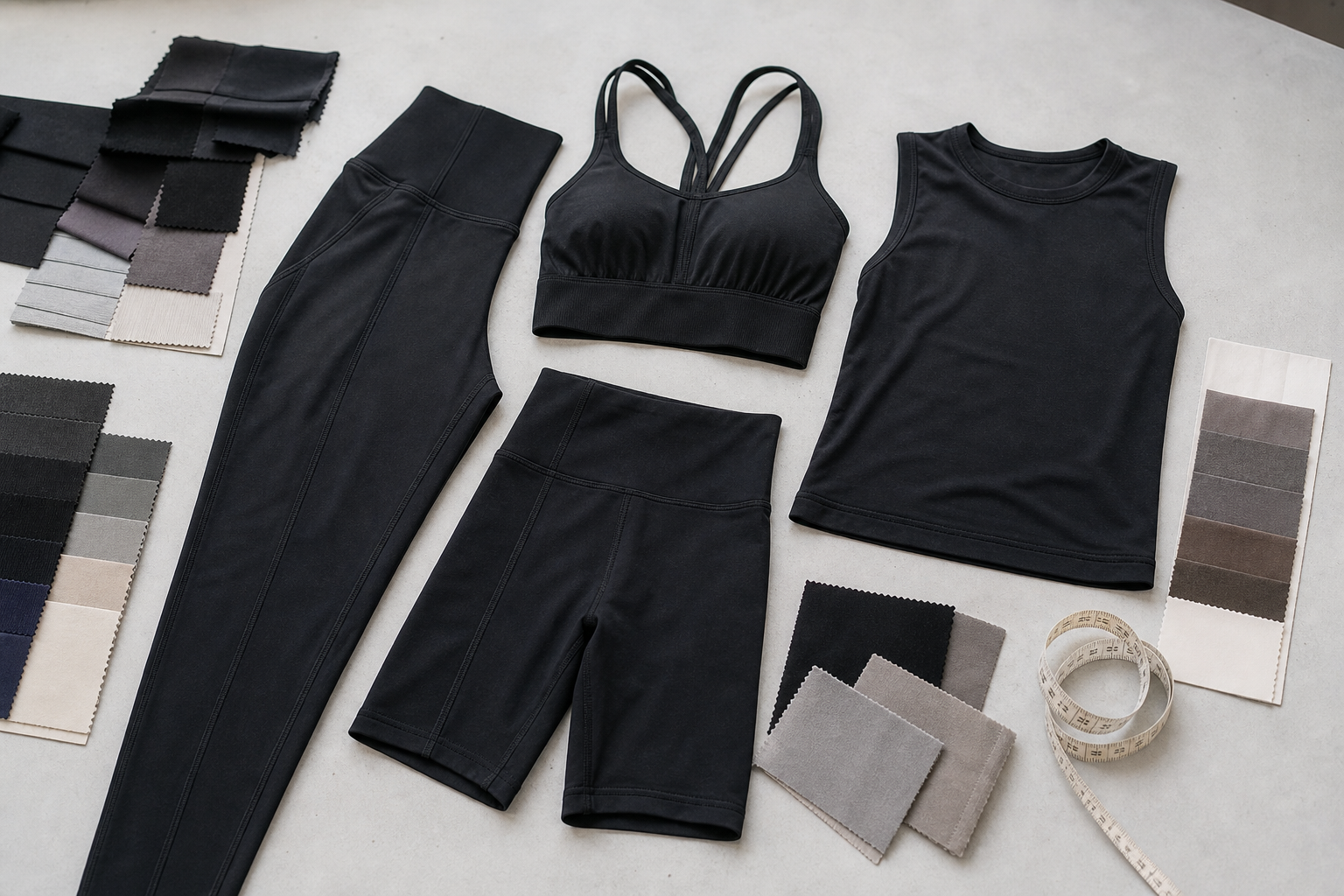
HTSUS classification affects customs processing and activewear import duties, so it must be checked product by product. “Yoga set” or “activewear” is a commercial collection label, not a sufficient classification conclusion. A leggings style, sports bra, tank, short, or jacket can require different analysis based on garment type, fiber content, knit or woven construction, and intended wearer.
Start with a technical fact sheet for every import line. Include the style name and code, garment category, fiber composition by component where relevant, construction, intended wearer, photos or approved sample reference, and any special features that could affect the analysis. For seamless goods, yarn selection, knit zones, gauge, elastane feeding, dyeing, and heat setting can be interdependent; provide the actual garment facts rather than applying cut-and-sew fabric assumptions.
Use the current U.S. Harmonized Tariff Schedule and applicable CBP guidance with a qualified customs professional before importing. A supplier may provide helpful construction and material information, but it should not be treated as the final authority on HTS codes for apparel. Coordinated sets deserve particular care: a bra, top, and leggings or shorts remain separate garments for technical specification purposes and must not automatically be treated as one import product.
How Activewear Import Duties Are Determined
A duty estimate begins with a product-specific classification and generally depends on customs value, country of origin, and any currently applicable trade-program treatment or additional measure. It is not sound planning to apply one apparel duty percentage across an entire yoga collection.
Keep customs duties separate from other landed-cost items: international freight, cargo insurance, brokerage, processing fees, domestic delivery, inspections, and any applicable taxes or charges. The origin analysis can influence duty treatment, which is one reason the International Trade Administration recommends understanding and applying relevant rules of origin (accessed September 14, 2026).
Illustrative landed-cost worksheet structure
| Field | Record for each style or entry line | Review owner |
|---|---|---|
| Style and product facts | Style code, garment type, composition, construction, quantity | Buyer and supplier |
| Classification assumption | Proposed HTSUS reference, source date, open questions | Customs professional |
| Origin assumption | Proposed origin, production facts, marking review status | Importer and customs professional |
| Customs value | Declared value, currency, valuation assumptions | Importer |
| Duty and other charges | Estimated duty, fees, program or additional-measure assumptions | Customs professional |
| Non-duty costs | Freight, insurance, brokerage, delivery, inspection | Buyer logistics team |
| Control record | Source date, version, reviewer, approval status | Importer |
Record the rule source date and reviewer for every estimate. Duty outcomes are not guaranteed by a supplier, and a quote is not a customs ruling.
How to Verify Garment Country of Origin
The country from which goods ship is not automatically the garment country of origin. Origin analysis can depend on where relevant manufacturing occurs and may require substantial-transformation or other rule-of-origin analysis. The applicable answer must be documented from the actual supply chain, not assumed from the port of export or supplier address.
Before bulk release, cross-check the proposed origin against manufacturing records, product specifications, labels, commercial invoices, packing documents, and packaging instructions. Textile and apparel country-of-origin marking also requires current review against applicable U.S. requirements. The ITA’s origin guidance is a useful starting point, but buyers should obtain broker or customs-professional input for the specific garment and sourcing scenario.
At Ninghow Yoga, controlled style data and export preparation can help align manufacturing, packaging, and shipment information around the agreed origin story. That support does not establish a universal origin conclusion. If materials or production steps change, reopen the origin question before labels are ordered or cargo is booked.
A Buyer Consistency Check for Labels, Invoices, and Packing Data
Use this buyer-side QA check before handing documents to the broker. It is an illustrative template, not a real customer or factory record. A mismatch can trigger clarification, correction, or a shipment hold, especially when it affects product identity, quantity, value, or origin.
| Field to compare | Invoice | Packing list | Product label | PO / product specification | Mismatch risk |
|---|---|---|---|---|---|
| Style name and code | Style/SKU description | Carton allocation | Internal style reference where used | Approved style code | Generic or different product names |
| Garment description | Detailed commercial description | Style description | Fiber and garment labeling content | Garment type and construction | Insufficient classification support |
| Quantity and size breakdown | Total units | Units by carton, color, size | Size label | Ordered quantity and ratio | Shortage, overage, or size discrepancy |
| Value and currency | Unit and total values | Usually not primary source | Not applicable | Approved commercial terms | Currency or valuation error |
| Country of origin | Origin statement | Origin field if used | Country marking | Approved origin decision | Conflicting origin claim |
| Cartons and weight | Package summary | Carton count, net/gross weight | Not applicable | Packaging specification | Carrier or entry-data discrepancy |
Resolve discrepancies through the controlled source record, not by choosing the most convenient document. For shipment preparation, Ninghow Yoga can assist with order and export-document consistency checks and with export packaging and shipment preparation; the importer retains approval of final compliance data.
Pre-Import Handoff Checklist for Custom Activewear Buyers
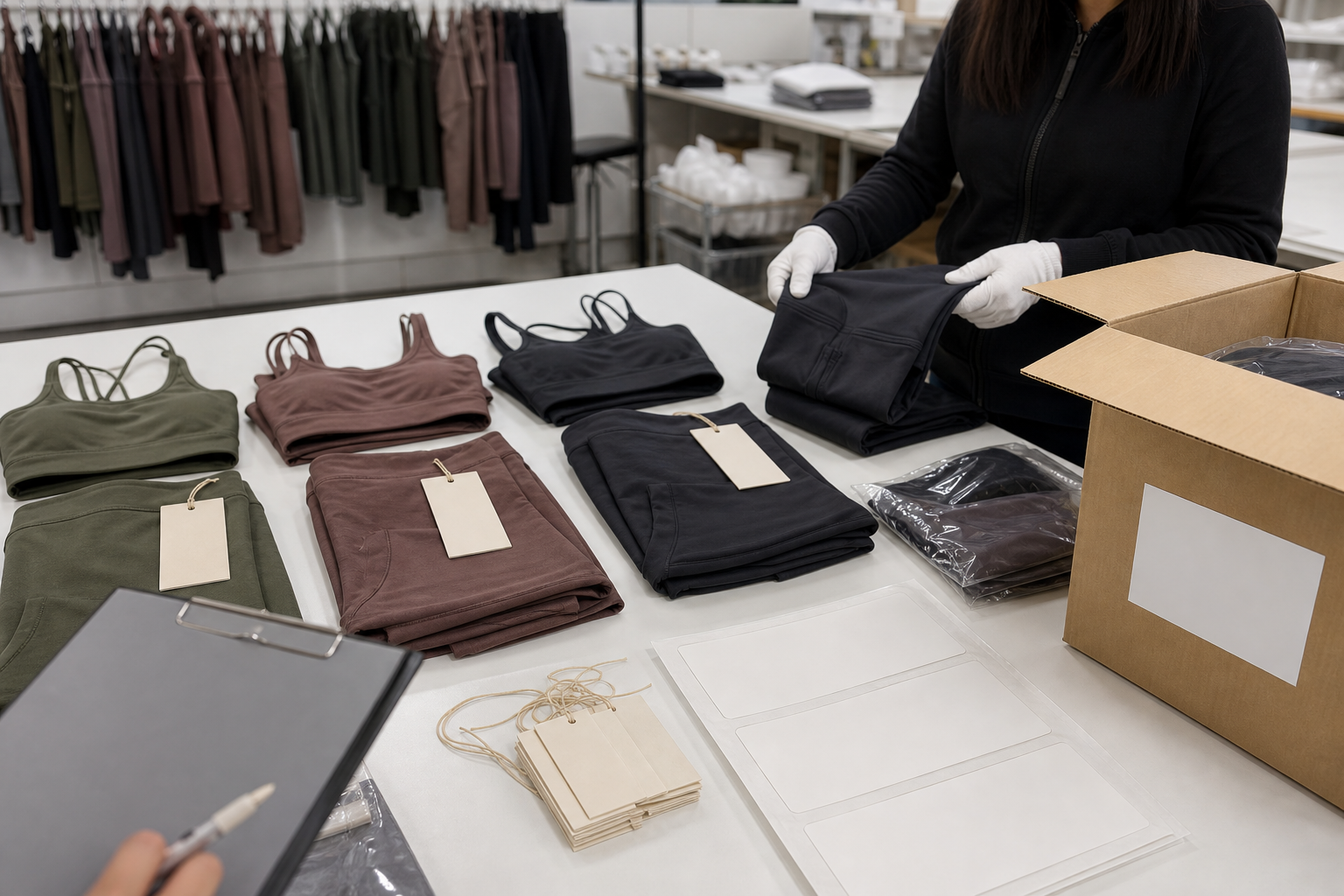
Create one product-by-product handoff sheet before production release and update it only through controlled approval. Document Control is especially useful when specifications, labels, or shipment data change.
- Product data: style name, Style Code or Style ID, garment category, materials, fiber content, construction, color, quantity, packaging, and proposed origin.
- BOM and sample basis: list fabrics or yarns, trims, labels, and components; state which approved sample, measurements, workmanship, and materials define bulk production.
- Classification and duty questions: record proposed HTSUS treatment, source date, unresolved facts, and customs-professional owner.
- Document Control: Version, Issue Date, Revision, Approval Status, Responsible Owner, and Sample Stage where applicable.
- Supplier handoff: state which commercial invoice, packing list, carton-mark, booking, and supporting documents the supplier prepares, reviews, or shares.
- Broker handoff: provide final approved documents and record questions requiring entry, valuation, origin, marking, or duty review.
- Set control: give every bra, top, legging, and short its own specification, even when merchandise is sold as a coordinated set.
- Final release: retain approved versions and prevent uncontrolled emails, screenshots, or product images from replacing the formal shipment data.
When to Escalate to a Customs Professional Before Shipment
Escalate before shipment when the HTSUS classification is uncertain, production is split across countries, origin statements conflict, labels do not align with documents, customs value is unclear, or a duty estimate depends on trade-program or additional-measure questions. Seek help as well when a new fabric, garment construction, or selling format changes the product facts used in the prior analysis.
Supplier support, broker processing, and importer accountability are different functions. A cooperative manufacturer can assemble reliable technical and shipment inputs; a broker may process entry based on instructions; the importer must make informed compliance decisions with qualified advice. Maintaining document control and resolving inconsistencies before booking gives that professional review the best available facts.
For manufacturing-side help assembling product and shipment inputs, buyers can use Ninghow Yoga’s international activewear shipment support or contact the manufacturing team. Obtain independent U.S. customs advice for classification, origin, labeling, valuation, and duty conclusions.